
Gantt Chart – Project Management Tool Inside Kanban App
Kanbanchi gives you a Gantt chart and a Kanban board in one app, working on the same tasks. Plan the schedule on the timeline, run the day-to-day on the board, and never maintain two plans that disagree with each other.
The app is flexible, works inside Google Workspace and Microsoft 365, and inherits the interface conventions your team already knows.
What Does Kanbanchi Offer as a Project Management Tool?
The interesting thing about Kanbanchi is that it gives the user a tool that brings together the functions of Gantt charts and those of a Kanban board in one place. What this means is that it offers a powerful way of controlling every aspect of a project from one easy to use tool.
In real terms, this allows you to use the Gantt chart in the software to plan the upcoming work as normal.
The Kanban board is then used to allocate tasks and to go through the workflow stage as smoothly as possible.
By choosing the right project management tool, you can make life a lot easier for your team. There is no need to just settle for a basic Gantt chart when it is now so easy to add in the extra features that you crave.
One task, two views
A card on your board and a bar on your Gantt chart are the same task, not two copies of it. Drag the bar, and the dates change on the card. Move the card and the timeline updates. Set a dependency on the Gantt view and the board respects it.
On top of the timeline, you also get dependencies between tasks, milestones for key dates, and drag-to-reschedule — without leaving the board your team works in every day.
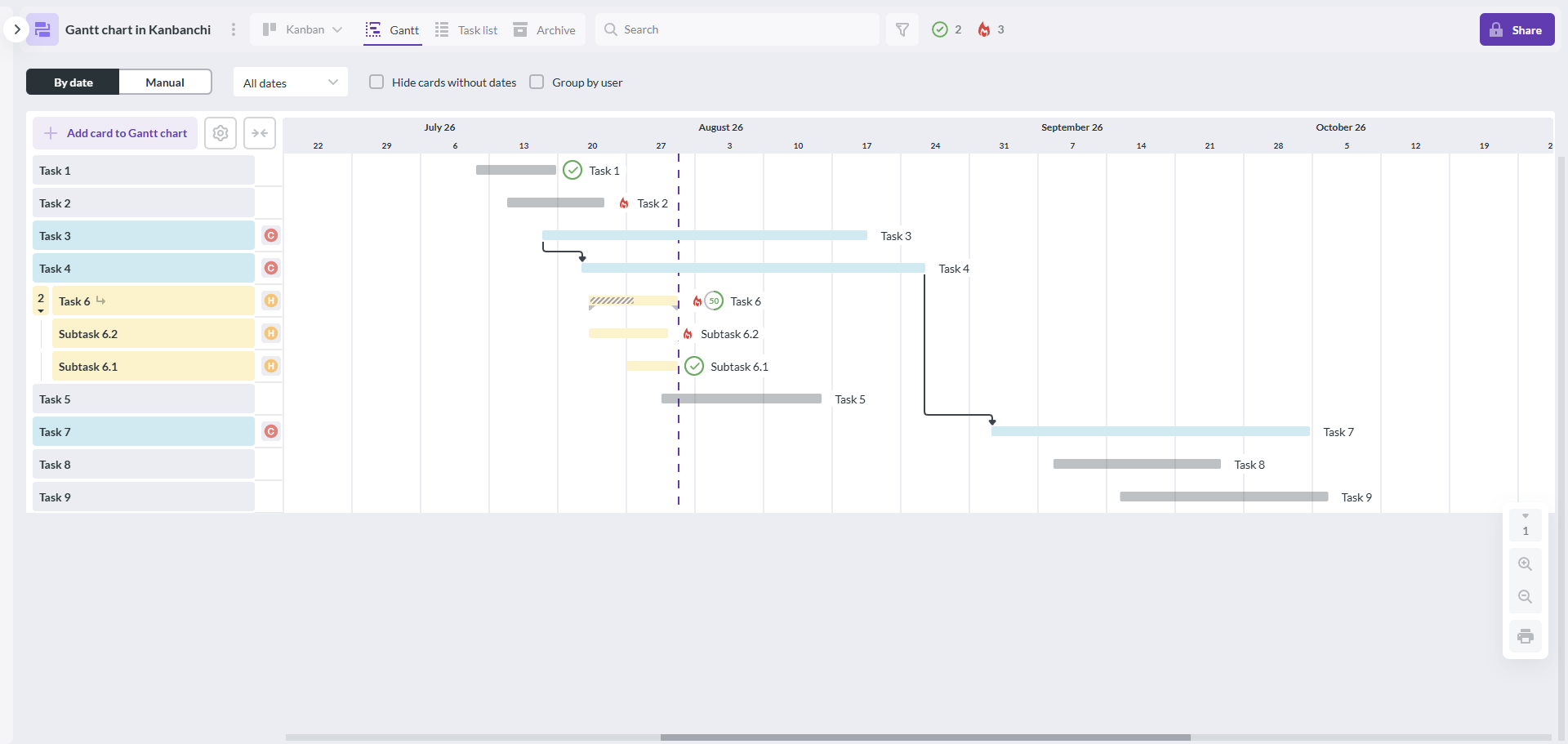
Gantt chart view of Kanbanchi board
The Gantt view puts every card with dates onto a timeline. Dependency arrows show which tasks are waiting on others, so you can see that Task 4 can’t start until Task 3 finishes, and Task 7 follows on from Task 4. Subtasks sit nested under their parent card rather than floating separately, and progress shows on the bar itself. Drag the edge of a bar to reschedule, and the change is reflected everywhere else in the board.
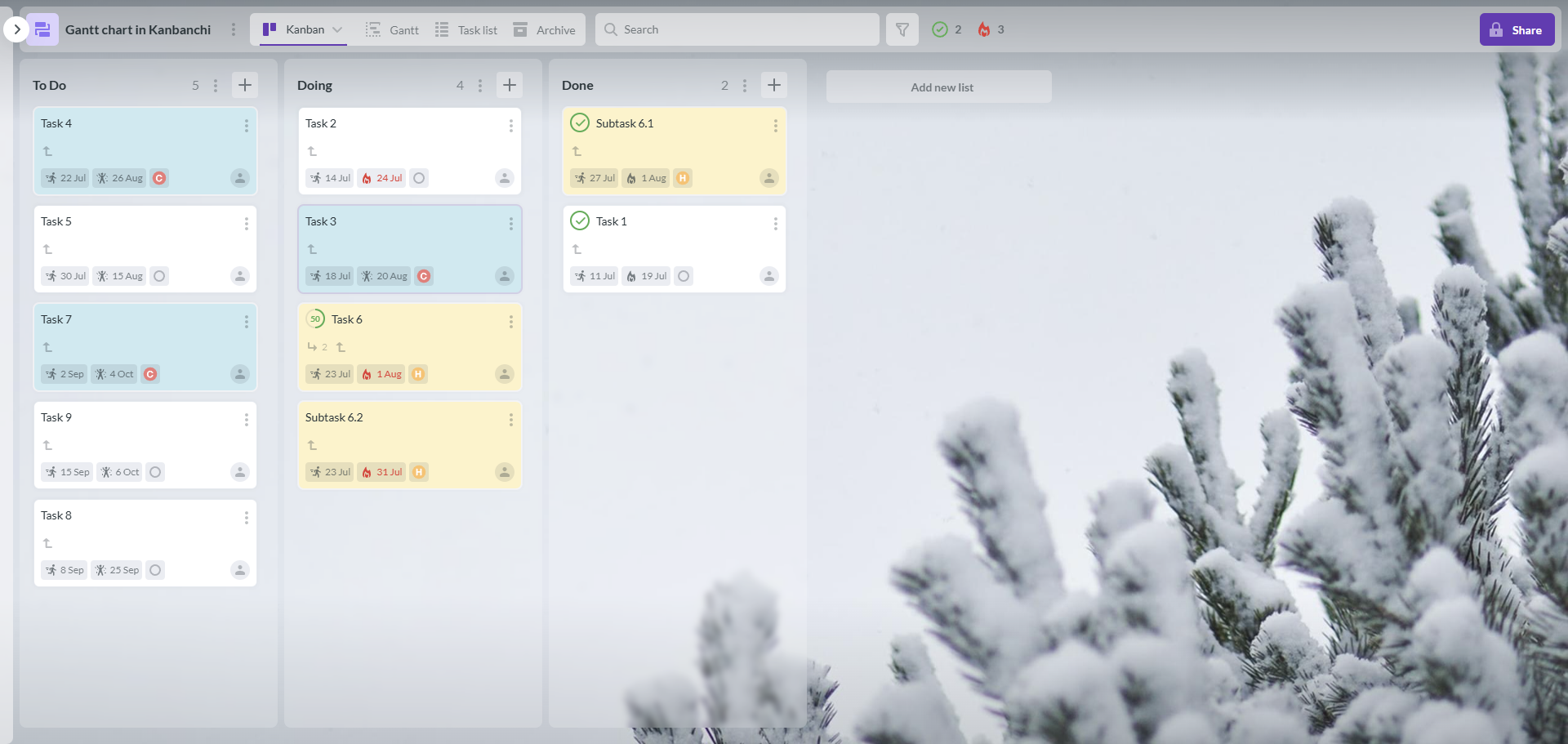
Kanban view of the same board
Switch to the Kanban view, and nothing has been recreated. These are the same tasks, now grouped by the stage they’re in. Task 3 is still blue, Task 6 still shows 50% complete with its two subtasks, and Subtask 6.1 is still marked done. Every card carries its start and due dates, so the timeline information travels with it. Move a card from Doing to Done here, and the Gantt chart knows about it immediately.
Try out Kanbanchi, and you will see how it lets you plan and control your projects like never before
Built into your ecosystem
Sign in with your Google or Microsoft account. Nothing else needed.
Drive and OneDrive
Attach files and share boards the way you already share documents.
Google Calendar integration
Card dates appear in your calendar, alongside in-app notifications.
Domain-wide deployment
One click in the Google Workspace admin panel.
Intuitive and familiar interface
Most teams are productive in their first session.
Support that answers
94% of requests resolved in one or two interactions.
Join 5000+ amazing companies
already running projects in Kanbanchi with Google Workspace and Microsoft 365
Still deciding which method fits your project? Read Gantt vs Kanban: what to use for my project