
In this Article:
Try Kanbanchi now
Start your free trial

With the growing need for efficient, cloud-based project management systems in organizations, many teams have adopted Google Workspace for help.
Gmail, Drive, Sheets, Calendar, Meet, Forms…Google seems to provide it all, with simple-to-use, collaborative business tools that many people are already familiar with.
But Google alone is not perfect for more complex project management and tracking needs. You can’t create or assign tasks effectively or view project progress. Scattered communications, poor overall project visibility, and “tool overload” can escalate the need for more dedicated project management tools.
Fortunately, dedicated platforms offering enhanced project management capabilities have sprouted up for use within the Google ecosystem.
Want to find out more about how to use Google Workspace for project management? Let’s consider more about the pros and cons of Google environments for project management. We’ll also look at how one dedicated tool (Kanbanchi) was purpose-built for use by teams deeply embedded in Google Workspace.
There’s a lot to love about Google when it comes to project management, even though there is no dedicated project management tool.
Google Workspace provides a collection of apps that can be integrated into an organization’s workflow management. The familiarity and ease of use of these apps are key reasons why teams choose them to collaborate on projects. Anyone with a Google or Gmail account can access these tools with virtually zero learning curve, bringing teams “instant” collaboration and organizational tools.
Google Workspace tools, like Docs, Sheets, Calendar, Chat, and Gmail, are a natural fit for collaboration and provide a superb “backbone” for project management, with easy accessibility, cloud synchronization, and real-time editing. As well as collaborating on projects through Docs, Sheets, and Slides, it’s easy to set up video calls, send messages via Chat, and share screens at the click of a button.
However, using Google Workspace for project management is not without its limitations. Coordinating remote work can be challenging without using other tools alongside the Google apps. The number of different apps required can lead to tool fragmentation. It can also be challenging to assign tasks, while tracking projects effectively in real time usually requires the use of supplemental tools alongside the apps.
Many project management tools boast “seamless” Google Workspace integration. However, when push comes to shove, it’s anything but seamless. Users may find themselves with multiple browser tabs open, manual syncs, or limited data sharing. This confusing setup is, actually …full of seams!
True, seamless Google Workspace integration is really only provided by tools that were designed from the ground up for use in Google environments, like Kanbanchi
Want to convert an email into a task on a Kanban board? Tick!
Want to sync an important meeting in Google Calendar directly from your project management software? Tick!
Want to gather feedback automatically from your project management platform using Forms? Tick!
There’s more to Kanbanchi below, but unless your project management software can integrate seamlessly with Google Workspace apps, it involves extra clicks, windows opening, and potential clutter. That can lead to mistakes and lost productivity.
Let’s take a closer look at the main project management apps provided by Google Workspace.

Google Drive provides a structured, shared workspace for storing project documents with real-time version control and secure access permissions.
Google Drive allows teams to cost-effectively and securely organize, store, and distribute documents, files, and other digital assets.
One of the key issues for teams when collaborating on documents is version control. Ensuring that everyone is working off the latest version of the document is easy with Google Drive. Google Docs, Sheets, and Slides automatically save and sync edits across all users, ensuring everyone sees the most recent version without needing to manually upload or merge changes.
However, if your team is using supplementary, third-party project management tools that do not integrate natively with Drive, this may not be the case. Links, attachments, or version tracking may not sync automatically—which can create confusion over document versions or access permissions.
Make sure your PM tools offer native Google Workspace integration if you rely on Drive for collaborative editing of files. Remember, Workspace offers many useful tools and apps but is not a dedicated project management platform.
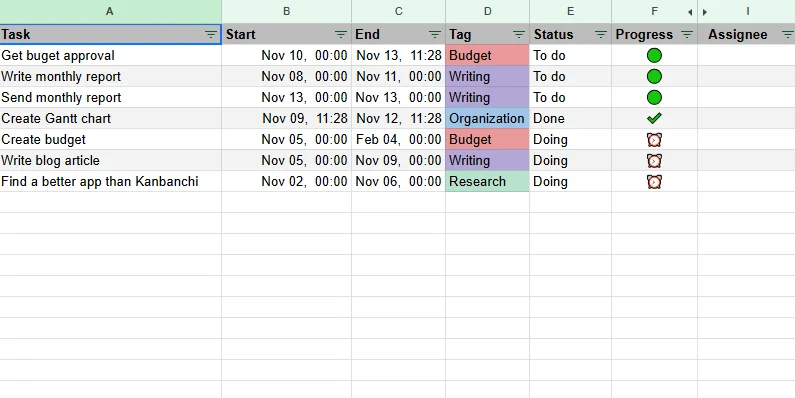
Teams can create task lists, timelines, and priority tags in Google Sheets to monitor project progress in a simple, collaborative format
Google Sheets is a secure, intuitive, easy-to-use, cloud-based spreadsheet app, similar to Microsoft Excel, used by many individuals and teams.
Sheets is especially useful for monitoring project plans, storing and manipulating data, and creating reports collaboratively and in real-time. Again, users with access can work on the latest versions of spreadsheet documents while project managers can plan and manage projects with task lists and timelines, using templates or personalized versions.
Spreadsheet-based project tracking and planning can be effective for organizing work for small teams but is limited and can get confusing for more complex needs or remote work on mobile devices. Identifying bottlenecks, managing workloads and resources, notifying users, and generating rich report data, for instance, requires dedicated project management software.
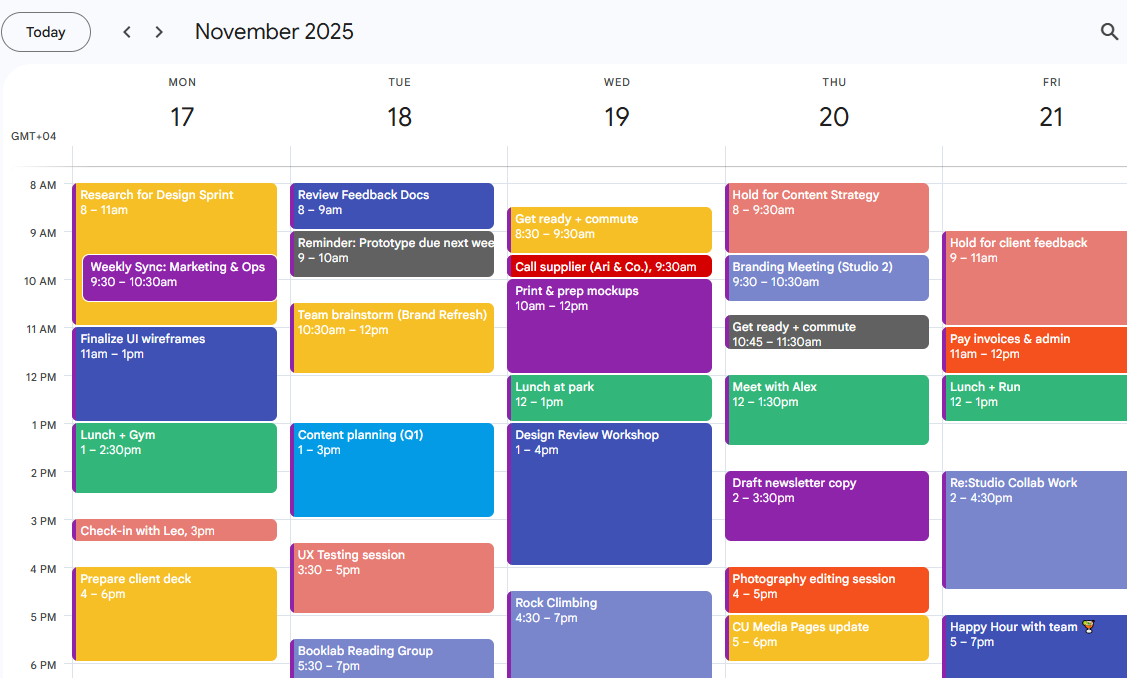
Google Calendar allows project managers and team members to create meetings and project-related events, send invitations, and receive reminders about upcoming deadlines.
Daily and weekly agendas help ensure that important meetings are never missed. The flexible features of Calendar can enhance collaboration, accountability, and productivity when seamlessly integrated with your project management software. Tasks can be linked to projects, while goals, milestones, and other deliverables can be tracked efficiently.
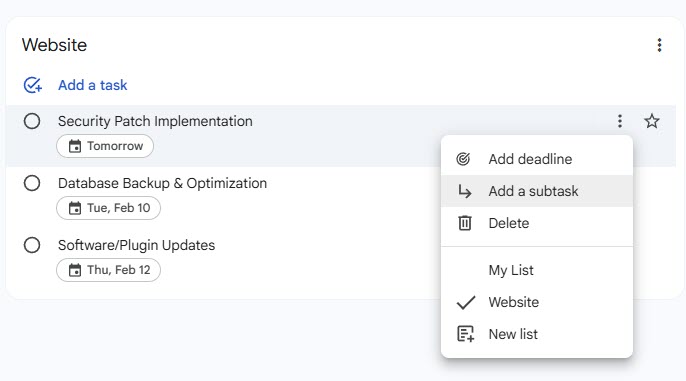 Google Tasks works for individual work, but lacks team assignment features
Tasks live in the Gmail and Calendar sidebar, handle personal to-do lists, and can’t assign work to teammates. It will be enough for your personal to-do list, but it is not a collaboration tool.
Google Tasks is fantastic for remembering to buy milk for the staff kitchen or follow up on a single email. It sits neatly in your Gmail sidebar. But for team collaboration? It’s virtually non-existent.
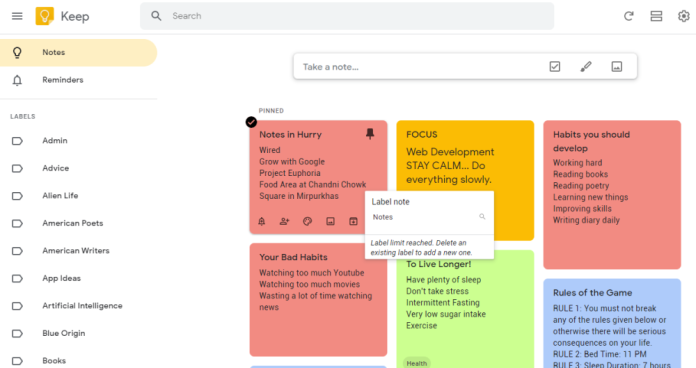 A Google Keep dashboard used for brainstorming
While excellent for capturing loose ideas, the scattered layout and “Label limit reached” warning illustrate why it fails as a structured project management tool.
Also, the absence of columns, swimlanes, or status indicators makes it immediately clear to the reader that managing a complex project here would be impossible.
We’ve all seen it: the person who tries to manage a project entirely through Gmail labels. While it keeps your inbox organized, it doesn’t provide a visual workflow. It’s a reactive way to work, not a proactive one. It can also create backlogs and confusion…
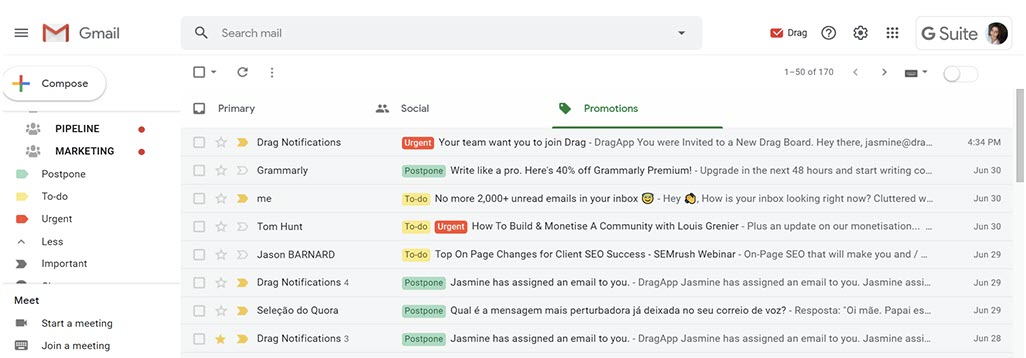 A Gmail inbox attempting to function as a project tracker using labels and filters
For instance, Dan might have noticed several follow-up emails from the client requesting changes to the task. But Joanne didn’t see them, as he’d incorrectly labeled them, so she didn’t get the memo. And so it rumbled on…until the deadline loomed, and nothing was finished.
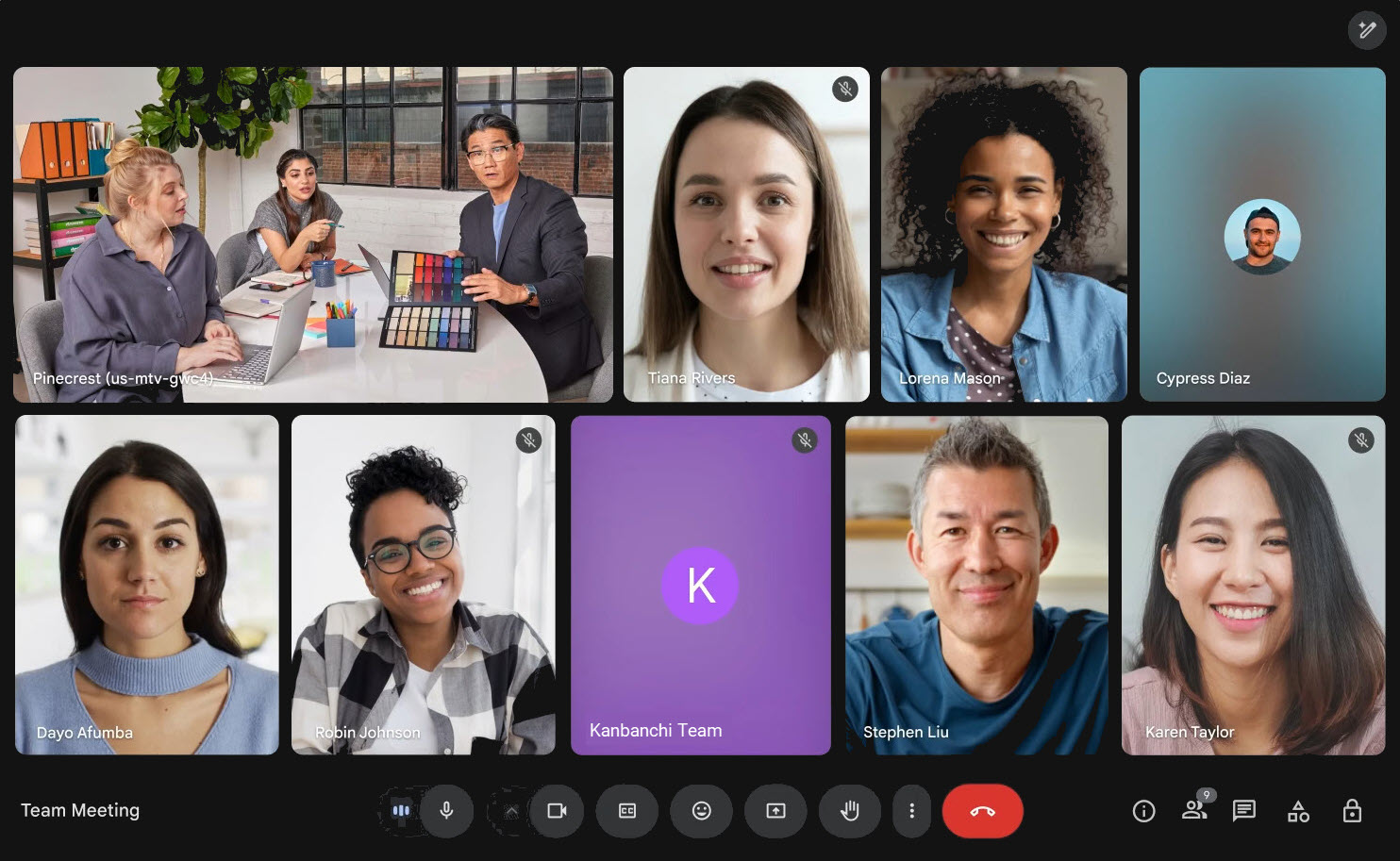 Enable real-time collaboration through organized conversations, video calls, and integrated file sharing with Google Chat and Meet
Google Chat provides a centralized space for project managers and team members to communicate in real time, share files, and collaborate on project updates. Organized chat rooms and threaded conversations help keep discussions focused and easy to follow.
When integrated with Google Workspace tools like Drive and Docs, Chat enables teams to streamline communication, reduce email clutter, and maintain transparency across projects. This integration fosters faster decision-making and strengthens team coordination.
Google Meet enables project managers and team members to connect through high-quality video meetings, fostering real-time collaboration and effective communication regardless of location. With features like screen sharing, live captions, and meeting recordings, teams can present updates, review documents, and align on project goals seamlessly.
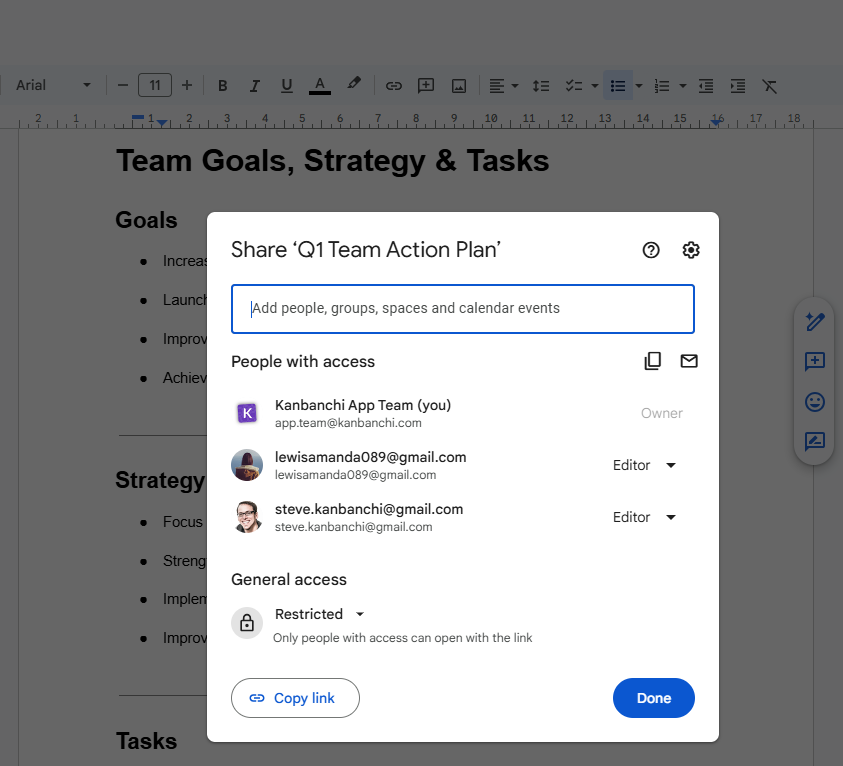 Docs and Slides allow teams to create and edit project documentation and presentations together in real time
Google Docs is an essential planning, productivity, and creativity tool for Google-based remote work, allowing individuals and teams to collaborate in real-time on text documents in various formats, including .docx, .pdf, etc.
Google Slides, on the other hand, allows teams to plan, design, and collaborate on presentations, proposals, and other visual, slide-based documents. It also supports screen sharing and live presentations during online meetings through Google Meet.
Teams can use these tools to create, edit, and collaborate on content in real time, but their true power is unlocked when integrated with dedicated project management software—allowing seamless planning, tracking, and reporting on projects from start to finish.
Seamless integration among Google’s tools enables users to streamline workflows and enhance productivity. For instance:
To understand more about how to use Google Workspace for project management, let’s cover a few practical steps to incorporate the main Google tools into your workflows. These will help you build a simple, lightweight project management system using Google Workspace.
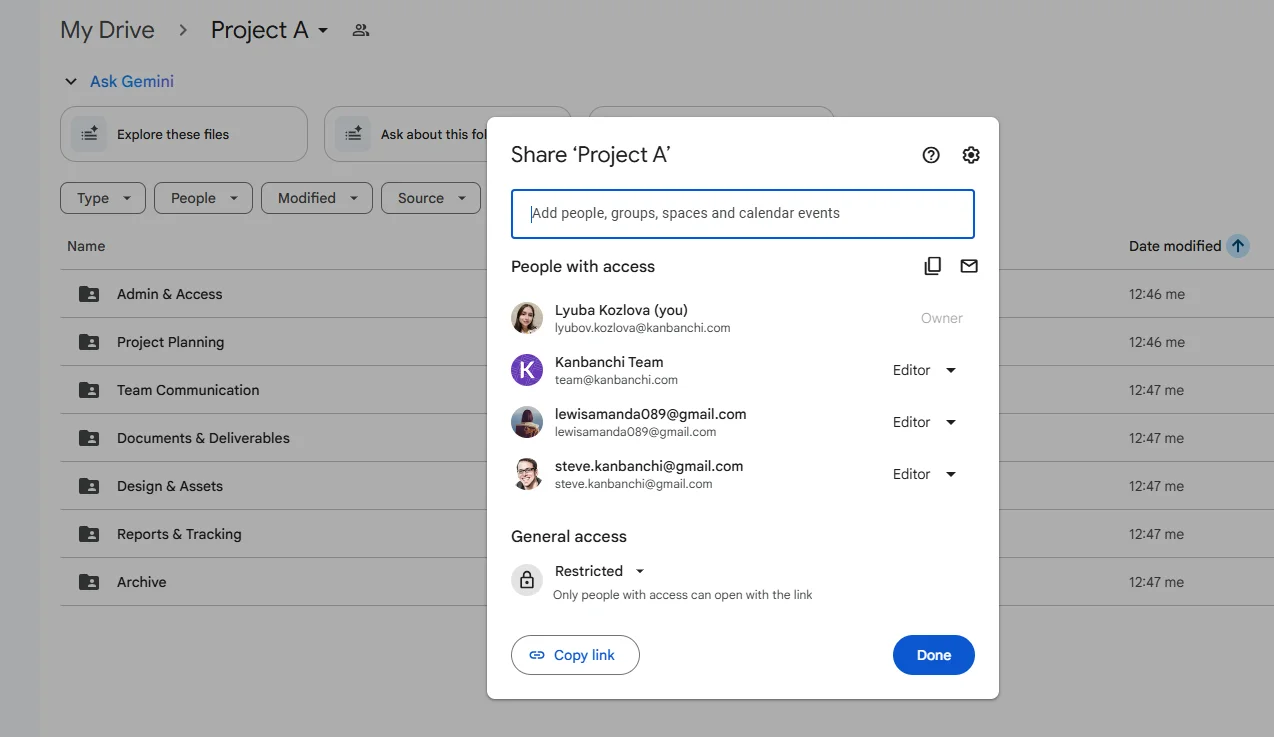 A shared folder structure in Google Drive helps teams organize project files, set access levels, and maintain a clear workflow.
The first step is to set up a shared Google Drive folder structure for your team. This will help organize files clearly, control access, and make collaboration easy and secure. How you do this will partly depend on team preferences, but it generally involves three or four main tasks:
For a fuller treatment of Drive folder structure, naming conventions, and permission levels, see Google Drive Project Management.
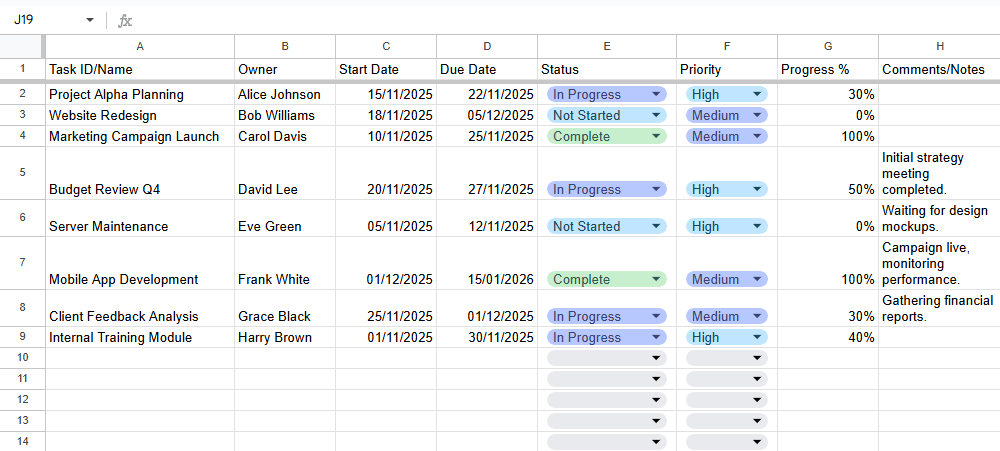
A project tracker built in Sheets enables teams to manage tasks, statuses, priorities, and deadlines in one centralized document
When working out how to manage projects in Google Workspace, project tracking is essential. Creating a project tracker in Google Sheets is an easy and flexible way to monitor tasks, deadlines, progress, and team responsibilities in real time.
o Status = Complete → Green background
o Status = In Progress → Yellow
o Status = Not Started → Red
o Priority = High → Light red text
o Priority = Low → Light gray text
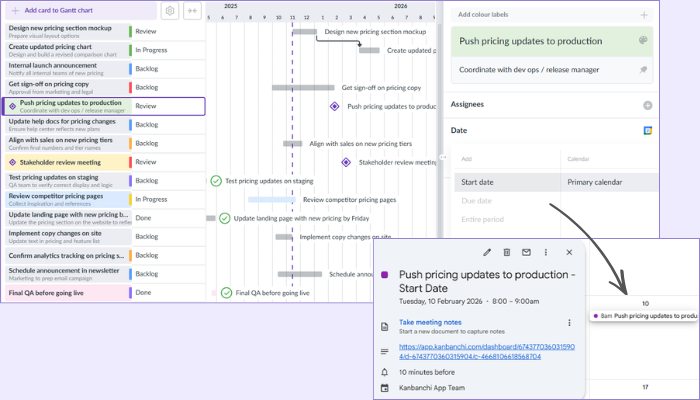 Project milestones can be added to Google Calendar for easy timeline visualization and automated reminders
Scheduling project milestones in Google Calendar is a great way to visually track key deadlines, sync them with your team, and receive reminders when using Google Workspace for project management.
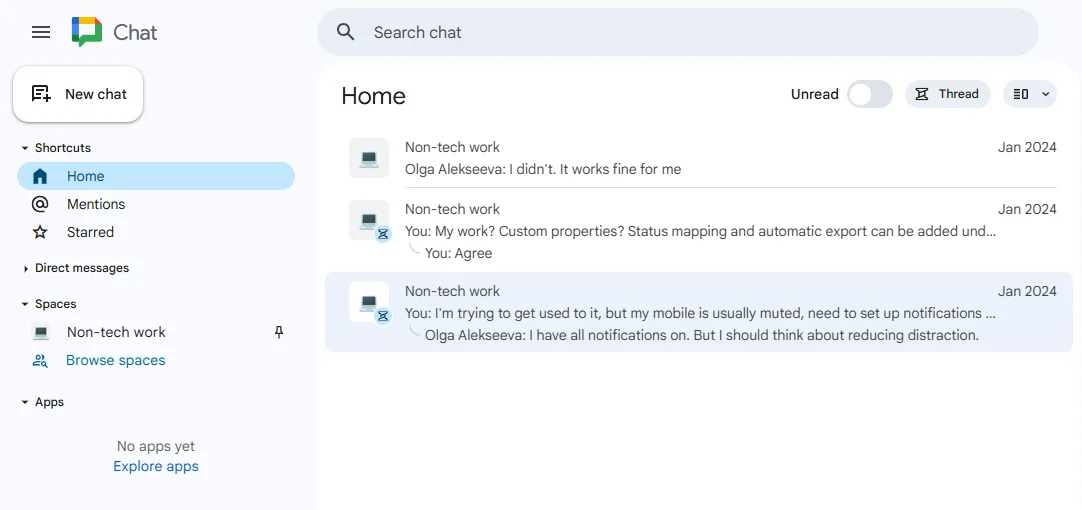
Dedicated Spaces and scheduled Meet calls help teams maintain organized communication and consistent collaboration
Setting up team communication channels using Google Chat and Google Meet helps teams stay connected, share updates, and collaborate in real time when using Google Workspace for project management.
Google Chat is for day-to-day messages, team discussions, and topic-based spaces, while Google Meet allows you to manage video meetings, 1:1s, and virtual collaboration. Both tools integrate with Gmail, Calendar, and Drive—so everything stays synced.
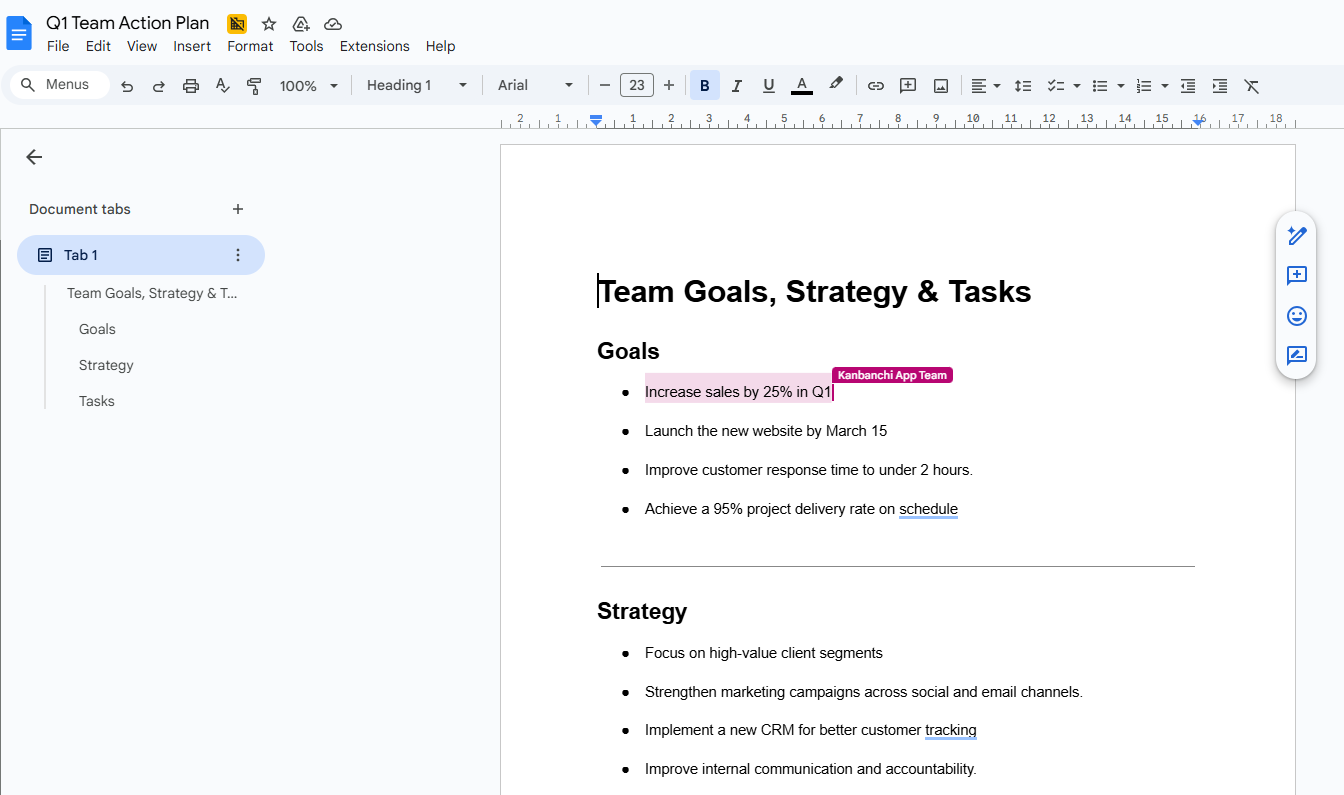
Google Docs allows multiple users to edit simultaneously, leave comments, assign tasks, and track document history effortlessly
Another key component of using Google Workspace for project management is collaborating on documents and sharing updates. This allows teams to work together in real time, without endless email threads or version confusion.
Read more articles related to Google Workspace here
More articles about managing projects here
If you’re wondering how to use Google Workspace for project management, bear in mind that the Google tools alone will NOT provide a complete project management solution. They are not designed to do that, but are best used as collaboration tools within a more comprehensive project management software environment.
Although they are convenient, powerful, and cost-effective, Google Workspace tools are mainly limited by the following:
So, can you use Google Workspace apps alone? It’s possible to cost-effectively manage tasks with the Workspace apps, but most organizations require a more advanced project management solution that integrates with these apps.
Many teams start project management in Google Workspace with just spreadsheets. While intuitive at first, relying solely on Google Sheets quickly becomes risky as a project grows in complexity, size, or duration. Simply put, spreadsheets are not databases, nor are they designed to handle complex project workflows.
The friction point lies in the lack of automation and the fact that there’s little visualization. When using Sheets for project management, teams will find several critical shortcomings:
So, you can see that hacking Google Sheets for professional project management is unsustainable in the long run. It spends too much time on manual input and too little on automating tasks. There’s a need for a better solution.
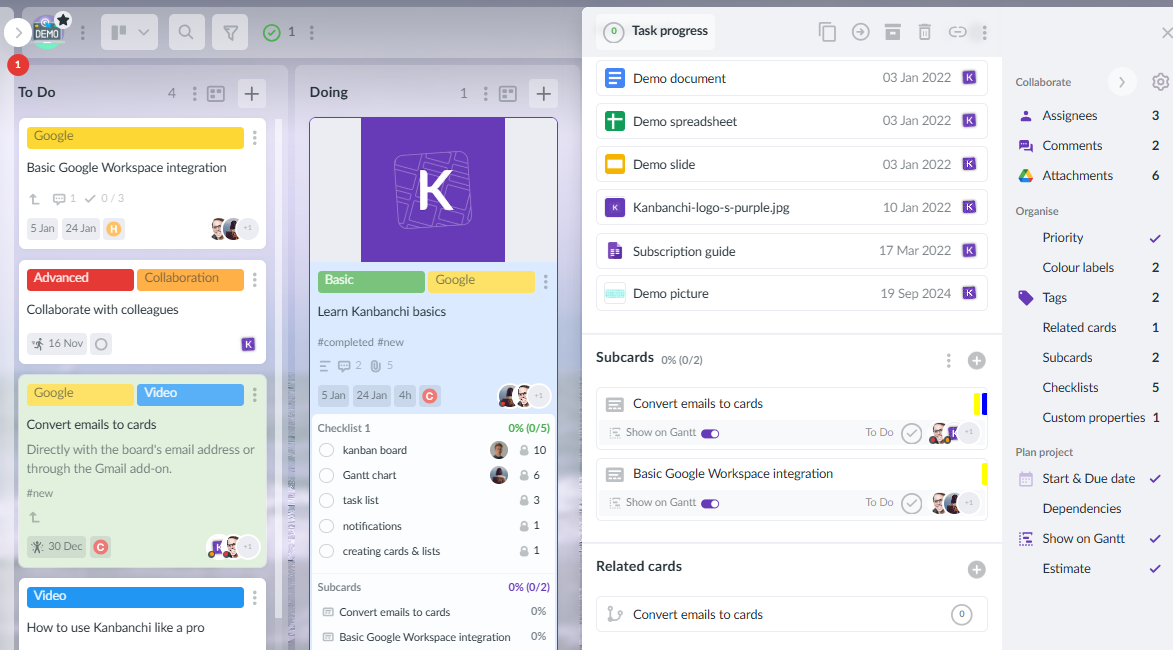
Kanbanchi provides Kanban boards, Gantt charts, dashboards, and native Google Workspace integration to create a unified project management hub
To develop a project plan with Google Workspace, you need at least the following apps:
So, basic project management tasks can be done with Google Workspace—but with a non-unified, patchwork system.
Kanbanchi helps you pull all these apps together in one unified system, with a central platform to work from, and with dedicated project management tools that compensate for the limitations of Google Workspace.
The platform does not replace anything in Google Workspace. Kanbanchi works within the Google ecosystem to create a more unified, scalable approach for project management—from consultants and small businesses up to the enterprise level.
For a ranked comparison of the third-party options, see 8 Best Project Management Software for Google Workspace.
With Kanbanchi as your project management platform, you can:
Unlike most dedicated project management solutions, Kanbanchi integrates natively with Google apps. It was built that way from the start and works seamlessly with the Google tools covered above. Everything can be managed from one centralized platform.
Kanbanchi has evolved into one of the most trusted platforms by Google Workspace users. With a G2 rating of 4.7 and a similarly impressive rating on the Google Workspace Marketplace, it is consistently ranked as one of the best project management apps by users.
Anything we’ve missed in our guide? You’ll find the answers below in our FAQ section.
No, Google does not offer a single, unified, enterprise-grade project management tool. Google Workspace offers powerful tools like Google Tasks for personal to-do lists and Google Sheets for simple tracking. However, it lacks critical features for professional management, such as built-in Gantt charts, advanced dependency tracking, and visual resource management. Kanbanchi fills this gap, providing the full Google project management software functionality while remaining seamlessly integrated with the Google Workspace environment.
The core applications like Sheets, Tasks, Calendar, and Docs are included with your Google Workspace subscription (which requires a paid subscription). However, pro solutions like Kanbanchi operate on a paid subscription model. These tiers unlock crucial features, including Gantt charts, time tracking, and advanced reporting.
Yes, you can use Google Sheets for project management, particularly for very small, simple projects or personal task lists. It’s highly flexible and collaborative. However, relying on Sheets for complex, large-scale projects carries risk, as we’ve outlined above. A dedicated project management in Google Workspace solution eliminates these manual pain points.
The best way to achieve comprehensive Google project-tracking software functionality is to integrate a specialized app like Kanbanchi, which works natively within the suite. This approach combines the security and familiarity of Google Drive (where your files and data reside) with the professional features of a PM tool (Kanban, Gantt, time tracking). It provides accurate, real-time tracking that fragmented native apps cannot deliver.
The most effective way is to use a Google-native PM app like Kanbanchi. It offers a Gmail add-on that lets you convert emails into tasks with one click and uses Google Drive as its primary file storage.
Different question, and it needs a proper answer rather than a line here. We go through integration depth, Kanban and Gantt support, single sign-on, and time tracking in Finding the Best Google Workspace Project Management App.
Google Workspace offers a powerful set of collaboration tools that can be of great use to project managers and teams embedded within the Google ecosystem.
You can elevate that to full-scale project management with a unified and scalable approach using Kanbanchi, increasing productivity without switching platforms. Simply add Kanbanchi to your existing platform as the missing project management layer to enhance overall team performance.
Want to learn more about how to use Google Workspace for project management with Kanbanchi? Explore your options in a free trial!



In this Article:
Start using Kanbanchi now
Start your free trial