
In this Article:
Try Kanbanchi now
Start your free trial
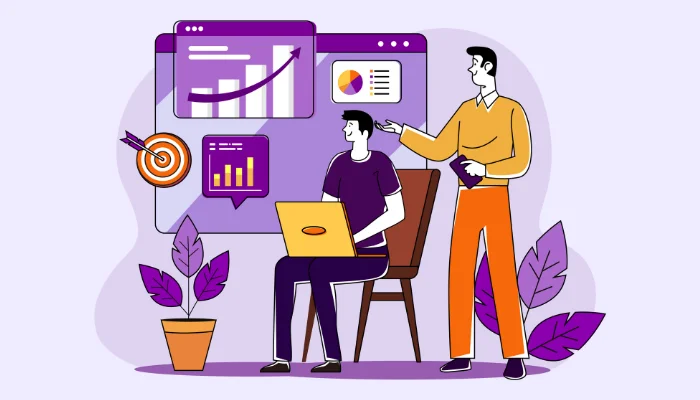
The Agile Project Management methodology (APM) is a framework that breaks projects down into several dynamic and iterative phases during their life cycles. In doing so, it offers greater flexibility and adaptability to adjust work as the project progresses, while improving customer focus, collaboration, and speed of delivery compared to traditional project management methods.
The value of this cannot be understated in today’s competitive environments, where every little advantage counts.
Once used almost exclusively in software development projects, APM methodologies have been adopted more widely in recent times across other sectors, too.
But what is Agile Project Management exactly? How does it differ from traditional methods? Why are more organizations adopting the methodology? What do Agile teams look like? And how can you introduce it effectively into your organization?
Read on for answers to these and other questions about the Agile methodology for project management…
Organizations that adopt the Agile Project Management methodology do so mainly because:
Agile Project Management methodology is designed to enhance how projects are managed and, ultimately, to produce better results.
Traditionally used mainly in IT-based and software development teams, Agile Project Management methodology is increasingly implemented across entire programs in operations, marketing, HR, business development, and finance departments in the following sectors:
Learn more about Project Management Methodologies
Traditional project management methodology is known as the “Waterfall” approach, where a clearly defined sequence of execution is planned and project phases advance only after each phase receives final approval.
This is a highly rigid, linear, and sequential system with “blocks of time” allocated to phases of the project. Returning to previous stages can be awkward and costly.
With project management Agile methodology, the sequences may be similar but smaller stages are incorporated, featuring regular feedback loops and allowing teams to adjust according to the project needs.
The following table outlines the main pros and cons of the waterfall methodology compared to the Agile methodology:
| Waterfall | Agile | |
|---|---|---|
| Approach | Linear, sequential process with distinct phases. | Iterative and incremental approach focused on flexibility and adaptation. |
| Main Pros |
|
|
| Main Cons |
|
|
| Best for | Projects with well-defined requirements and minimal expected change. | Projects requiring flexibility, innovation or frequent stakeholder input. |
| Team structure | Specialized, phase-based teams (e.g., design → development → testing). | Cross-functional teams collaborate throughout the process. |
| Customer involvement | Limited until final delivery. | Continuous feedback throughout development. |
| Risk management | Risks often discovered late in the process. | Risks identified and mitigated early through iteration. |
| Timeline & Delivery | Delivery at the end of the project. | Continuous delivery in smaller, functional increments. |
In summary, traditional project management methods require extensive upfront planning to define a target and a series of linear steps to get there, all focused on the final target. The Agile methodology in project management defines a vision and outlines a broad direction that teams can adapt as they head towards the vision. Hybrid approaches combining Agile and Waterfall methodologies are also possible.
Kanbanchi supports Agile workflows natively for Google Workspace users, reducing the technical tools and know-how needed to switch to an Agile Project Management methodology.
BOOK A FREE TRIAL OF KANBANCHI
The Agile Manifesto was developed by 17 software developers who met at a ski lodge in Utah in 2001. It includes four main tenets and 12 core principles that form the basis of the methodology, and which we look at below.
The principles of Agile methodology project management outlined in the manifesto shape the mindset and workflow of Agile teams. They speak for themselves:
As you can see, the cornerstones of Agile Project Management methodology—flexibility, customer collaboration, and continuous improvement—are all there.
When we refer to “Agile” frameworks and methodologies, there are several popular methods to choose from, as well as some lesser-known ones…
So, what is the Agile Project Management methodology best suited to your organization? Let’s find out…
Scrum is a popular Agile methodology for small teams, led by a “Scrum Master” whose main role is to clear obstacles for other team members who execute the day-to-day work.
In Scrum (and Agile Project Management in general), the Product Owner also plays a central role, acting as the voice of the customer and the bridge between stakeholders and the development team.
The Scrum methodology involves short, time-boxed periods (usually 1-4 weeks) during which a specific set of work is planned, developed, tested, and reviewed. These are known as “sprints” and are the heartbeat of Scrum-based Agile Project Management methodology.
Each sprint is started during a “Sprint Planning” event, which outlines everything to be delivered during the block of time. Sprints aim to deliver small, usable increments of the product regularly—enabling feedback, adaptation, and continuous improvement.
During a short daily meeting (“Standup”) lasting around 15 minutes, team members synchronize progress, discuss active tasks and challenges, and adjust plans as required.
After the work has been completed, the team presents the completed product increment to stakeholders for feedback during a Sprint Review. Following the review, a Sprint Retrospective discusses what went well, what didn’t, and how to improve the next sprint.
The Kanban method is a more visual approach to Agile Project Management than Scrum. Traditionally used mainly in the manufacturing sector, it is now widely used across industries using online tools like Kanbanchi, Trello, and other popular project management software.
The Kanban methodology adopts a series of Boards, Columns, and Cards to present workflows visually to teams, with tasks moved from the To Do column to Doing and, finally, Done as each stage of the development process is completed.
Using the Kanban methodology, teams can:
It’s easy to see from this how Kanban fits into the principles of the Agile methodology for project management.
A few other methodologies may be used in project management for various types of teams:
Whichever project management Agile methodology you choose for your organization, it can be combined with other methods to suit the project goals.
We’ve already touched on some of the roles and responsibilities of Agile team members. Here’s a fuller breakdown:
| Role | Responsibilities |
|---|---|
| Product Owner |
|
| Scrum Master |
|
| Development/Delivery Team Members |
|
| Stakeholders |
|
| Agile Mentor |
|
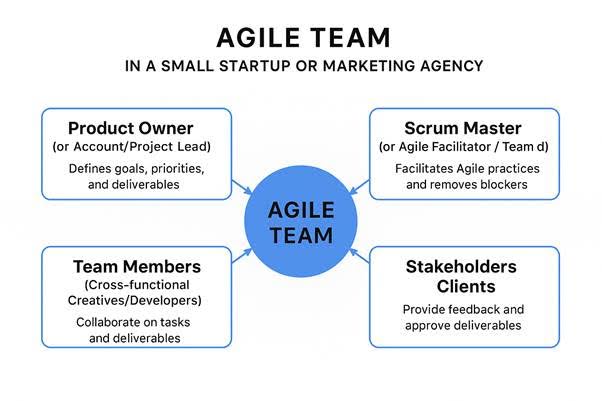
An Agile team in a small startup or marketing agency should be lean, flexible, and cross-functional—with overlapping roles and rapid feedback loops to deliver value fast and stay creative.
Team size may be around 5–9 people (small and highly collaborative), with sprints held every 1–2 weeks to maintain momentum and responsiveness. Meetings should be short and informal, with daily stand-ups, weekly reviews, and quick retrospectives.
Here’s how the team structure may look:
Agile teams use a variety of tools, techniques, and metrics to manage projects effectively. The best tools for Agile Project Management methodology help teams collaborate efficiently and track progress in real-time. Here are a few examples:
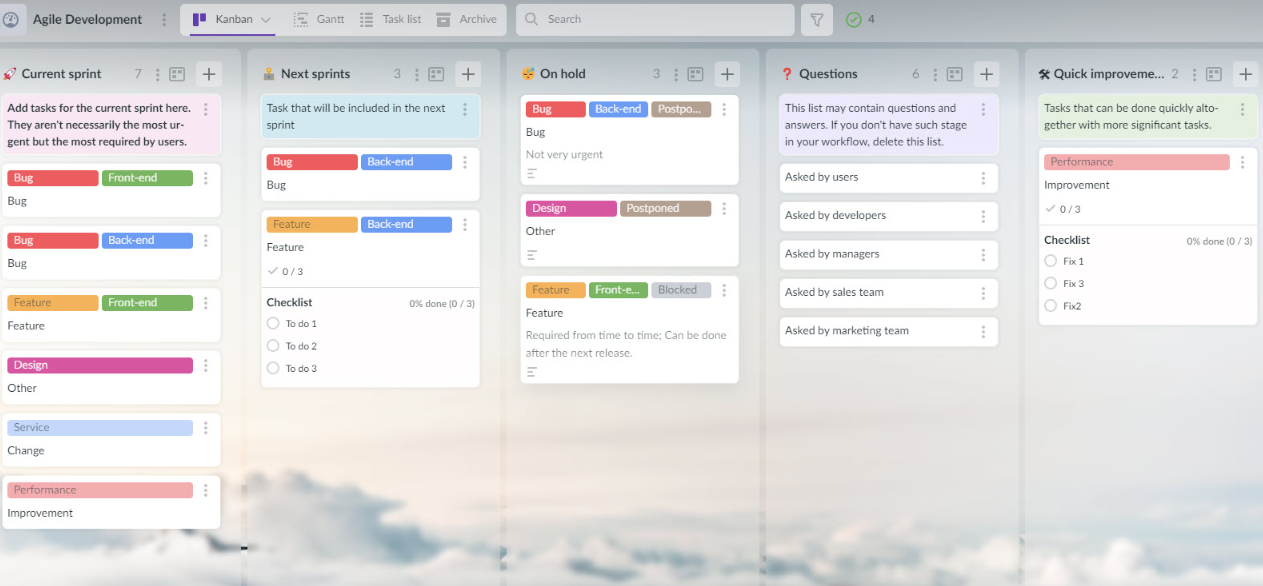
Kanbanchi is a popular Kanban-based project management tool built specifically for Google Workspace. It allows teams to manage backlogs, sprints, and tasks visually and cost-effectively—both online and offline, and with custom reporting to measure progress.
The Kanbanchi tools are fully integrated with Google Drive, Docs, and Sheets. Tasks and boards can be shared via Google Chat and Calendar. The platform features real-time collaboration and file attachment from Google Workspace.
With flexible pricing options, Kanbanchi is used widely by many types of Kanban-based agile teams in Google environments, from freelancers and small teams up to the enterprise level.
BOOK A FREE TRIAL OF KANBANCHI
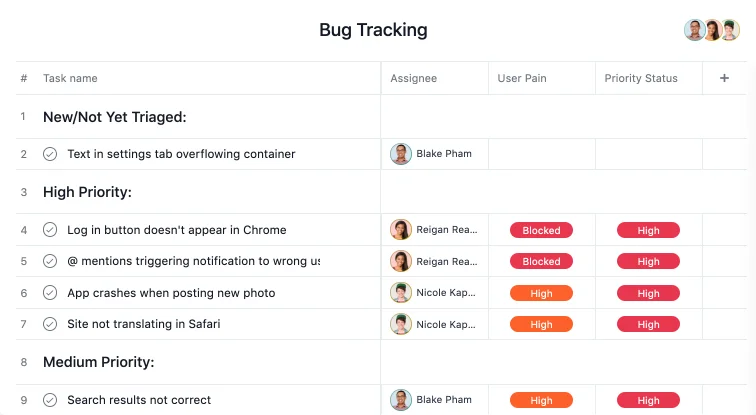
Asana is another flexible project management tool suitable for both technical and creative Agile teams. It is feature-rich and supports sprints, backlogs, and task dependencies but is a little more expensive for larger teams than Kanbanchi.
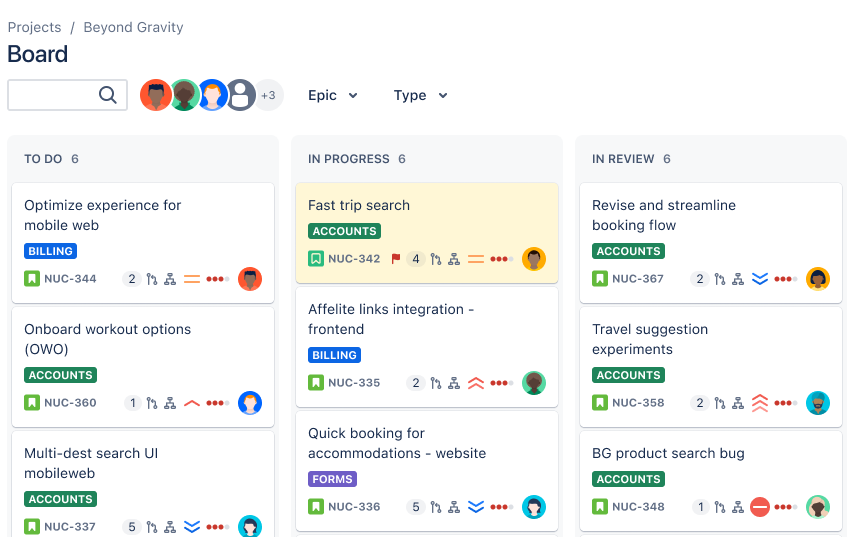
Jira is another robust Agile project management platform often used for software development, actively supporting Scrum, Kanban, and hybrid workflows. This tool is highly configurable for custom issue types, offers excellent reporting with real-time insights, is scalable and secure, and offers a massive integration ecosystem.
If you’re still wondering what is Agile methodology in project management—in terms of the specific techniques used—the following overview should help (we’ve covered some of these already but this is a useful summary of techniques):
| Technique | Description | Purpose/Benefit |
|---|---|---|
| Product Backlog | A prioritized list of all project work—features, tasks, and enhancements. Managed by the Product Owner. | Ensures focus on the highest-value work and allows dynamic reprioritization. |
| User Stories | Short, simple descriptions of a feature from the user’s perspective (e.g., “As a user, I want to…”). | Clarifies requirements and keeps the focus on user value. |
| Sprints | Time-boxed iterations (typically 1–4 weeks) during which specific tasks are completed and reviewed. | Enables incremental delivery, regular feedback, and continuous improvement. |
| Story Points | Units of estimation used to measure the effort or complexity of a user story. | Helps teams estimate workload and track velocity (how much work is completed per sprint). |
| Retrospectives | Regular review meetings at the end of each sprint to discuss what went well, what didn’t, and how to improve. | Encourages continuous process improvement and team collaboration. |
| Kanban Boards | Visual workflow management tools (columns like To Do → In Progress → Done). | Improves visibility, limits work in progress, and optimizes flow. |
Like with all project management methods, Agile teams must be able to accurately track progress and make adjustments as necessary. Teams using APM do this using a few main metrics:
Velocity measures the number of story points completed in a sprint and helps forecast team capacity and delivery pace.
A burndown chart is a visual representation of remaining work over time. Its main purpose is to track and visualize sprint progress and identify pacing issues.
The Cycle Time is the time taken for a task to move from start to completion, highlighting efficiency and process bottlenecks.
The CFD tracks the number of work items in each workflow stage. This is useful because it measures stability and helps identify bottlenecks.
Also read: PMI Agile Certified Practitioner (PMI-ACP) Exam Guide
It’s time to summarize the benefits and challenges of the Agile Project Management methodology.
In the next section, we consider some of the best practices for implementing the Agile methodology so that organizations can overcome the main challenges and start enjoying the benefits outlined above.
Agile implementation in an organization requires strong leadership and training in the benefits, methodology, and roles associated with Agile Project Management. Those looking to get beginners started should go through a step-by-step process, such as this:
Educate leadership and teams on the Agile Manifesto and its values and principles, emphasizing flexibility, customer focus, and continuous improvement.
Choose the framework that best fits your organization’s work style. This could be Scrum, Kanban or Scrumban, etc.
Agile requires small, self-organizing teams that include all necessary skills (e.g., product, design, development, testing). Within these teams, you’ll need to define the key roles of Product Owner, Scrum Master, etc.
Clarify what you’re building and why, and create a prioritized list of features, tasks, and improvements (Product Backlog).
You’ll need to break the project into short cycles of 1-4 weeks. Then, choose which backlog items to complete in the first sprint and hold a Sprint Planning meeting to set clear goals.
Implement digital tools like Kanbanchi or Jira to track tasks and progress. Kanban boards or Scrum boards can help you visualize workflow.
Conduct daily stand-ups to discuss progress, challenges, and next steps. A Sprint Review should showcase completed work and gather feedback after each sprint. Also, run a Retrospective to discuss what worked well and what to improve next time.
Track Agile metrics like velocity, burndown charts, and cycle time. Combined with feedback, these will help you refine processes and increase efficiency.
Encourage experimentation, transparency, and learning among your Agile team and expand practices to other teams in the organization if necessary.
Now you know what Agile Project Management is, its pros and cons, and how to implement it from the ground up in your organization, it’s time to decide if it’s right for you.
The Agile methodology in project management brings greater flexibility, customer focus, and a mindset of continuous improvement— as well as practical benefits, such as a faster time to market for products. This can help teams solve many of the typical issues faced when confronting projects…
If your teams are deeply embedded in Google Workspace environments, implementing the Agile Project Management methodology is much easier using Kanbanchi’s advanced tools.

In this Article:
Start using Kanbanchi now
Start your free trial