
In this Article:
Try Kanbanchi now
Start your free trial

Does your team use Hive but find it’s becoming a bit unwieldy? You’ve bought into a great tool, but are suddenly finding that what should be helping your productivity is starting to hinder it. Workflows that were easy now feel cluttered… Let’s look at the best Hive alternatives available today.
We’ll explore why teams are making the switch, compare the heavy hitters like Asana and Monday, and, of course, show you why Kanbanchi is the go-to choice for teams who want a visual, seamless experience right inside Google Workspace (will touch on Microsoft too).
Hive has carved out a respectable niche as a productivity platform that combines:
However, many teams find themselves hitting a wall as their workflows evolve. These days, project management isn’t just about having every feature under the sun; it’s about having the right features that actually talk to the tools you already use every day.
Hive is a cloud-based project management and collaboration tool designed to help teams plan work, manage time and tasks, and track progress in one shared workspace. It’s commonly used by:
They need structured task management without having to build systems from scratch. There’s a real need for these tools. According to research from Harvard Business Review, only 35% of projects today are completed successfully. It’s a disappointing rate that reflects ongoing challenges in project delivery and management, as well as the need for more businesses to invest in high-quality software.
Why do teams need a product like Hive? At its core, it’ll help to:
It offers a range of tools within its system, such as:
Hive will only work for teams that need structured task execution, run multiple projects in parallel, or require predictable workflows with moderate customization. So it’ll suit a fair few different setups, but it might not be for everyone.
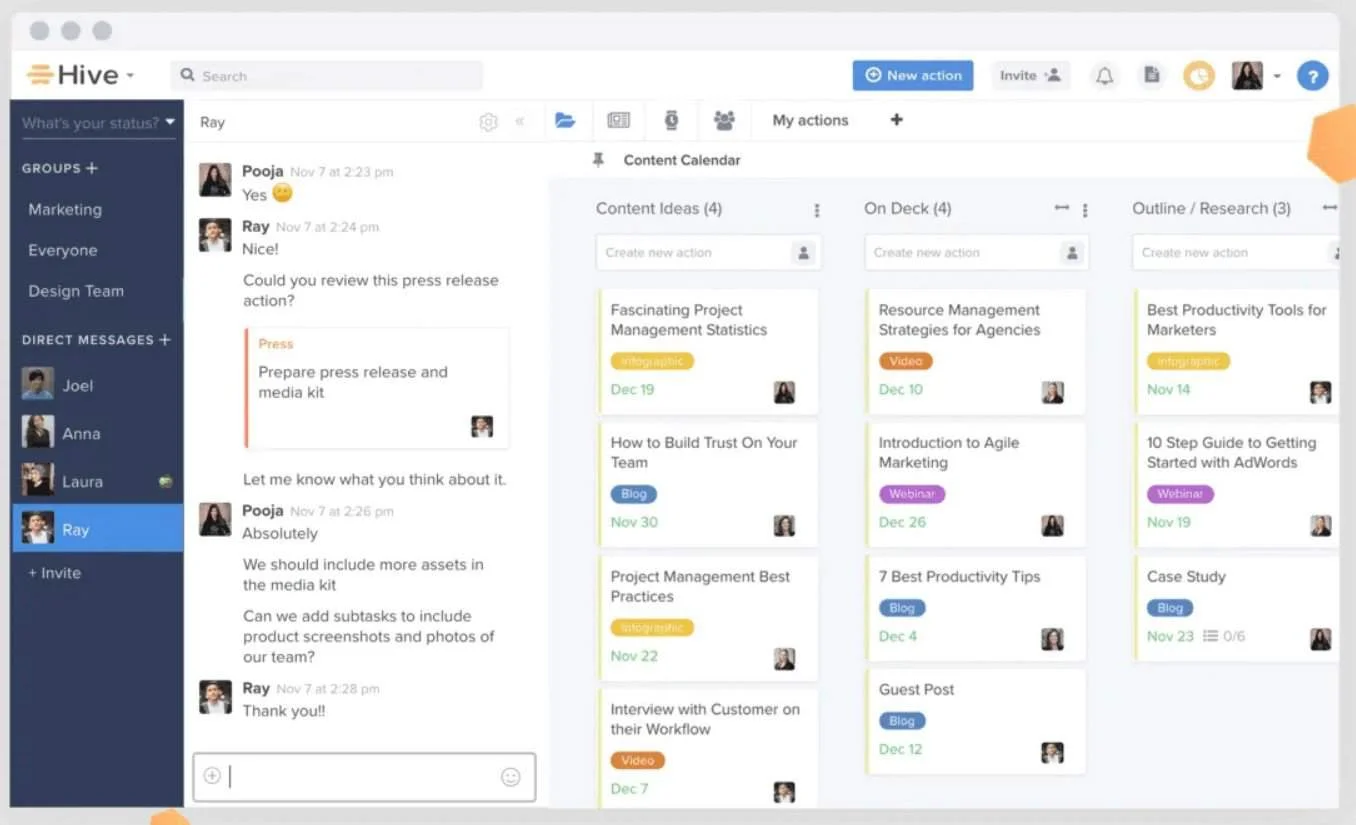
Hive distinguishes itself by merging project planning with communication, allowing users to manage tasks and chat with teammates in a single interface
There’s no doubt it’s a powerful tool. However, Hive may feel limiting if teams need:
Hive is often marketed as the first productivity platform “built by users, for users”. It’s a great sentiment. However, when built by everyone, for everyone, it can sometimes result in a tool that feels like a jack-of-all-trades, master of none. Here are the most common reasons teams might consider alternatives to Hive.
Hive works well at the beginning, but as projects multiply:
Teams often want simpler, more intuitive tools that don’t require heavy setup or ongoing admin work.
For product, strategy, or leadership teams:
This leads teams to look for tools with stronger timeline, goal, and roadmap views.
As teams grow:
Many teams want predictable pricing or tools that offer core features without costly upgrades.
Modern teams rely on tools like Google Workspace. If integrations feel limited, shallow, or unreliable, teams look for platforms that fit naturally into their existing workflow instead of forcing process changes.
Some teams outgrow Hive’s structure and want:
This is especially common for product, marketing, and cross-functional teams.
Leadership often needs clear progress tracking and high-level summaries without manual work. If reporting feels manual or incomplete, teams seek alternatives that provide instant clarity and stakeholder-ready views.
This is especially true for Google Workspace users who have a reporting tool within their suite of tools and want their project management app data fit in.
As teams mature, priorities change:
Hive is task-centric by design, so teams often explore tools built for strategy and roadmapping
Selecting a new project management tool isn’t just about picking the one with the most features. It’s about finding the one that your team will actually use. It’s no good investing in something expensive only to find it suits 50% of your team and leaves the rest unsupported.
Before you pull the trigger on a Hive alternative, ask yourself these four key questions:
If 90% of your work happens in Google Docs, Sheets, and Slides, choosing a tool like Kanbanchi instead is a no-brainer. Having software that requires constant manual uploading and downloading just creates more work for you. If you rely on OneDrive or SharePoint and your team uses Microsoft’s tools, you may also be interested in adding another app, like Kanbanchi, to your stack of integrated apps.
Does your team prefer a bird’s-eye view of a timeline, or do they thrive on a simple checklist?
Many Hive competitors use teaser pricing. The base price looks great, but as soon as you need Gantt charts, Time Tracking, or Private Boards, you’re bumped up to the Enterprise tier or add-ons that you pay for separately. Look for transparent pricing that includes the features you need at a predictable cost.
Do you have a dedicated Project Management Officer (PMO), or are you a DIY team? Some tools have a highly complex setup, like Monday.com or ClickUp. Both of these might require an IT expert to set up. Whereas highly efficient tools like Kanbanchi have little to no setup or downtime and can be up and running in a few minutes.
Once you’ve come up with the answers to these, it should help you on your way to finding out which alternative to Hive will work best for you. With that in mind, we’ve put together an explainer on five of the best tools we think are worth considering for any team looking to move forward with their project management and find the best fit for their needs.
Find more articles on Project Management here
Choosing an alternative isn’t about finding a Hive clone; it’s about finding the tool that solves your specific pain points as a team. There’s quite a lot to think about as we look at how the top competitors stack up in 2026. So, we’ll start right at the beginning with a brief overview.
To help you visualize the landscape, here is how the top Hive alternatives compare on the features that matter most to modern teams.
| Feature | Kanbanchi | Asana | Monday.com | ClickUp | Trello |
|---|---|---|---|---|---|
| Google Integration | Native / Full | Partial (API) | Partial (API) | Partial (API) | Basic (Power-Up) |
| Primary View(s) | Kanban & Gantt chart | List & Timeline | Table / Visual | List & Kanban | Kanban |
| Time Tracking | Professional plan | Premium plan | Pro plan | Built-in | Power-Up |
| Setup Time | ~ 10 mins | Moderately time-consuming | Very time-consuming | A few hours | ~ 10 mins |
| Best For | Google/Microsoft users | Complex Workflows | Creative Teams | Small teams | Personal users |
If your team runs on Google Workspace, Kanbanchi isn’t just an alternative; it’s the logical next step. While Hive tries to build its own ecosystem, Kanbanchi thrives inside the one you already use.
Best for: Google Workspace power users, agencies, and project managers who prioritize visual clarity. Competitive pricing and a superb free trial.
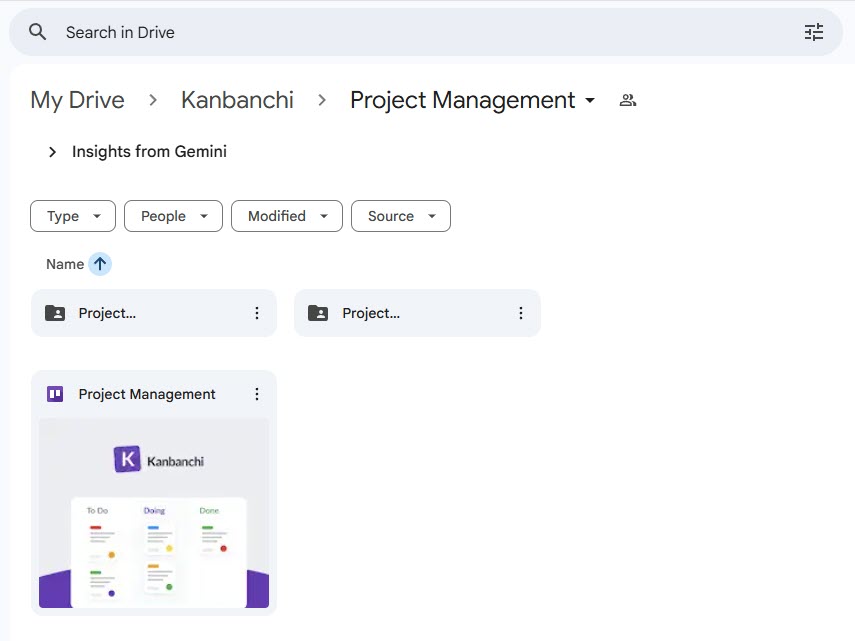
Kanbanchi is the logical Hive alternative that lives directly inside your Google Drive
Why it beats Hive: No more syncing issues. It looks, feels, and acts like a part of Google. Users often praise the intuitive drag-and-drop interface that makes it easy for teams to adopt and manage tasks visually without extensive training.
START YOUR FREE KANBANCHI TRIAL TODAY
Asana remains a titan in the PM space because of its incredible flexibility. It’s excellent for mapping out complex, multi-step processes that require strict dependencies.
Best for: Large teams with complex, cross-departmental workflows.
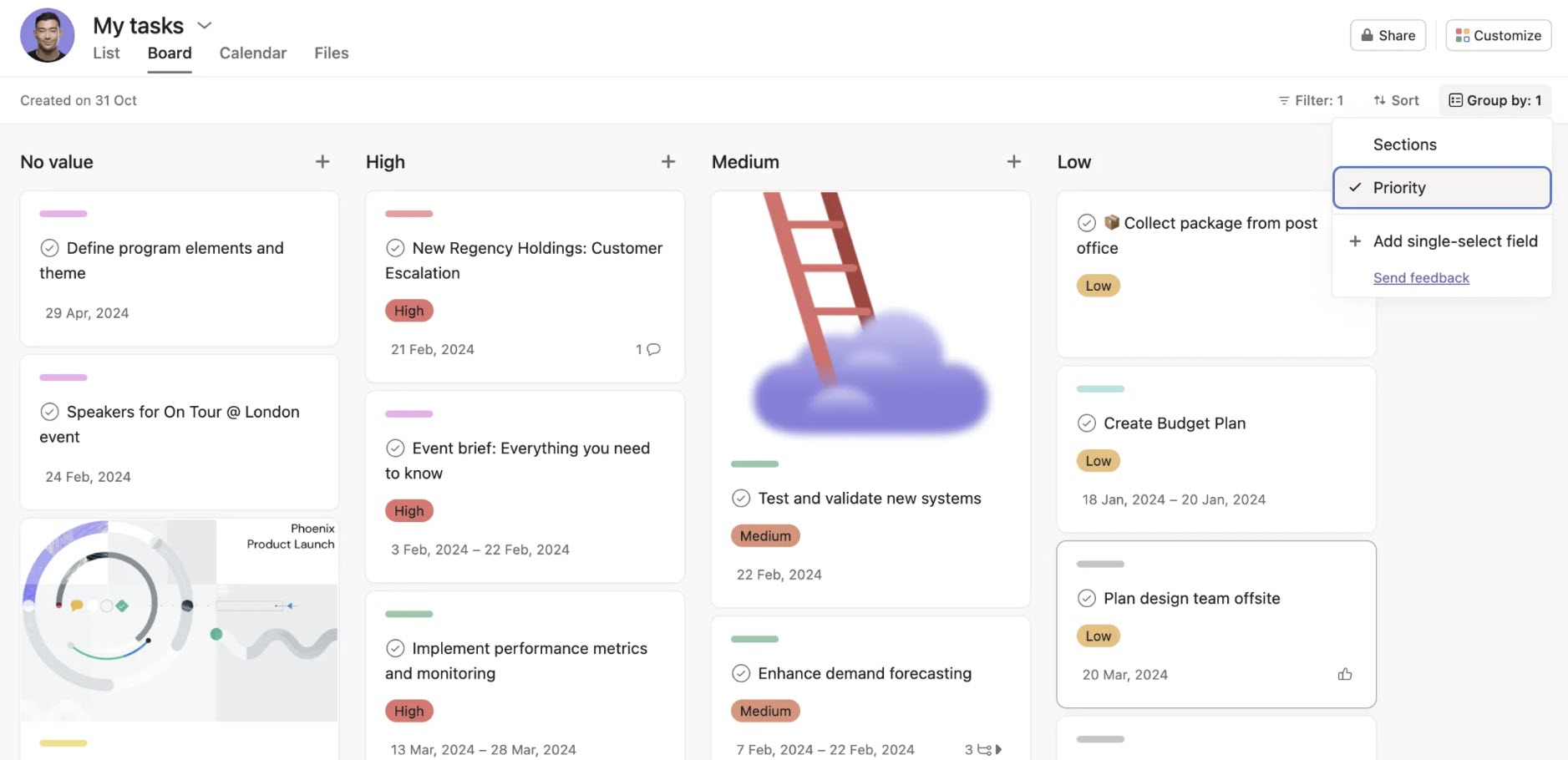
Asana, a top-tier Hive alternative, helps organize your personal to-do list effectively with the My Tasks board view
Why it beats Hive: Asana’s My Tasks view is more intuitive for individual contributors than Hive’s action lists.
Where Hive wins: Hive offers a better, integrated chat feature that allows conversations alongside tasks. Asana often relies on external tools, such as Slack, to carry out these tasks.
Sometimes, less is more. If Hive feels too heavy, Trello is the ultimate lightweight alternative. It popularized the Kanban method for a reason.
Best for: Small teams or simple projects that don’t require deep reporting.
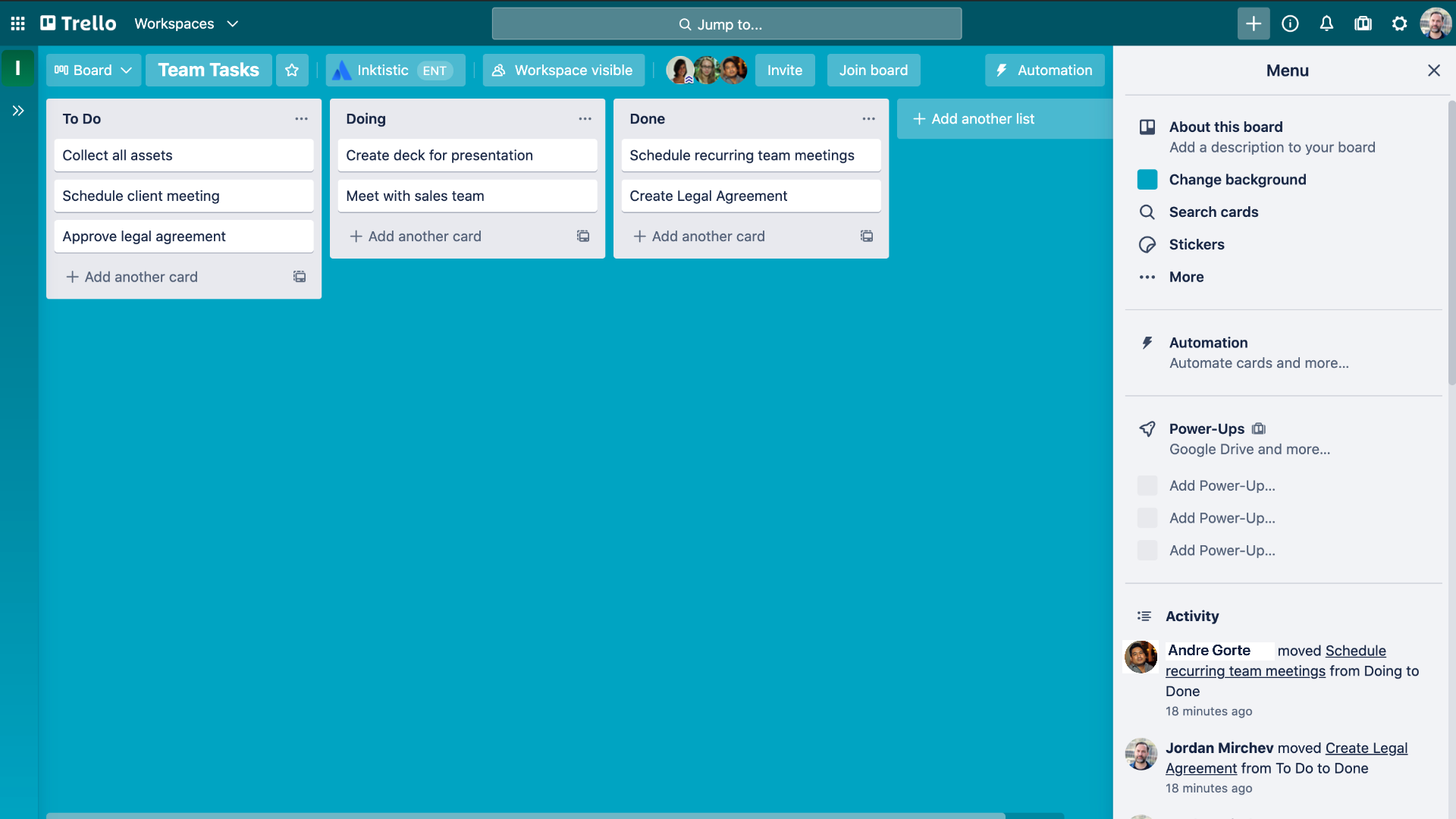
Trello offers a lightweight, easy-to-use interface, making it the best Hive alternative for small teams
Why it beats Hive: If you just need to move cards from To Do to Done without the bells and whistles, Trello is significantly faster to set up.
Where Hive wins: Trello doesn’t include built-in chat, reporting, and resource management, and Hive does.
Monday.com is essentially a highly visual, super-powered spreadsheet. It’s incredibly colorful and customizable, which makes it popular with creative teams.
Best for: Teams that want to build their own bespoke tracking systems from scratch.
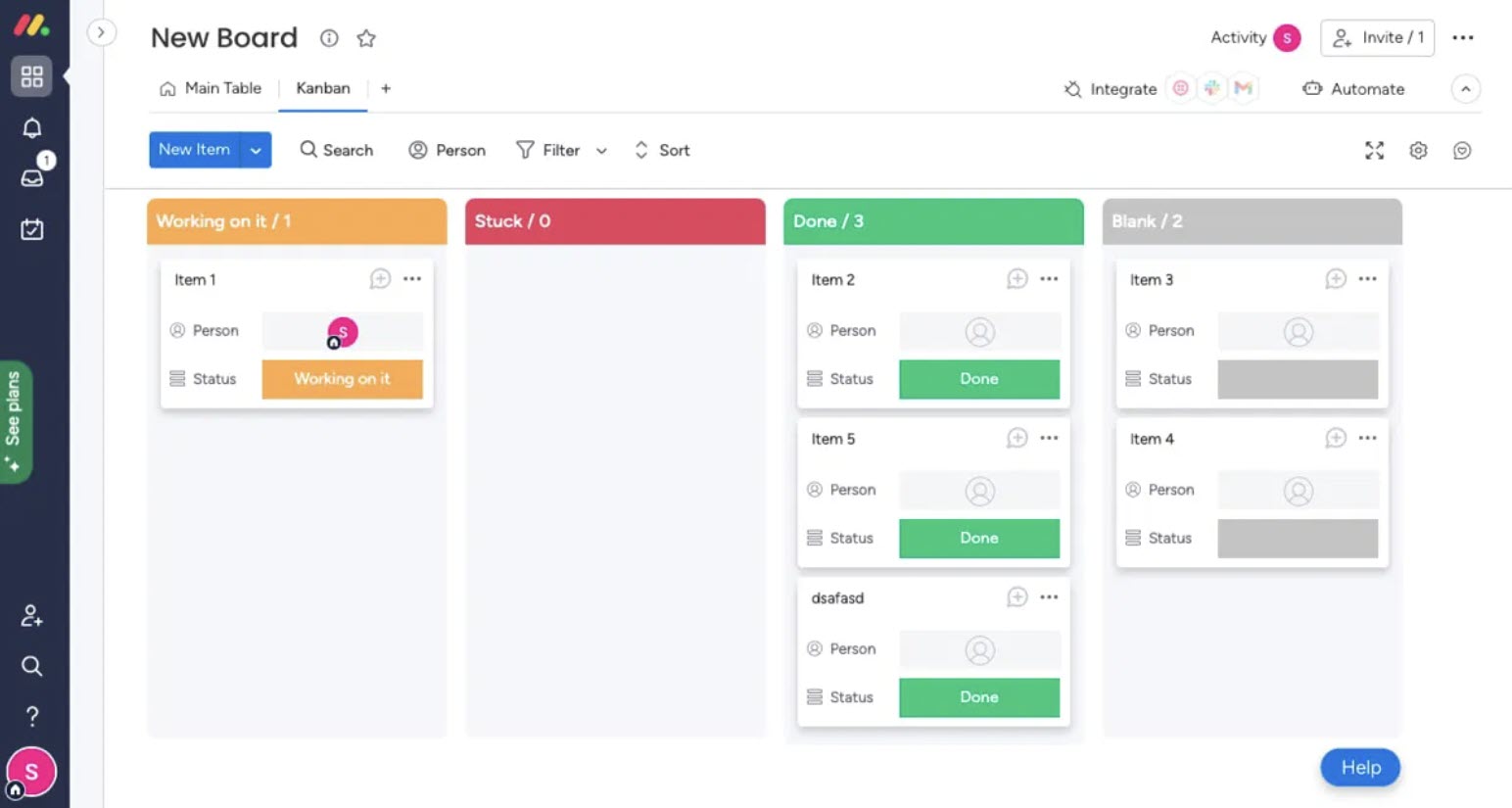
Boost team engagement with the vibrant and flexible dashboards of Monday.com
Why it beats Hive: The interface is generally considered more modern and fun to use, which can help with team engagement.
Where Hive wins: It combines traditional project management with modern tools, offering more features out-of-the-box for some users.
If your reason for leaving Hive isn’t feature bloat, but rather that Hive didn’t have enough features, ClickUp is your answer. It is arguably the most feature-dense tool on the market.
Best for: Teams that want to consolidate all business functions (Docs, Goals, Whiteboards) into a single window.
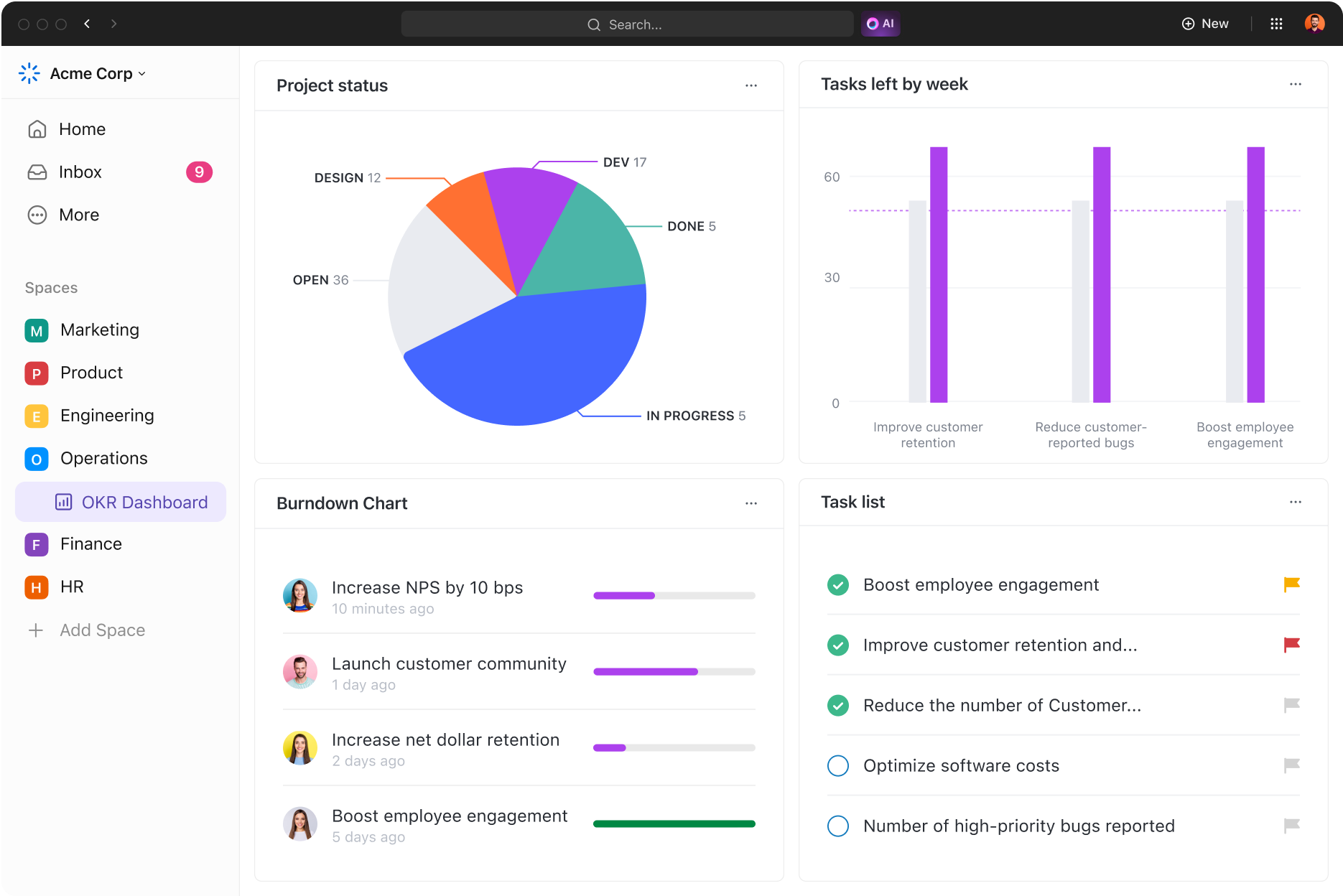
ClickUp is the most feature-rich Hive alternative available, but it may feel overwhelming
Why it beats Hive: It offers a more robust free tier and more granular control over notifications.
Where Hive wins: Praised for a clean, intuitive interface that’s easier for teams to pick up quickly.
While Hive offers a broad spectrum of tools, many teams find that they are paying for extras they don’t actually use, all while struggling with a platform that feels like an outsider to their primary workspace. If your team lives in Google Workspace, Kanbanchi isn’t just another tab; it’ll become the new natural place for your work. Here is why it stands out as the premier alternative.
Most Hive competitors claim to integrate with Google. Usually, this means you can attach a file or sync a calendar event after jumping through several authorization hoops. Kanbanchi is different. It was built specifically for Google Workspace users.
Hive’s interface can sometimes feel like a cockpit, with lots of buttons, many of them unnecessary for daily task management. Kanbanchi strips away the noise to focus on what actually moves the needle: Visual Planning.
You can start with a clean, professional Kanban board to manage daily flow. Need to see the bigger picture? With a single click, your board transforms into a Gantt Chart. You can adjust schedules by simply dragging the edges of a task bar, and the changes reflect instantly across all views.
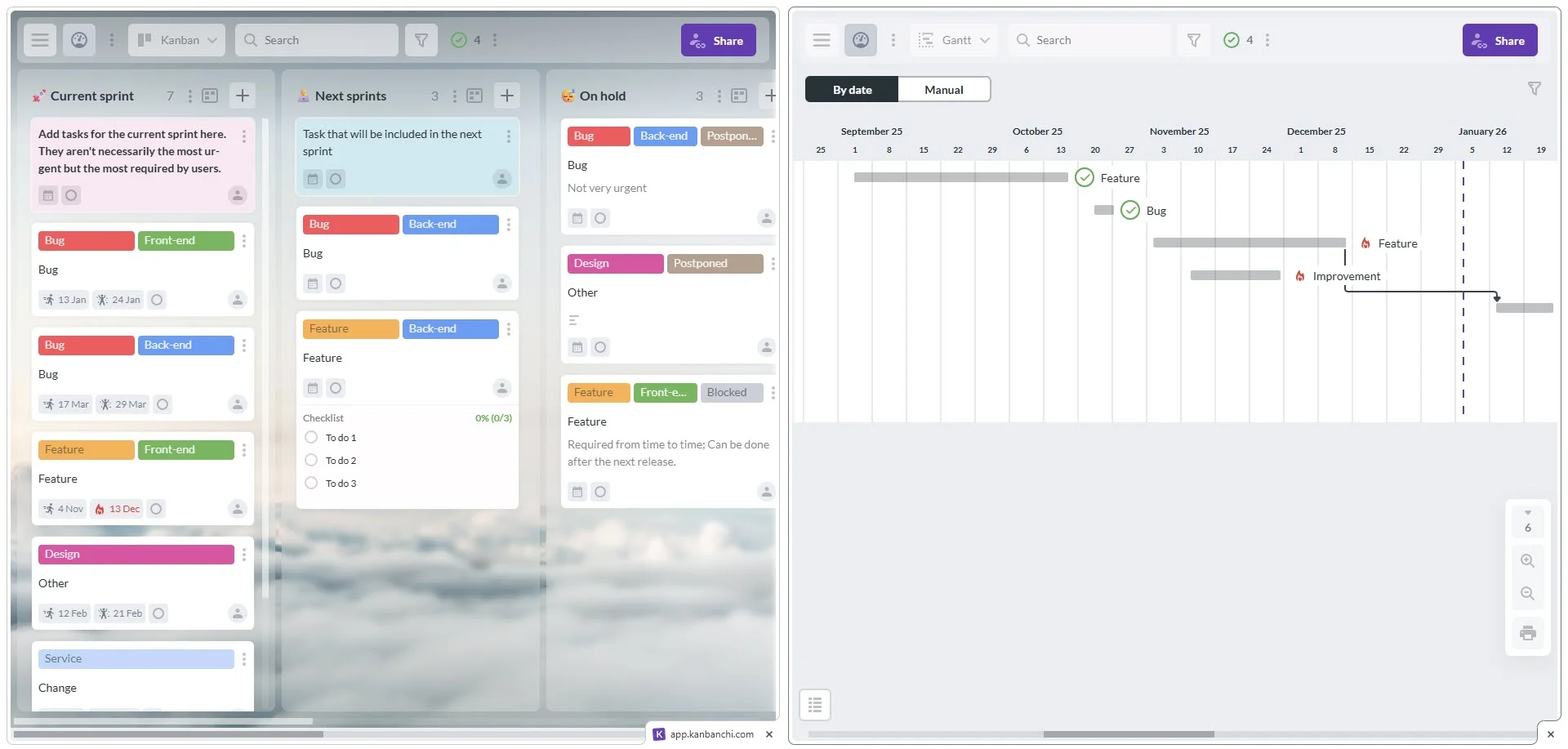
Kanbanchi’s dual-view capability: switch between Kanban board and Gantt chart within the same project in one click
One of Hive’s selling points is its all-in-one nature, but Kanbanchi matches this where it counts. Our built-in Time Tracker allows team members to log hours directly on their task cards. This data doesn’t just sit there; you can export it to a Google Sheet to build reports. It will help you identify bottlenecks and understand exactly where your team’s resources are going without needing a separate subscription to a tool like Harvest or Toggl.
If you find yourself constantly switching between Hive and your Google tabs, you’re losing context. Every switch is a micro-distraction. By bringing your project management into your Google environment, Kanbanchi eliminates that friction. Kanbanchi looks, feels, and acts like Google. The learning curve isn’t a curve; it’s a straight line.
When you choose a tool that melds seamlessly with your existing systems, you achieve a harmonious blend between your workflow and the team’s success. They’ll stay focused on what really matters, and your stakeholders will always be able to get the real-time updates they need, without endless meetings and email chains that get lost and create pain points.
Although Kanbanchi was initially created for Google users, it has since then expanded.
Try Kanbanchi today, and let’s get the conversation started.
Finding the best Hive alternative shouldn’t be a full-time job! Still got some burning questions? To help you reach the best decision, we’ve answered the most common questions from our community…
Yes, Hive offers a Free Forever plan for individuals and small teams. However, it is quite limited in terms of storage and advanced features such as time tracking and analytics, which often leads teams to seek more robust alternatives.
For small teams that need simplicity (especially those who use Google Workspace), Kanbanchi is often the better choice because it requires no separate account management and offers professional tools like Gantt charts for free or at a lower entry price.
While Hive is a standalone productivity platform, Kanbanchi is a specialized project management tool built inside a Google or Microsoft environment. Kanbanchi offers a more streamlined, visual experience with better Google Drive or OneDrive/SharePoint integration, whereas Hive offers more built-in communication tools, such as internal email.
Most top-tier alternatives, including Kanbanchi, allow you to import data via CSV files. This ensures you don’t lose your progress or task history when switching.



In this Article:
Start using Kanbanchi now
Start your free trial