
In this Article:
Try Kanbanchi now
Start your free trial

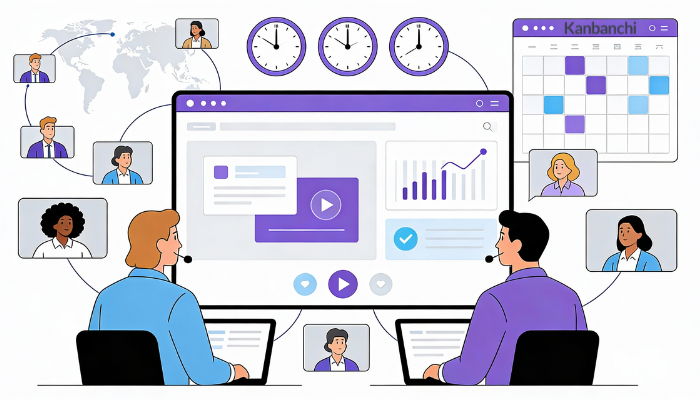
By 2033, it’s reckoned that the global remote sales team market will have experienced a CAGR of 15%, taking it from being valued at $50 billion this year to $150 billion. Companies are realising the value it creates.
And little wonder when you consider that the shift to remote work hasn’t just changed the location from which sales teams operate. It has completely reshaped everything from:
It means that managing a remote sales team today requires much more intention and structure than ever before.
…And while remote work unlocks a lot more in the way of global talent and flexible operations, it also presents new challenges that can quietly slow down revenue if they’re not addressed proactively.
Working in sales is fast-paced, driven by human interactions, loads of conversations, follow-ups, and little details that matter more than most people realize. When you get together in an office for work, these details surface naturally when you have those quick desk chats or watercooler moments. Remote environments don’t lend themselves as easily to this.
Learning how to manage a remote sales team is now a strategic skill for modern leaders. It’s not just about monitoring performance; it’s about creating clarity, consistency, and connection across distributed team members who may never meet in person.
When managers redesign their processes for remote-first sales, they get something incredibly valuable: a team that knows what to do, why it matters, and how success is measured, no matter where they are.
In this article, we’ll explore the essential components of managing a remote sales team effectively, from communication rhythms and performance structures to coaching frameworks and the tools that support a unified sales operation. We’re going to tell you all about:
Ultimately, remote sales teams can’t rely on chance. They need systems, alignment, and brilliant, insightful management to get the very best from them. We can help you with all this, so let’s begin with the challenges that often hold teams back, and why they matter.
Break it down into its most basic chunks, and remote sales work sounds simple:
..rinse and repeat..? But the reality is way more nuanced. Sales relies heavily on communication and ensuring that everyone involved is properly aligned. When teams go remote, the cracks can start to appear quickly, and sometimes everything falls flat. We reckon there are 7 common challenges faced by project managers in remote sales teams. Let’s unpick them a bit.
In an office, updates spread organically. Remotely, they disappear unless captured intentionally. Messages get lost in overflowing channels. People misinterpret tone. Deal status updates arrive late…or not at all. Sales teams need predictable communication patterns to stay aligned.
Managers can’t walk around the office and ask for quick progress updates. Instead, they rely on dashboards, reports, and check-ins. When data is inconsistent, forecasting becomes guesswork. This directly impacts deadlines and client relationships.
Remote work gives people flexibility, but it also demands discipline. Without structured check-ins or transparent work tracking, it’s difficult to know who’s doing what, whether follow-ups happened, or if leads were contacted on time. High-performing remote sales teams operate on clear expectations, not assumptions.
Salespeople thrive on energy, connection, and shared purpose. But remote environments can feel isolating. Managers must work harder to create team cohesion, peer recognition, and shared motivation.
A new hire can’t lean over and ask a quick question. They can’t observe experienced sales reps in action. They can’t casually absorb team culture. Without proper project management systems in place, remote onboarding can become confusing quickly.
Sales teams often rely on:
Without a unified workflow system, everyone ends up with their own method, resulting in inconsistent processes, limited visibility, and no way to scale effectively.
Sales can be stressful. Rejection, competition, long cycles. In an office, energy is shared. In remote work, energy must be created. Managers must build rituals that support morale, recognition, and cultural consistency. Remote sales teams don’t fail because people are lazy. They fail because systems aren’t designed for distributed work.
So those are the problems, what about the solutions? We hear you! The next section outlines the skills every remote sales manager needs to solve these challenges and build up a team that breeds success.
More articles about Remote Work here
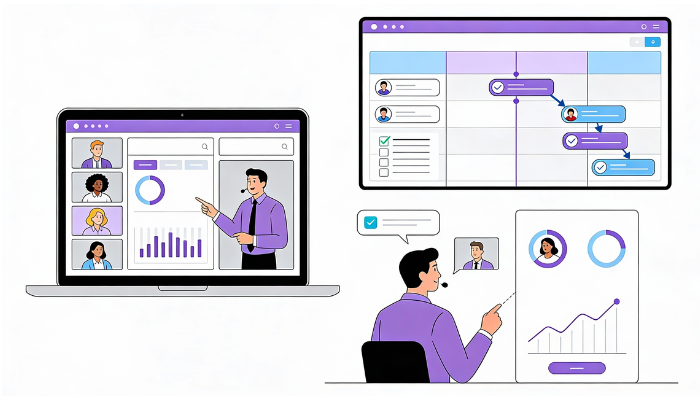
Managing a remote sales team requires clear communication, coordination, and the right tools.
Managing a remote sales team isn’t about getting people to simply make sales and hit targets; it’s also about creating clarity, removing friction, and enabling performance that drives success.
The best managers always operate like coaches and architects, structuring the environment for their reps to succeed. Here are the traits and skills that matter most.
Remote sales teams need managers who communicate with intention. Why? Well, because clarity beats charisma and specificity beats assumptions. Great remote sales managers articulate:
Often it’s ambiguity that kills momentum. Great, consistent communication paves the way to success.
High performers want to know the rules of the game so they can perform at their best. Therefore their managers must define:
This clarity creates confidence and fosters an environment where everyone takes accountability for their actions and workload.
Remote reps need consistent skill development and feedback so they can understand what they need to strive for, and gain insight when things don’t go quite to plan. Great managers run:
Coaching isn’t optional; it’s the core of remote performance and it’s needed more than ever these days.
Remote management requires better metrics, not more meetings. Managers should track:
Good data removes guesswork and keeps clear goals in sight, with everyone on the right track.
Sales work can sometimes be emotionally demanding and high-stress. Remote sales is even more so. Managers who check in personally, not just professionally, build loyalty and reduce burnout in their teams.
Without in-person cues, sales reps rely entirely on systems. Managers must create processes that scale, such as:
The more systematic the process, the easier remote management becomes. There’ll be less stress, less problems that crop up and everyone will effectively ‘sing from the same hymn sheet’.
Remote sales teams run on digital tools. Managers must know how to use them, integrate them, and simplify them.
This is where tools like Kanbanchi become a powerful driving force, helping managers to centralize tasks, track updates, and align the team in a single space, that requires no learning curve.
Remote sales teams crave clarity, probably more so than in-office sales teams. Without it, reps will often fill the gaps with assumptions, which leads to inconsistent performance. Strong managers communicate expectations with precision. This includes:
It’s a great idea to put in place a communication plan that goes something along these lines and gives everyone a point of reference:
Clear communication isn’t just about talking more; it’s about saying the right things, in a predictable rhythm, through channels that keep everyone aligned. Remote teams perform better when communication isn’t random.
Coupled with communication is the need for better coaching, feedback, and performance updates. This is another important cog in the wheel.
Remote sales reps need regular coaching, not sporadic guidance. Great managers build a predictable coaching loop that improves performance over time. A simple framework suggestion might be:
This structure prevents “coaching chaos” and creates steady, measurable growth. Remote environments amplify isolation, so consistent feedback helps reps feel supported, not judged. Managers who coach with empathy and clarity build teams that sell with confidence.
Remote sales teams succeed when their tools work together, not against them. A fragmented tech stack creates friction. A unified one creates momentum. Tools fall into six essential categories.
The source of truth for leads, deals, activities, and revenue forecasting. Think about examples like HubSpot, Salesforce, Pipedrive. You or your reps might already be familiar with these and use them daily.
Remote teams rely on clean, organized communication through channels like Gmail, Google Chat, Slack, Zoom, Meet. Picking one or two of these to stick to keeps everyone aligned and in a familiar zone.
For outreach, sequencing, call recording, and analytics, think about tools like Outreach, Gong, SalesLoft.
Reps need immediate access to playbooks, scripts, demo notes, and onboarding documents to ensure they have all the information they need. Google Workspace is a familiar spot, encompassing Google Docs, Sheets, Drive.
This is where Kanbanchi becomes essential for remote sales teams. Remote sales teams use our software to:
Managers must track performance without micromanaging. Dashboards help clarify whether the team is on pace to hit targets.
Let’s take some time now to look at Kanbanchi in action and how it could be used to help manage a specific remote sales team situation.
OK, here’s the setup. There’s a remote SaaS sales team operating across three countries. They run demos daily, manage follow-ups, nurture leads, and collaborate with marketing. Here’s how Kanbanchi becomes their remote operations command center.
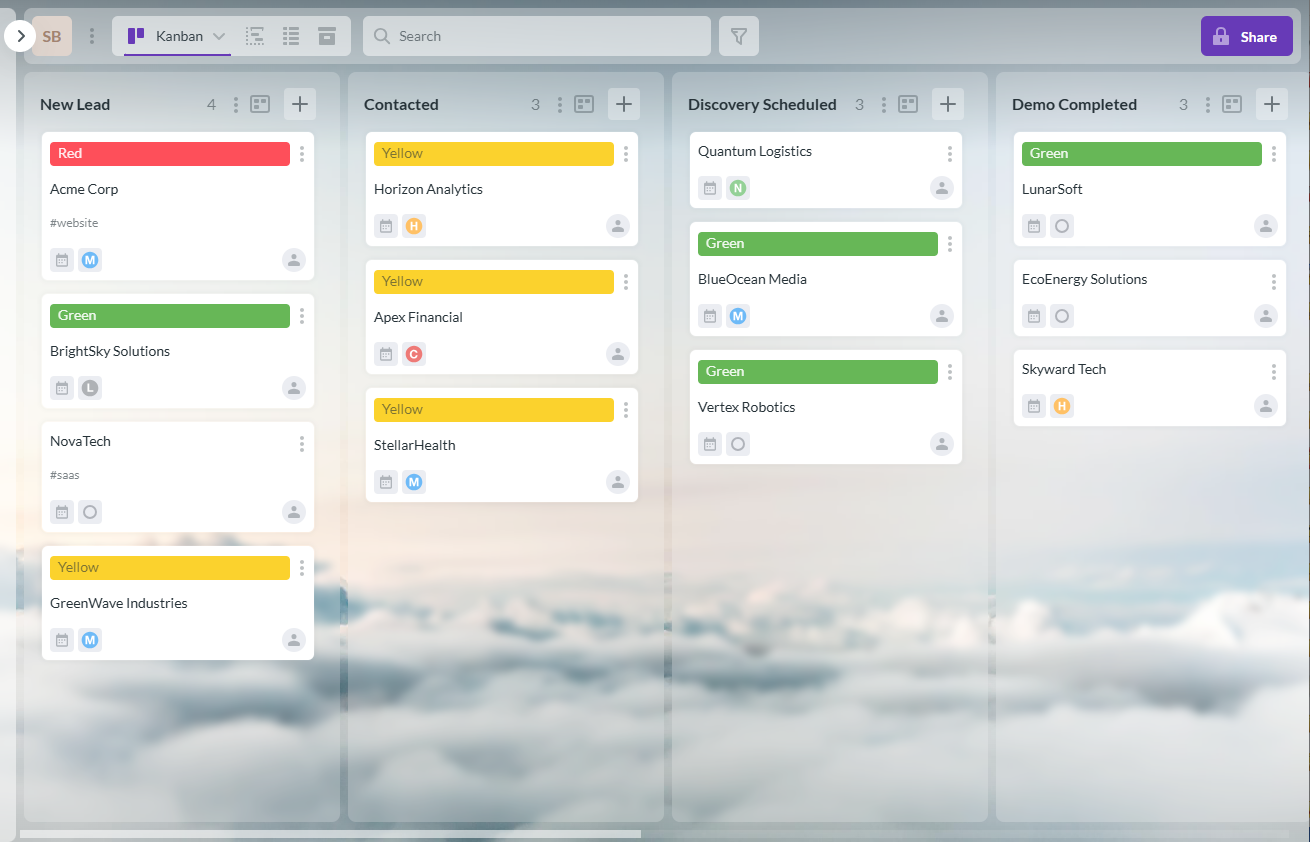
Visual example of a Kanban board helping remote sales managers stay organized and productive.
The manager sets up a board with columns such as:
As sales reps progress through each stage, they move cards through it, providing real-time visibility into pipeline health.
Each rep gets assigned tasks like:
Kanbanchi’s task assignment and reminders ensure nothing slips through the cracks and gets missed.
Managers open Kanbanchi during the meeting and walk through deals visually. The board becomes a single source of info, no more mismatched spreadsheets or outdated slides.
Comments inside Kanbanchi cards replace scattered chats. There, you’ll find all the links to Google Docs, Sheets, or Drive assets sitting inside each task.
Kanbanchi houses onboarding boards with step-by-step tasks, ensuring every new hire gets consistent training.
Using Gantt view, managers map:
Kanbanchi transforms planning from abstract to visual, and everyone stays aligned. It’s a great system, providing ease of use, clarity and function all in one.
How would this work in an actual sales situation? Below, you’ll find an example.
Below is a practical workflow you can implement immediately.
Set up columns representing every stage of your sales pipeline. Use colors, tags, and custom fields to categorize leads so everyone can see, at a glance, what’s happening.
Assign tasks for:
This removes any confusion or ambiguity and keeps information clear and consistent for everyone.
Examples include:
Recurring workflows reduce cognitive load and take all the guesswork out of what needs doing, when and by whom!
Examples:
Separate boards help teams focus on their specific projects whilst allowing them to see at a glance what stage everyone else is at.
Visual timelines clarify sequence, dependencies, and pacing. When information is presented in a vibrant visual manner like this it becomes so much easier to see what’s what.
When a task is done, a card will move. This will automatically update the project metrics and offer clear insight into where the sales project is at. Everyone can see progress and therefore they stay aligned, focused and on track.
The importance of managing a remote sales team effectively can’t be underestimated. When you unify your team with one unique software program that does everything, the difference it can make to project success becomes obvious.
A sales team that live across countries, yet are still able to work together successfully, communicate and deliver to deadline is one that will continue to deliver profitability and satisfied clients.
For seamless sales project management solutions with Google Workspace
Let’s round up our guide now with some of the remaining questions you might have about managing a remote sales team properly.
Use consistent communication, measurable goals, structured workflows, and reliable tools. Clarity and visibility are the foundations of high-performing distributed sales teams.
A CRM for tracking deals, communication tools for alignment, and workflow tools like Kanbanchi to manage daily tasks, follow-ups, and collaborative projects.
Recognize wins publicly, provide meaningful coaching, create team rituals, and set achievable growth paths. Motivation grows when reps feel supported and seen.
Activity volume, conversion rates, pipeline health, follow-up time, and forecast accuracy. Good KPIs drive clarity and consistency.
Kanbanchi centralizes tasks, communication, deadlines, and sales workflows in one shared space integrated with Google Workspace, making remote coordination seamless and transparent.



In this Article:
Start using Kanbanchi now
Start your free trial