-  views

How to Manage a Remote Development Team Effectively: a Comprehensive Guide

Try Kanbanchi now

Start your free trial
 

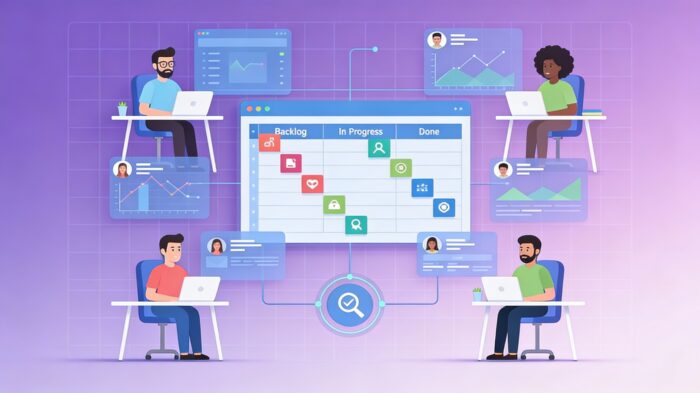
Managing remote developers with the help of online software

Kanbanchi is on hand with a guide designed to cut through the noise and show you exactly how to manage a remote development team successfully. As a fully remote team since 2017, we have extensive experience.

By 2030, it’s reckoned that there’ll be as many as 92 million workers in roles that are considered “remote potential”. Currently, about 28% of the entire global workforce is in a position to work fully remotely, and this figure will climb in the coming years.

That means those “water cooler” chat moments, open plan offices, and in-person collaboration are becoming a thing of the past. Teams work across different continents and time zones and have totally different schedules.

Remote work offers loads of benefits:
  • access to global talent
  • reduced overheads
  • improved work-life balance

But with it, there are quite a few challenges. How do companies maintain their vision, keep up with client demands, yet still foster collaboration when your entire workforce could all be thousands of miles apart?

Remote teams, when poorly managed, suffer from:
  • disjointed communication
  • accountability issues
  • slow project delivery

When they’re appropriately managed, with proper structure and clear processes, these teams become powerhouses of innovation and productivity.

We’ll explore how to build trust and do a deep dive into the technical structures needed to ensure clarity and accountability, no matter where you’re all based.

So, let’s start our journey.

Remote Work Foundations: Trust and Psychological Safety

What is psychological safety at work? Well, building a trusting environment starts with this. It’s the belief that no one will be punished or ridiculed for speaking up with ideas, questions, concerns, or mistakes.

Think about it this way: in an office, trust often forms among workers when you chat over coffee breaks and at shared lunches. It happens differently in a remote setting: it’s pretty much got to be built from scratch.

When there’s no trust, leaders often start micro-managing, which erodes morale and productivity faster than any technical bug.
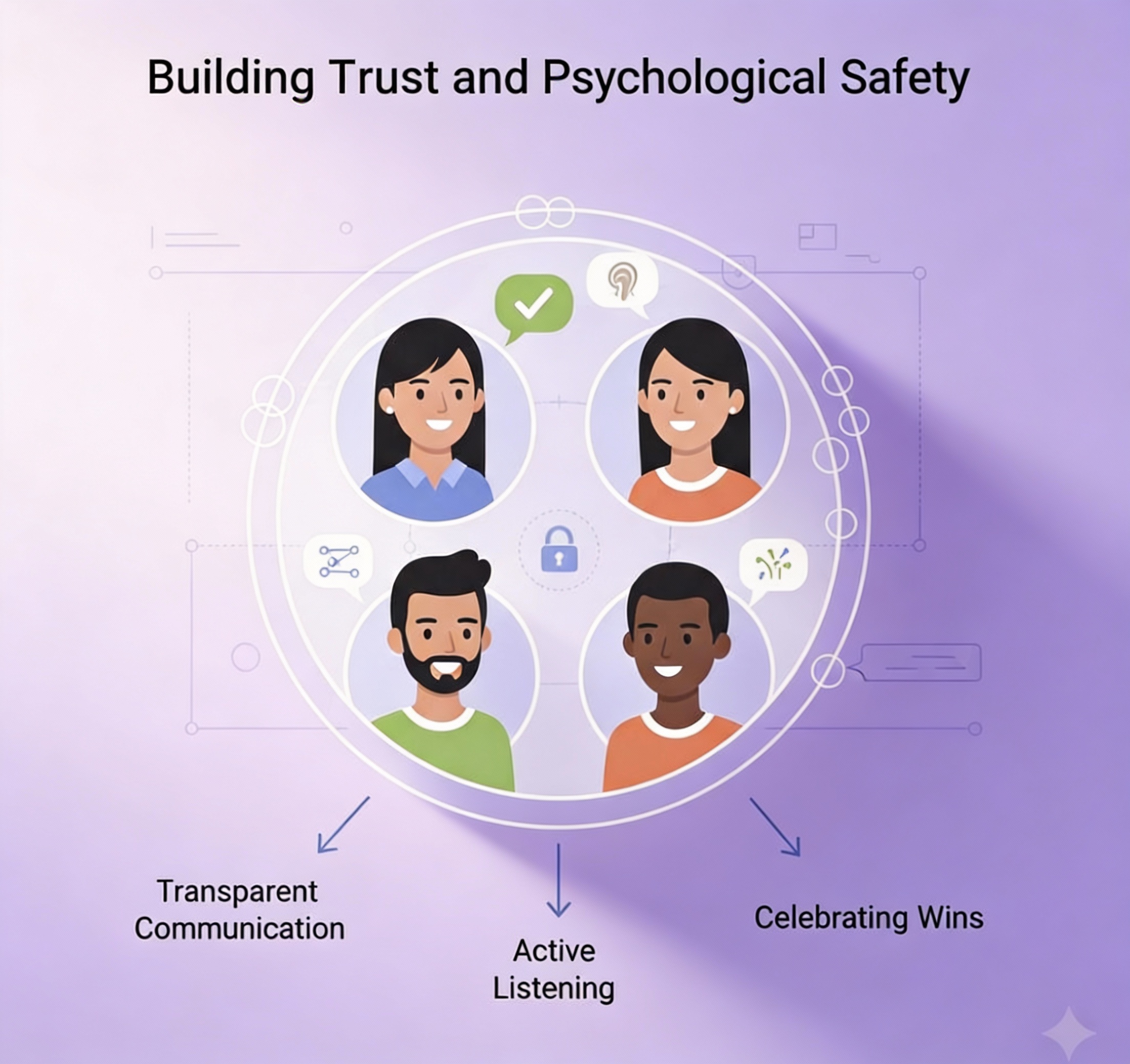
An illustration representing connection and safety. People interconnected through bubbles.

Three key elements of trust and psychological safety: transparent communication, active listening, and celebrating wins

Here’s how to cultivate trust and safety when you’re deciding how to manage remote developers on your team:

1. Clear Communication

Managers must chat to their teams honestly. It means sharing context, explaining the “why” behind decisions, and being candid about challenges.

  • Communicate with EVERYONE: Don’t rely solely on private messages. Use shared channels (like a dedicated project channel or team chat) for project-related updates and decisions. This ensures information is accessible to everyone, reducing the feeling of being “out of the loop.”
  • Share Failures: When a decision you made doesn’t work out, own it and discuss it with everyone. This vulnerability encourages teams to view mistakes as learning opportunities, not reasons for blame.

2. Engage in Active Listening

Remote communication can be transactional. Managers have to work to ensure their team members feel understood, particularly during one-on-one check-ins when deciding how to manage a remote team of developers

  • Ask Open-Ended Questions: Move beyond general takes like “How is Project X coming along?” to questions like, “What challenges are you navigating with this project?” or “Is there anything we can do as a team to make your job easier?
  • Confirm Understanding: Before moving on, summarize what your team member has said to you: “So, what I hear is that the hold-up with the client brief has made this more tricky? Is that correct?

3. Encourage Social Connection Away from Work

Structure is key, but teams bond over shared human experiences. It strengthens trust among everyone.

  • Virtual Water Cooler: That water cooler we joked about at the beginning? It can still exist remotely. Have a dedicated non-work chat channel in the office for sharing memes, hobbies, and personal news. We have two informal chats for Kanbanchi team members to share anything. One is called “censored”, and people who are part of this chat agree that they don’t share certain parts of the content. Another “uncensored” chat exists for that. Employees can decide which chats they want to be part of (or both).
  • Have Virtual Fun: Host optional, short, non-work meetings. It could be something as simple as a fun general knowledge quiz with prizes, or just a relaxed cuppa and chat with everyone.
  • Celebrate Wins: Publicly acknowledging achievements is vital. Celebrate milestones, completed projects, and even things like birthdays. It reinforces that the manager sees and values the individual, not just the work they produce.

By focusing on building trust, you ensure all your team members are:

  • Engaged
  • Communicative
  • Ready to tackle challenges

This is by far the most effective approach for managing remote teams. However, it’s not the only thing.

Switching to Asynchronous Communication

Working remotely means it’s impossible to replicate the in-office, real-time environment. There’s a need for video calls, coupled with instant-reply expectations. They ultimately reduce productivity. Key to success here is learning to shift from synchronous (sync) to asynchronous (async) communication.
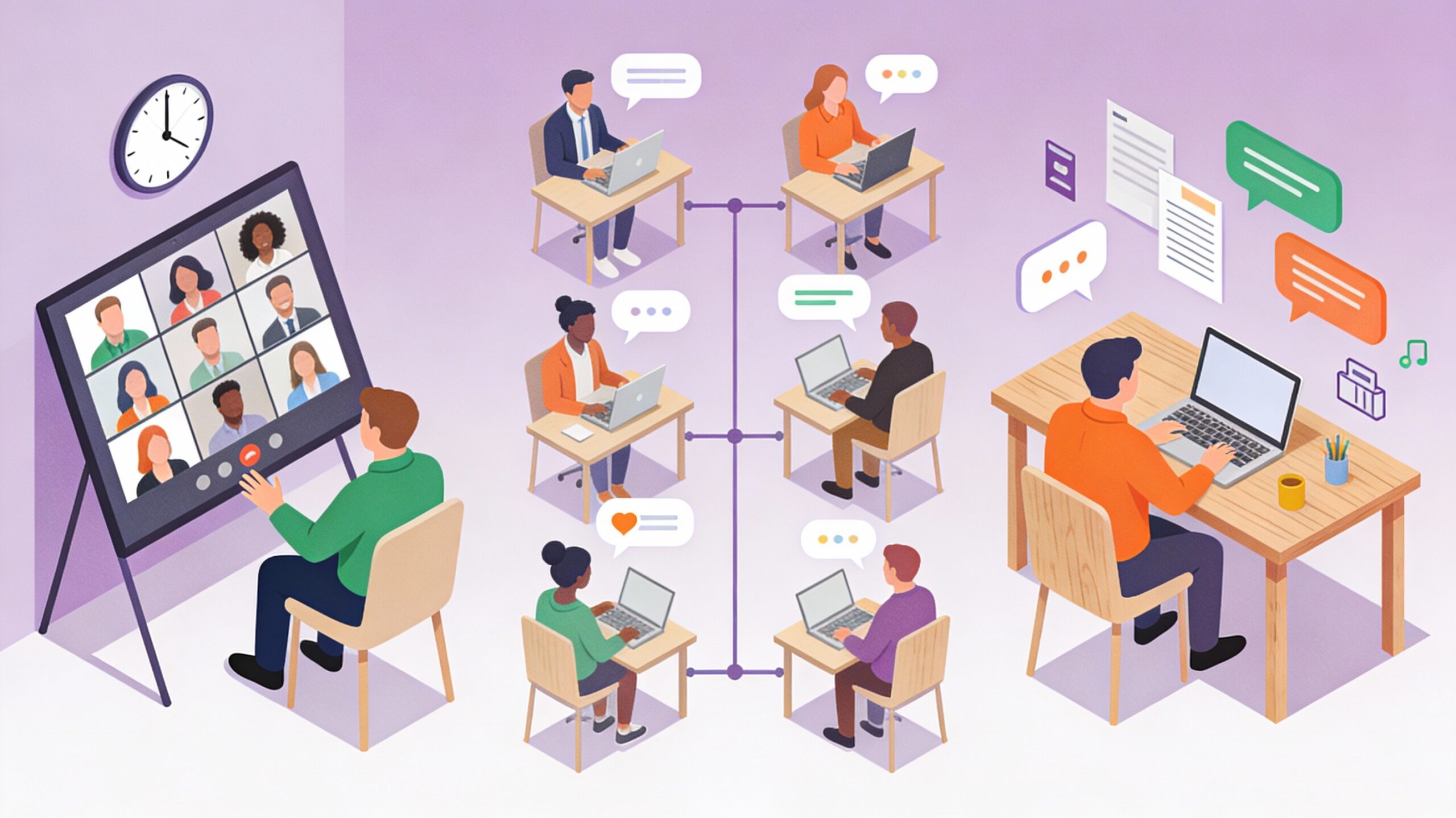
Picture illustrating a shift from synchronous to asynchronous communication

Shifting to asynchronous communication will replace long live meetings and calls with flexible chats, and turn employees from expecting an immediate response to better planning and documenting their work

Let’s explain this:

  • Sync communication: Requires immediate attention; consider on-demand meetings or random phone calls.
  • Async communication: This approach allows teams to process information and respond when they can within their working day. So, for instance, more detailed emails or messages. It works so much better for remote teams.

Asynchronous Communications Tips

Async communication requires clearer documentation and software systems that match. It needs better planning, so think about the following setup:

  • Set clear response times: Establish expectations for each message type. If it’s Urgent, respond within 5-15 minutes. If it’s within a Project deadline but non-urgent, reply within 1-2 hours. If it’s in an Email, respond within one business day.
  • Prioritize Written Communication: Decisions, tasks, and discussions must be documented and shared in a centralized location (e.g., Google Docs or a Kanban board. If it wasn’t written down, it didn’t happen.
  • Add as much Context to Messages as possible: Train the team to send complete messages that provide all necessary context upfront, avoiding the “Hey, are you free?” trap. This frees up time and smoothes out communication across time zones.

Mastering async communication establishes the rhythm needed for remote workers to maintain focus and meet project deadlines, while keeping all channels of communication open.

Structuring Remote Work: Clarity, Visibility, and Accountability

If trust is the foundation of a remote team, then structure is the scaffolding that holds the work together. When managing remote workers, you lose the physical cues of progress, so you can’t see someone working at their desk or in the boardroom.

To compensate, implement a system that provides crystal-clear visibility to the workflow, making it easy to answer questions like: “Who’s working on what, and when will it be done?

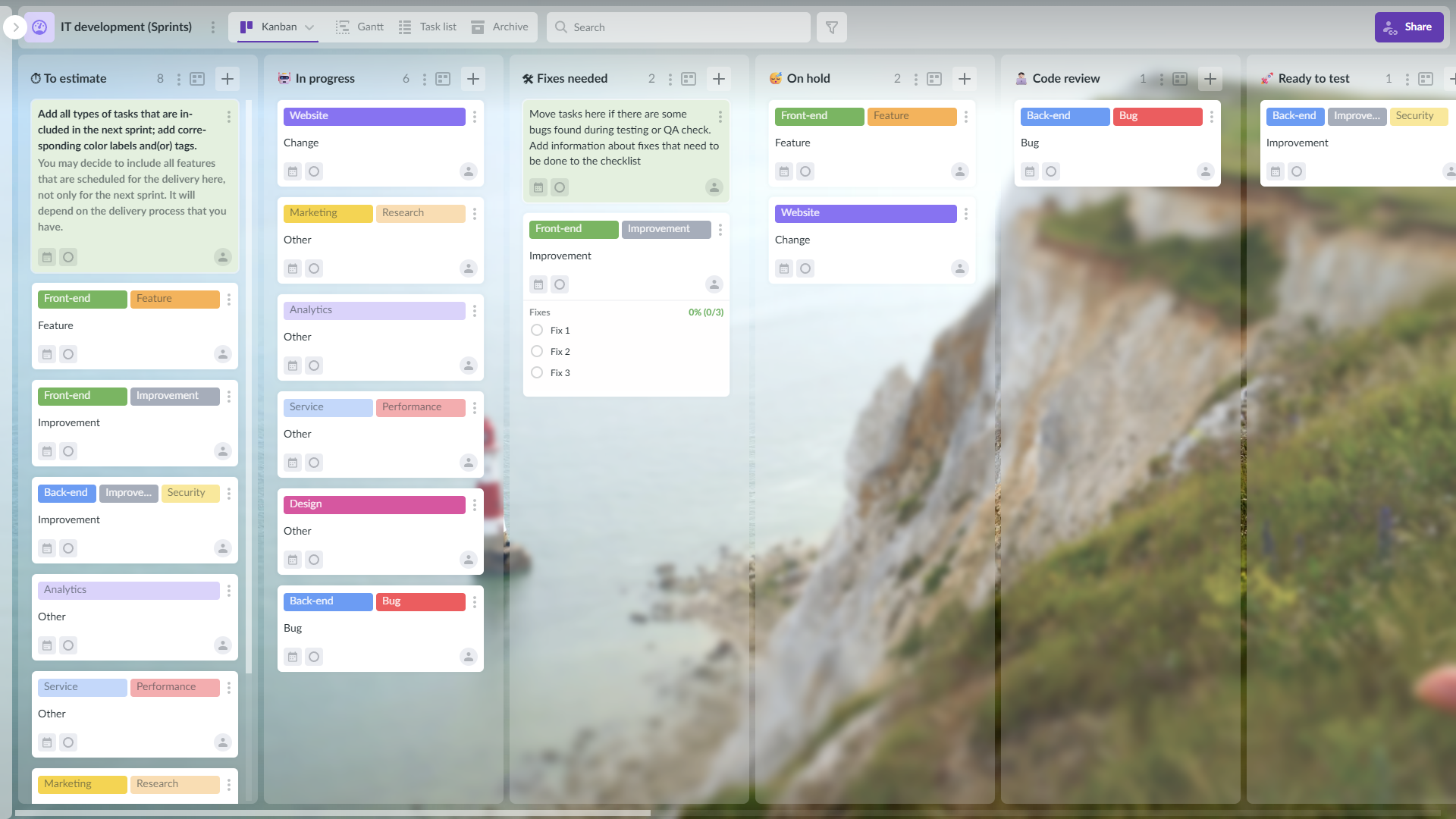
Kanbanchi project management tool interface

Kanban board is a great tool that helps to visualize all the stages of workflow and check when tasks will be done

This need for structure directly addresses how to manage remote teams in a way that is empowering and not invasive. Your goal? To establish accountability through shared visibility, not surveillance.

How can it be done? Let’s see.

1. Centralized Task Management

Every task, fix, feature request, and project milestone has to sit in one platform. This platform becomes the “single source of truth” for the entire team, replacing casual verbal conversations that confirm nothing or emails that get lost. This is where Kanbanchi comes in as a valuable assistant for visualising workflow. It can help with all of the following.

  1. Defining Tasks clearly: They can be broken down into manageable, actionable units (ideally requiring less than two days of work). Vague tasks like “Work on client brief” become a thing of the past.
  2. Clear Ownership of Tasks and Roles: Every job in the system must have one designated owner. It’s crucial for accountability and to prevent duplicate effort.
  3. Unified Documentation: Link all necessary resources like design files (Figma), spec documents (Google Docs), and code repositories (GitHub) directly to the task card. Nothing gets lost!

2. Visualize Workflows with Kanban and Gantt

For remote teams, the most efficient way to visualize workflow is a hybrid approach that combines the simplicity of Kanban with the timeline capabilities of Gantt charts.

This is another area where integrating tools designed for Google Workspace, such as Kanbanchi, is essential. It provides a dynamic, visual Kanban board that integrates natively with Google Workspace. This allows developers to see the status of every card:

From “Backlog” to “In Progress” to “Testing” and “Done.”

This visual workflow makes it immediately clear where bottlenecks occur.

For high-level project planning, Kanbanchi’s Gantt Chart view provides the robust timeline perspective that’s required. You can:

  • Quickly map dependencies across development streams
  • Set milestones
  • Track resource allocation

All this’ll ensure the overall project stays on schedule.

3. Implement Workflow Rules

A project management tool is only as good as the rules the users set in place for its proper functioning. It’s a good idea to think about the following:

  • Proper Entry and Exit Criteria: What must happen for a task to move from one stage to the next? As an example, if a client brief for a product hasn’t been checked, it can’t progress to the production stage.
  • Work-In-Progress Limits: Enforce strict limits on the “In Progress” column on your Kanban board. This forces teams to complete current tasks before starting new ones, dramatically improving delivery speed.

By using a visual system like Kanbanchi, you provide a remote team with the clarity and visibility to prioritize their workloads and understand their contributions to the project as a whole.

4. Setting Daily and Weekly Rituals

Consistency is a key element of effective remote team management. Without a shared office routine, teams need defined, recurring rituals to maintain alignment and momentum. These meetings should be short, focused, but non-negotiable fixtures in the team’s calendar.

The most crucial ritual is a daily check-in. For remote teams, this’ll happen via video call or, as an async update in a dedicated chat channel, that everyone has to react to with a check-in mark.

5 Do’s and Don’ts for Remote Rituals

Do Don’t
1. Stick to the time box. End the meeting exactly when scheduled. 1. Use it for problem-solving. Detailed discussions should be moved to a separate “parking lot” call.
2. Enforce the agenda. Focus only on progress, plans, and blockers. 2. Allow personal updates (unless it’s a dedicated social event).
3. Rotate the facilitator. Give every team leader a chance to lead the meeting. 3. Force video on. Allow developers to choose their preferred level of comfort and bandwidth.
4. Use it to reinforce WIP limits. Ask team members what they will finish today. 4. Shame anyone for blockers. Blocker identification is a strength, not a weakness.
5. Start with a positive moment. A quick, shared win boosts morale. 5. Skip the meeting. Consistency is vital for remote cohesion.

Beyond the daily sync, the Weekly Check-in or Sprint Review should be used for tactical planning, goal setting, and celebrating the past week’s accomplishments.

These rituals keep the remote development team connected, accountable, and ensure momentum is never lost.

Performance Management: Focus on Outcomes, Not Hours

The most outdated model of managing remote teams is relying on “desk time”. That’s to say, the amount of time the worker is in their seat in the office. If you’re transitioning to remote work, this notion has to go.

Management must focus exclusively on:

  1. Measurable outcomes
  2. Delivery

…Not the hours logged. This shift is central to managing remote developers effectively while respecting their professional autonomy.

Why are Hours a Poor Metric?

Trying to track eight hours of visible, productive time is impossible (and counterproductive) in a remote context. What matters is the value delivered.

You might have an effective senior coder put together an effective bug fix in three focused hours. But an underperforming coder might spend eight hours achieving the same result. Rewarding eight hours, when three would have been sufficient, is unjust and unfair.

Set Measurable Goals

To shift this focus, you need clearly defined metrics that tie directly to business objectives:

  • Key Performance Indicators (KPIs): These should measure results, not activity.
  • Objective and Key Results (OKRs): Use OKRs to align individual team members’ goals with the broader organizational mission.

By defining success using these metrics, you give employees the clarity to prioritize their work and manage their time flexibly, knowing they are judged solely on their contributions.

Conducting Remote Performance Reviews

How to best manage remote developers in terms of their performance reviews. These must be structured to eliminate location bias and focus solely on data driven by KPIs and OKRs.

  • Focus on Documentation: Review a developer’s contributions using the project management tool (like Kanbanchi) and the version control system. Look at completed tasks, contribution to cycle time, code review quality, and documented knowledge sharing.
  • 360-Degree Feedback: Gather detailed, specific feedback from peers, QA, and product managers who worked closely with the developer on specific deliverables.
  • Continuous Feedback Loop: Formal reviews should hold no surprises. Managers should provide regular, small doses of constructive feedback throughout the quarter, tying it back to documented goals and project metrics.

This outcome-focused approach honors the flexibility remote work demands while maintaining high standards for the development team. It is the gold standard for managing remote developers in a competitive, results-driven environment.

Time Tracking and Burnout Prevention

In the remote environment, the boundaries between work and personal life often blur. While performance management focuses on outcomes, managers are responsible for using tools, including time tracking, primarily for estimation and load balancing (not as a surveillance tool).

For a remote development team, time tracking, such as the feature available in Kanbanchi, can offer two valuable insights:
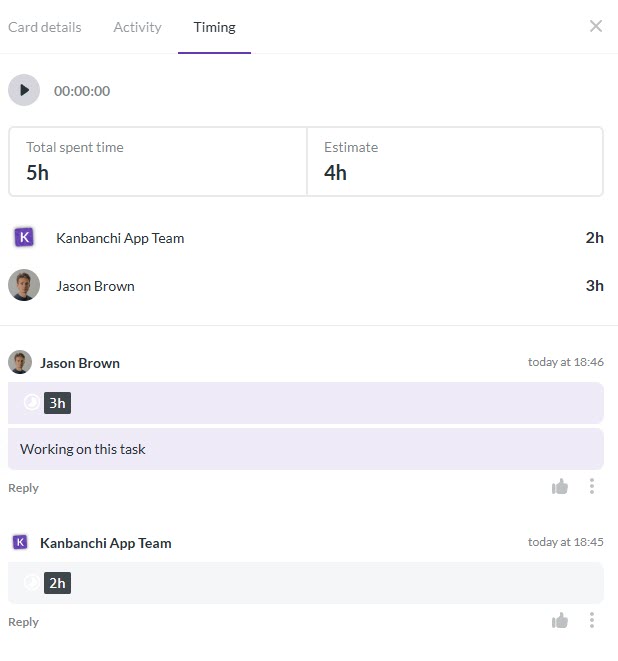
  • Estimation Accuracy: Tracking time spent on tasks across several sprints enables the team to refine future estimates, leading to more predictable delivery.
  • Burnout Detection: A sudden spike in logged hours, or conversely, a drop in productivity despite high hours, can signal an impending burnout risk.
Time tracker in Kanbanchi

Time tracker in Kanbanchi allows to compare time estimates with the actual spent time and improve estimations

The manager’s role in preventing burnout is crucial. This is key to effective remote developer management.

  • Set Communication Boundaries: Explicitly forbid non-emergency communications outside of agreed-upon core working hours. Model this behavior yourself.
  • Encourage Disconnection: Mandate the use of vacation time and encourage short, regular breaks throughout the day.
  • Monitor Workload: If a developer is consistently logging extra hours, the issue is often poor prioritization or an overloaded sprint, not poor performance. Use your project tool to balance task distribution.

By proactively managing the workload and establishing clear boundaries, you foster a sustainable remote work environment that supports developer health and long-term productivity.

Check out some of the other Kanbanchi’s IT and development-related blogs.

Best Software Tools for Remote Developer Teams

A great tech stack is the secret superpower behind a successful remote development team. Human-centric foundational principles need the help of a powerful, integrated suite of tools. The right tech stack can:

  1. Minimize friction
  2. Centralizes information
  3. Provide connectivity

It’s needed to manage a remote team of developers efficiently.

1. Project Management and Visualization

This is the nerve center of your development workflow. It needs to provide visual clarity and act as the single source of truth for every task.

  • Kanbanchi or Kanban/Gantt Platforms: Get a platform that provides both Kanban visualization for agile task flow and Gantt charts to serve strategic timeline planning. Choosing such a tool as Kanbanchi and then integrating it seamlessly with Google Workspace will lead to zero data silos. Under development, tasks can be organized along with their Google Drive files and events in Google Calendar, while never leaving this well-known Google environment.
  • Version Control-GitHub/ GitLab: Indispensable for code collaboration and reviews. The integration with the project management tool guarantees that any status updates happen in an automated way.

2. Communication and Presence

While async communication is the default, teams still need real-time and flexible channels for quick questions and discussions that provide real-time solutions more quickly.

  • Real-time Chat: Like Slack, is used for quick bursts of conversation and nattering.
  • Video conferencing: Google Meet/Zoom are primarily employed for stand-ups, sprint reviews, and other structured meetings, while very important face-to-face discussions should be restricted. Always prioritize clear agendas to avoid that horrible feeling of “meeting fatigue”.

3. Documentation and Knowledge Sharing

In a remote team, documentation isn’t a luxury. Rather, it is an essential duty. This is the knowledge that would have been passed along by word of mouth in an office environment.

  • Centralized Documentation: Using Google Docs or other centralized repositories ensures that technical specifications, product decisions, API details, onboarding guides, and sprint retrospectives are maintained in a single location. In addition, using Google Docs for specifications within the Google Workspace environment further streamlines collaboration.
  • Shared Drives: Keep design assets, meeting recordings, and non-code documentation in well-organized folders within Google Drive, with consistent permissions across all assets.

4. Time Management and HR

Applications in this category help manage the professional aspects of working from home.

  • Time Tracking and Invoicing: While used ethically to measure estimates and balance workload (as discussed in the previous section), these tools are vital for project accounting and billing accuracy.
  • Resource Planning: Tools that enable managers to map out developer availability, capacity, and time off to avoid over-allocation and prevent burnout.

Check out the real case of the development company using Kanbanchi to support their agile workflow: How DevSync Master Agile Workflows with Kanbanchi

Mastering the Art of Remote Development Team Management

Managing a remote development team isn’t just something that you may need to think about in a few months’ time; this is fast becoming the modus operandi of competitive organizations seeking the best devs.

The difference between a successful and struggling remote team is not about their location but rather how well they collaborate.

Let’s end by outlining the three key pillars for remote dev team management:

  1. Trust: Focus on psychological safety and asynchronous communication to enable the developers, while minimizing micromanagement.
  2. Methodology: Implement clear, centralized, visually oriented project workflows that keep all tasks accountable and transparent with the help of Kanban and Gantt-based software.
  3. Outcomes: Shift the focus from monitoring activity hours to measuring tangible results, velocity, and quality (KPIs/OKRs).

Success with remote management at the end of the day boils down to the quality of your systems and clarity in communication.

When you choose integrated tools, like Kanbanchi, you’ll get powerful visualization plus native compatibility with Google Workspace. This bridges the gap, allowing your developers to focus on what they do best: writing great code.

Ready to turn your remote team into a hub of brilliance? Why not start with building the structure that fosters trust and drives results? Get complete visibility and control over your remote development projects today. Integrate your project management seamlessly with Google Workspace.


Try Kanbanchi free today

    MultipleAuthors\Classes\Objects\Author Object
    (
        [term_id] => 973
        [term:MultipleAuthors\Classes\Objects\Author:private] => 
        [metaCache:MultipleAuthors\Classes\Objects\Author:private] => Array
            (
                [user_email] => olga.alekseeva@kanbanchi.com
                [user_id] => 20
                [first_name] => Olga Alekseeva
                [last_name] => 
                [job_title] => Growth hacking expert with over 10 years of experience with Kanbanchi
                [description] => Olga wears multiple hats across marketing, sales, product, and ops after 10+ years in the SaaS world. She is passionate about helping teams streamline their workflows with Kanbanchi and Google Workspace or Microsoft 365. "When I'm not optimizing processes or writing guides, I'm probably tweaking our product roadmap or diving into the latest productivity tools".
                [user_url] => https://linkedin.com/in/olgksv
            )
    
        [userObject:MultipleAuthors\Classes\Objects\Author:private] => WP_User Object
            (
                [data] => stdClass Object
                    (
                        [ID] => 20
                        [user_login] => olga.alekseeva
                        [user_pass] => $wp$2y$10$WuiuvYMj7CDnLrRbWchEkuBwKzmbBakK64Uk5c68bDY3qA46MFam6
                        [user_nicename] => olga-alekseeva
                        [user_email] => olga.alekseeva@kanbanchi.com
                        [user_url] => https://linkedin.com/in/olgksv
                        [user_registered] => 2025-09-03 15:47:58
                        [user_activation_key] => 
                        [user_status] => 0
                        [display_name] => Olga Alekseeva
                    )
    
                [ID] => 20
                [caps] => Array
                    (
                        [editor] => 1
                        [author] => 1
                        [contributor] => 1
                        [wpseo_editor] => 1
                        [wpseo_manager] => 1
                    )
    
                [cap_key] => wp_capabilities
                [roles] => Array
                    (
                        [0] => editor
                        [1] => author
                        [2] => contributor
                        [3] => wpseo_editor
                        [4] => wpseo_manager
                    )
    
                [allcaps] => Array
                    (
                        [moderate_comments] => 1
                        [manage_categories] => 1
                        [manage_links] => 1
                        [upload_files] => 1
                        [unfiltered_html] => 1
                        [edit_posts] => 1
                        [edit_others_posts] => 1
                        [edit_published_posts] => 1
                        [publish_posts] => 1
                        [edit_pages] => 1
                        [read] => 1
                        [level_7] => 1
                        [level_6] => 1
                        [level_5] => 1
                        [level_4] => 1
                        [level_3] => 1
                        [level_2] => 1
                        [level_1] => 1
                        [level_0] => 1
                        [edit_others_pages] => 1
                        [edit_published_pages] => 1
                        [publish_pages] => 1
                        [delete_pages] => 1
                        [delete_others_pages] => 1
                        [delete_published_pages] => 1
                        [delete_posts] => 1
                        [delete_others_posts] => 1
                        [delete_published_posts] => 1
                        [delete_private_posts] => 1
                        [edit_private_posts] => 1
                        [read_private_posts] => 1
                        [delete_private_pages] => 1
                        [edit_private_pages] => 1
                        [read_private_pages] => 1
                        [wpseo_bulk_edit] => 1
                        [copy_posts] => 1
                        [ppma_edit_post_authors] => 1
                        [ppma_edit_own_profile] => 1
                        [wpseo_edit_advanced_metadata] => 1
                        [wpseo_manage_options] => 1
                        [view_site_health_checks] => 1
                        [editor] => 1
                        [author] => 1
                        [contributor] => 1
                        [wpseo_editor] => 1
                        [wpseo_manager] => 1
                    )
    
                [filter] => 
                [site_id:WP_User:private] => 1
            )
    
        [hasCustomAvatar:MultipleAuthors\Classes\Objects\Author:private] => 1
        [customAvatarUrl:MultipleAuthors\Classes\Objects\Author:private] => Array
            (
                [url] => https://www.kanbanchi.com/wp-content/uploads/2025/09/photo_2024-04-10_17-25-16.jpg
                [url2x] => https://www.kanbanchi.com/wp-content/uploads/2025/09/photo_2024-04-10_17-25-16.jpg
            )
    
        [avatarUrl:MultipleAuthors\Classes\Objects\Author:private] => 
        [avatarBySize:MultipleAuthors\Classes\Objects\Author:private] => Array
            (
                [96] => 
                [80] => 
                [50] => 
            )
    
    )
    
  • Growth hacking expert with over 10 years of experience with Kanbanchi

    Olga wears multiple hats across marketing, sales, product, and ops after 10+ years in the SaaS world. She is passionate about helping teams streamline their workflows with Kanbanchi and Google Workspace or Microsoft 365. "When I'm not optimizing processes or writing guides, I'm probably tweaking our product roadmap or diving into the latest productivity tools".

    All articles
Share

Try Kanbanchi now

  • Collaborate seamlessly
    with your team
  • Integrate Kanbanchi
    with Google or Microsoft
  • Manage all your work in one place
Start for free

Start using Kanbanchi now

Start your free trial