
In this Article:
Try Kanbanchi now
Start your free trial

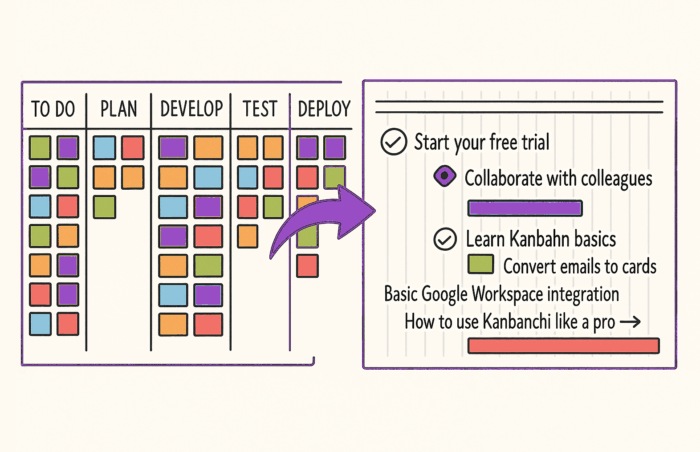
Modern project management has reached a critical inflection point where traditional single-view tools no longer meet the complex demands of today’s dynamic work environments. The emergence of hybrid project management software represents a paradigm shift that addresses the fundamental limitations of conventional approaches by enabling seamless transitions between different project visualization methods. The evidence overwhelmingly supports the adoption of dual-view solutions that allow teams to switch between Kanban and Gantt chart views in one click. The majority of high-performing organizations are now using hybrid project management approaches, because it significantly increases project success rates compared to using single methods alone.
The project management software market, valued at $7.5-9.8 billion in 2024 and growing at a CAGR of 12.9-16%, is being driven primarily by organizations seeking flexible solutions that can adapt to diverse project requirements and stakeholder needs. This transformation is particularly evident in the widespread adoption of hybrid methodologies, which 73% of organizations expect to increase over the next five years, demonstrating an unprecedented shift toward adaptable project management approaches that combine the structured planning capabilities of Gantt charts with the agile workflow management of Kanban boards.
The limitations of traditional project management approaches have become increasingly apparent as organizations grapple with complex, multifaceted projects that require different visualization methods at different stages. Research indicates that 70% of professionals report communication challenges within their organizations, leading to wasted time, often stemming from the use of inadequate visualization tools that fail to match the specific needs of different project phases and stakeholder groups.
Single-view project management tools create significant inefficiencies by forcing teams to adapt their natural workflows to rigid visualization constraints. When project managers rely solely on Gantt charts, they excel at timeline planning and dependency management but struggle with daily workflow optimization and task prioritization. Conversely, teams using only Kanban boards achieve excellent workflow visualization and continuous improvement but lack the comprehensive timeline perspective necessary for long-term planning and stakeholder reporting.
The inadequacy of single-view approaches becomes particularly evident in modern project environments, where 31.5% of companies now use hybrid models combining predictive and Agile practices, increasing from 20% in 2020. This trend reflects the growing recognition that different project phases require different management approaches – strategic planning benefits from Gantt chart timelines, while execution phases thrive with Kanban workflow management.
Furthermore, the rise of remote and distributed teams has exacerbated these limitations. With 61% of project workers now working remotely at least one day per week, teams need visualization tools that can accommodate diverse working styles and stakeholder preferences. Single-view tools force unnecessary context switching and create communication barriers when team members have different visualization preferences for the same project data.
The financial impact of these limitations is substantial, with studies showing that organizations using project management tools complete 61% of their projects on time, compared to just 41% for those not using such tools. However, the gap between successful and unsuccessful projects often correlates with the flexibility and appropriateness of the visualization methods employed throughout the project lifecycle.
The fundamental differences between Kanban and Gantt chart methodologies reflect their origins and intended applications, making each approach uniquely suited to specific project management scenarios. Understanding these distinctions is crucial for appreciating why hybrid project management software that seamlessly integrates both approaches represents the optimal solution for modern organizations.
Kanban methodology originated from Toyota’s manufacturing system and emphasizes continuous workflow optimization through visual task management. Its core strengths include visual workflow representation, work-in-progress (WIP) limits that prevent bottlenecks, continuous improvement through iterative adjustments, and team autonomy in task prioritization. Kanban boards excel in environments where requirements frequently change, team members need real-time visibility into task status, and the focus is on optimizing throughput rather than adhering to fixed schedules.
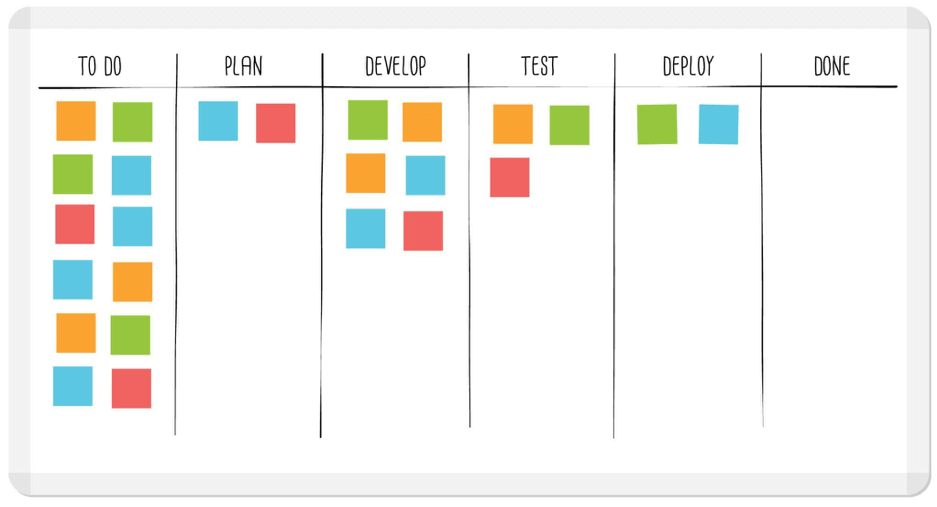
Kanban board with workflow stages and categorized work items showing user stories, defects, tasks, and features
The Kanban approach particularly benefits agile development teams, customer service departments, and marketing teams managing ongoing campaigns. Research shows that teams using Kanban report improved adaptability to shifting project needs and shorter time-to-market for deliverables, with the methodology’s flexibility allowing for rapid response to changing priorities and stakeholder requirements.
Gantt chart methodology, developed by Henry Gantt in the early 20th century, provides comprehensive timeline visualization with emphasis on task dependencies, milestone tracking, resource allocation, and schedule management. Gantt charts excel in scenarios requiring detailed upfront planning, complex dependency management, resource optimization, and stakeholder reporting with clear timeline expectations.
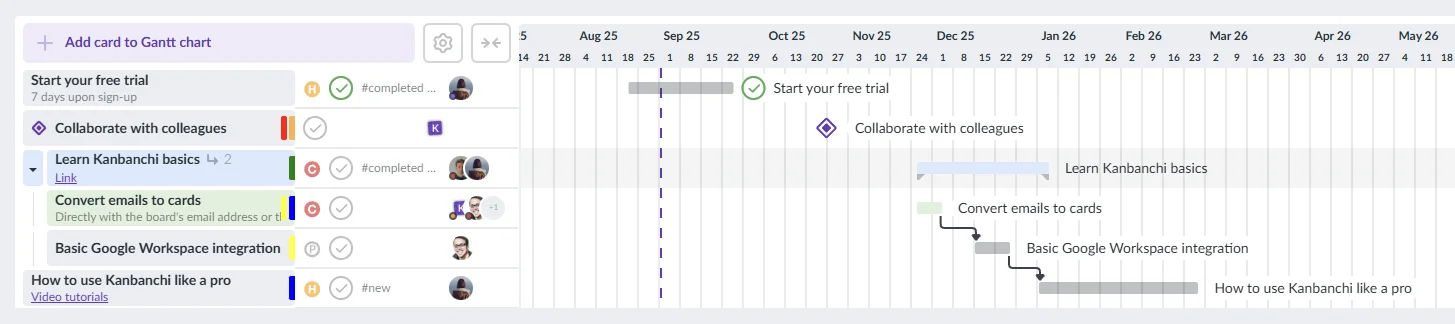
Simple Gantt chart in Kanbanchi application
The Gantt approach proves most effective for construction projects, product launches, event planning, and enterprise software implementations where sequential task completion and adherence to deadlines are critical. Studies indicate that Gantt charts provide superior capabilities for managing task dependencies and ensuring project completion within defined timeframes, making them indispensable for projects with fixed deadlines and regulatory requirements.
The key limitation of each approach becomes apparent when organizations attempt to force-fit single methodologies to diverse project requirements. Kanban boards, while excellent for workflow optimization, lack the comprehensive timeline perspective necessary for long-term planning and stakeholder communication. Conversely, Gantt charts, though superior for scheduling and dependency management, often prove too rigid for agile workflows and continuous improvement processes.
Modern project environments typically require both approaches at different phases: Gantt charts for initial planning and stakeholder alignment, followed by Kanban boards for execution and continuous optimization. This recognition has driven the development of kanban Gantt chart tools that enable teams to leverage the strengths of both methodologies without the limitations of single-view constraints.
Hybrid project management software represents a revolutionary approach that combines the structured planning capabilities of traditional methodologies with the flexibility and responsiveness of agile practices. This integration addresses the fundamental challenge facing modern organizations: the need to balance predictability with adaptability in an increasingly complex project landscape. The core benefits of hybrid project management software extend far beyond simple tool consolidation.
Workflow flexibility enables teams to adapt visualization methods to match project phases, stakeholder requirements, and team preferences without losing data continuity or requiring system changes. This adaptability proves particularly valuable as 84% of organizations cite greater flexibility as a primary driver for adopting hybrid project management approaches.
Stakeholder communication improvements represent another critical advantage, as different audiences prefer different visualization methods for project information. Executives and clients typically favor Gantt chart timeline perspectives for strategic discussions, while team members and operational managers prefer Kanban boards for managing daily workflows. Hybrid project management software enables seamless transitions between these views, ensuring optimal communication with each stakeholder group without data duplication or version control issues.
Project phase alignment becomes significantly more effective when teams can match visualization methods to project activities. Initial planning phases benefit from Gantt chart timeline development and dependency mapping, while execution phases thrive with Kanban workflow optimization and continuous improvement processes. Research demonstrates that organizations using hybrid approaches report 27% higher project success rates compared to single-method implementations.
Team productivity improvements result from eliminating tool switching, reducing data duplication, and enabling each team member to work within their preferred visualization framework while maintaining shared project visibility. This productivity gain is particularly significant for distributed teams, where 88% of organizations report improved resource management as a key benefit of adopting hybrid project management.
Cost efficiency represents a compelling business case for hybrid solutions, as organizations can replace multiple specialized tools with comprehensive platforms that address diverse project management needs. The total cost of ownership decreases significantly when teams no longer require separate licenses for Kanban tools, Gantt chart software, time tracking applications, and collaboration platforms.
Data consistency across different project views ensures that all stakeholders work from the same source of truth, regardless of their preferred visualization method. This consistency eliminates the version control problems and data synchronization issues that plague organizations using multiple disparate tools for different project management functions.
The business impact of these benefits becomes evident in real-world implementations. Organizations adopting hybrid methodologies report increased team efficiency, reduced development cycle times, higher-quality deliverables, and improved stakeholder satisfaction. These improvements directly translate to competitive advantages in markets where project delivery speed and quality differentiate successful organizations from their competitors.
Kanbanchi stands as the pioneering solution in hybrid project management software, offering unprecedented one-click switching between Kanban and Gantt chart views that transform how teams visualize and manage their projects. As the only project management tool natively integrated with Google Workspace, Kanbanchi addresses the critical need for seamless view transitions while maintaining complete data synchronization and workflow continuity.
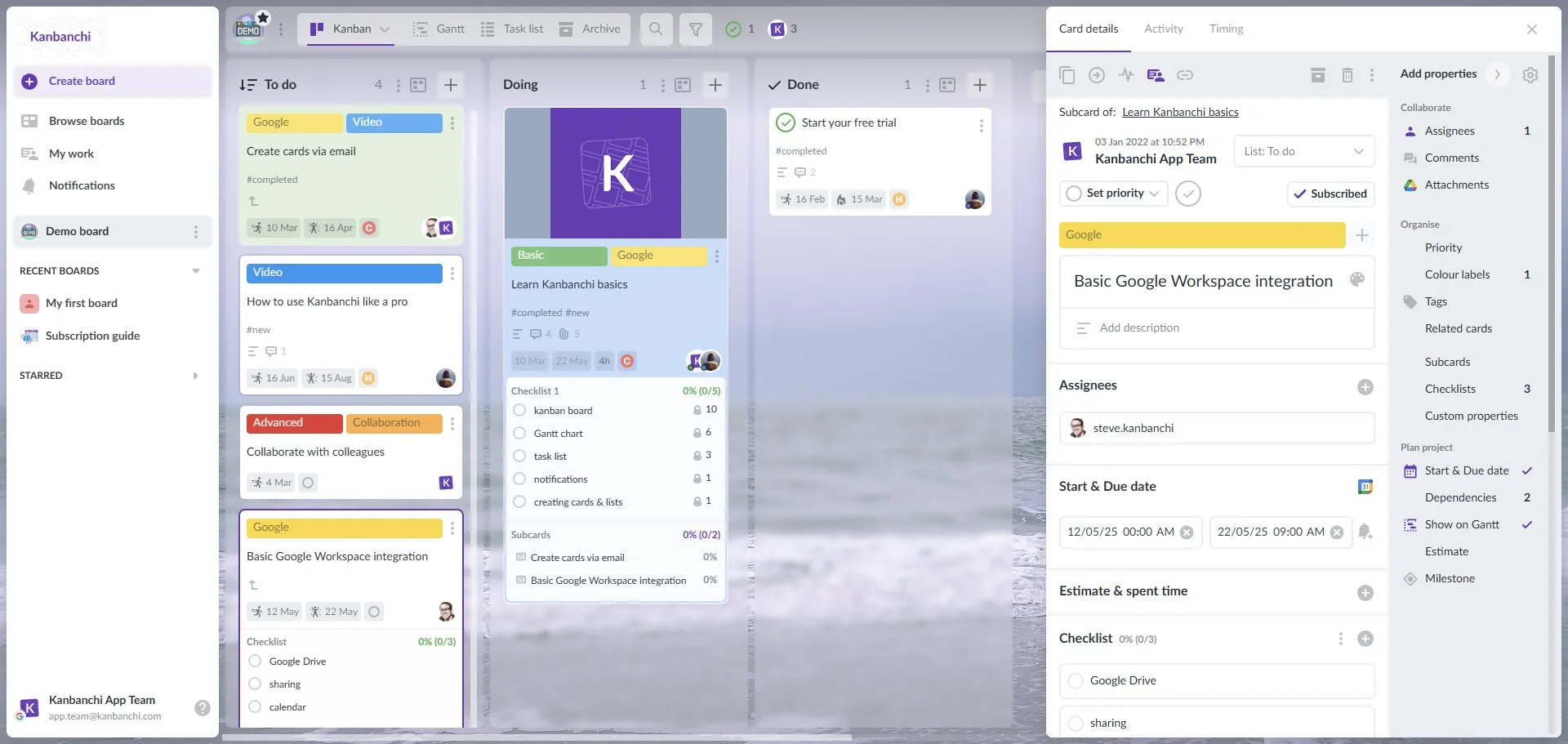
Demo board in Kanbanchi with the switcher between Kanban, Gantt chart, and other views on the top panel
The seamless data synchronization capability ensures that changes made in one view are instantly reflected across all other views without requiring manual intervention or data export/import processes. When team members update task statuses, modify deadlines, or add comments in the Kanban view, these changes are immediately reflected in the Gantt chart, accompanied by appropriate timeline adjustments and dependency updates. This real-time synchronization eliminates the version control issues that plague organizations using separate tools for different visualization methods.
Intelligent view conversion represents Kanbanchi’s most sophisticated feature, automatically mapping Kanban cards to Gantt tasks while preserving all metadata, relationships, and project context. The system intelligently interprets due dates as Gantt timeline endpoints, transforms card dependencies into Gantt chart relationships, and maintains task assignments across both visualization methods. This automation eliminates the manual effort typically required when transitioning between different project management approaches.
Contextual view selection offers intelligent recommendations for optimal visualization, tailored to the project phase, team activity patterns, and stakeholder requirements. The system analyzes project data to suggest when Gantt chart timeline perspectives would benefit planning activities or when Kanban workflow views would optimize execution phases. This intelligence helps teams make informed decisions about visualization methods without requiring extensive project management expertise.
Google Workspace integration extends far beyond basic connectivity, enabling synchronized calendars, document attachments from Google Drive, task creation from Gmail, and seamless sharing permissions that match existing organizational structures. Team members can create Kanbanchi tasks directly from Gmail messages, attach Google Docs and Sheets to project cards, and synchronize task deadlines with Google Calendar – all while maintaining the ability to switch between Kanban and Gantt views without losing integration functionality.
Microsoft 365 users can also log in using their Microsoft accounts. In the Microsoft environment, Kanbanchi can function in either OneDrive or SharePoint, and file attachments are possible from both storage options. Users can send tasks to their project boards directly from their Outlook email.
Real-time collaboration capabilities enable distributed team members to work simultaneously in their preferred views, maintaining complete project visibility and coordination. A project manager might use the Gantt chart for timeline planning while developers work in the Kanban view for daily task management, with all changes synchronizing instantly across both perspectives. This flexibility eliminates the workflow conflicts that occur when teams are forced to use visualization methods that don’t match their working styles.
The two-column card view feature, recently introduced by Kanbanchi, exemplifies the platform’s commitment to workflow optimization. This enhancement allows users to view task details and comment threads simultaneously, reducing scrolling time by 94% and improving collaboration efficiency by 52%. It demonstrates how Kanbanchi continuously evolves to address real-world productivity challenges while maintaining its core hybrid functionality.
Performance metrics from Kanbanchi implementations demonstrate significant improvements across key project management indicators. Teams report 52% faster comment reply times, 171% increase in task-comment cross-references, and 21-point improvement in user satisfaction scores when using the platform’s dual-view capabilities compared to single-view alternatives.
The practical application of hybrid project management software becomes most apparent through specific scenarios where teams benefit from switching between Kanban and Gantt chart views to optimize different aspects of project execution. These real-world use cases demonstrate why project management dual-view capabilities are essential for modern organizations seeking to maximize both planning effectiveness and execution efficiency.
Sprint Planning and Execution represent a classic hybrid scenario, where teams begin by developing a Gantt chart timeline to define the sprint scope, allocate resources, and identify milestones. Once sprint execution begins, teams switch to Kanban views for daily standup meetings, workflow optimization, and continuous task prioritization. Development teams using this approach report improved adaptability to shifting project needs and shorter time-to-market for software products, with the dual-view capability eliminating the friction traditionally associated with transitioning between planning and execution phases.
Stakeholder Presentation Management showcases how different audiences require different visualization approaches for the same project data. Executive stakeholders typically prefer Gantt chart timeline perspectives for strategic discussions, budget approvals, and milestone tracking, while operational teams need Kanban workflow views for daily coordination and task management. Hybrid project management software enables seamless transitions between these presentation formats, eliminating data duplication and manual reformatting.
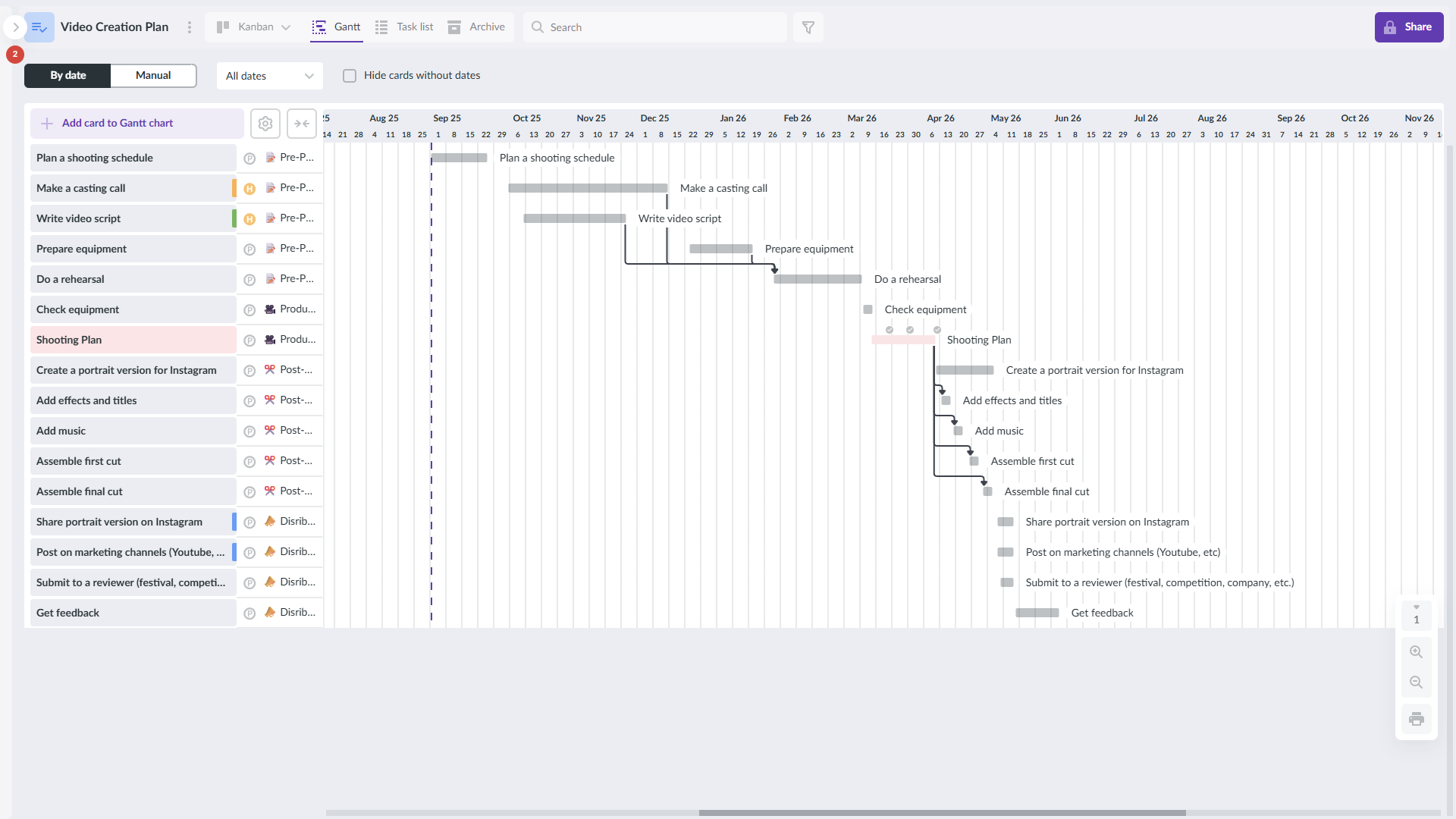
Video creation plan in Kanbanchi that can be printed and shown to stakeholders
Gantt charts excel at identifying resource conflicts, planning capacity allocation, and forecasting project timelines, while Kanban boards provide real-time visibility into workload distribution and team availability. Project managers can use Gantt views for strategic resource planning, then switch to Kanban views for operational workload balancing.
Client Project Delivery illustrates how external stakeholder communication benefits from view flexibility. Initial project proposals and milestone discussions benefit from Gantt chart timeline presentations that clearly communicate deliverable schedules and project phases. During project execution, internal teams switch to Kanban views for daily workflow management while maintaining the ability to generate Gantt charts to report on client meetings.
Product Development Lifecycle Management exemplifies the natural progression from strategic planning to tactical execution. Product roadmap development and feature prioritization benefit from Gantt chart timeline perspectives that show release schedules and dependency relationships. The feature development and testing phases transition to a Kanban workflow management approach for continuous improvement and adaptive task prioritization.
Marketing Campaign Orchestration demonstrates how complex multi-channel campaigns require both timeline coordination and workflow optimization. Campaign planning phases use Gantt charts for timeline development, resource coordination, and milestone tracking across multiple channels and deliverables. Campaign execution phases switch to Kanban views for daily task management, content workflow optimization, and real-time priority adjustments based on market feedback.
Each scenario delivers measurable benefits when teams can seamlessly transition between visualization methods. Organizations report a 27% improvement in project success rates when using hybrid approaches compared to single-view methodologies, with the flexibility to match visualization methods to specific project phases and stakeholder needs representing a key factor in success.
The cumulative impact of these use cases demonstrates why 73% of organizations expect to increase their use of hybrid project management practices over the next five years, with the ability to optimize both strategic planning and tactical execution within a single platform, providing significant competitive advantages in today’s dynamic business environment.
Successfully implementing hybrid project management software requires systematic planning and structured deployment to ensure teams can effectively leverage dual-view capabilities while maintaining productivity throughout the transition process. This comprehensive implementation guide addresses the critical phases necessary for optimal Kanbanchi deployment and team adoption.
Phase 1: Project Setup and Infrastructure begins with creating hybrid boards that accommodate both Kanban workflow management and Gantt timeline visualization. Organizations should start by defining project scope parameters, establishing team roles and permissions within the Google Workspace environment, and configuring integration touchpoints with existing organizational tools. The native Google Workspace/Microsoft 365 integration simplifies this process by inheriting existing access permissions and organizational structures, reducing setup complexity and security configuration requirements.
Phase 2: View Configuration and Customization focuses on establishing optimal Kanban column structures that align with organizational workflows while ensuring seamless translation to Gantt timeline formats. Teams should customize list configurations to match their specific process stages, establish appropriate work-in-progress limits for workflow optimization, and configure Gantt timeline parameters, including project start dates, milestone definitions, and dependency relationships. The intelligent view conversion capabilities automatically handle most translation requirements, but initial configuration ensures optimal performance for specific organizational needs.
Phase 3: Workflow Integration and Team Training emphasizes practical adoption strategies that minimize disruption while maximizing benefit realization. Teams require structured training on one-click view switching functionality, establishment of clear usage guidelines for when to employ each visualization method, and implementation of automation rules that streamline routine tasks. Best practices include starting with pilot projects, providing hands-on training sessions, and establishing internal champions who can support broader organizational adoption.
Phase 4: Optimization and Scaling involves monitoring usage patterns to identify workflow improvements, refining view configurations based on actual team behavior, and scaling successful implementations across broader organizational units. Organizations should track key performance indicators, including task completion rates, collaboration frequency, and user satisfaction scores, to measure implementation success and identify optimization opportunities.
Common implementation pitfalls include attempting to replicate existing tools exactly rather than leveraging hybrid capabilities, insufficient training on view switching functionality, and failure to establish clear guidelines for when to use each visualization method. Successful implementations avoid these issues by embracing the flexibility of hybrid approaches, investing in comprehensive team training, and developing organizational standards that optimize both planning and execution workflows.
Integration considerations must address existing organizational tools, data migration requirements, and workflow continuity during the transition period to ensure seamless integration. Kanbanchi’s Google Workspace or Microsoft integration significantly simplifies these requirements by leveraging existing organizational infrastructure, but teams should plan for gradual migration strategies that maintain productivity throughout the implementation process.
The setup process typically requires 2-4 weeks for complete organizational deployment, with initial pilot implementations achievable within days. Organizations that follow structured implementation approaches report higher adoption rates, improved team satisfaction, and faster realization of productivity benefits compared to ad-hoc deployment strategies.
The financial and operational benefits of hybrid project management software implementation deliver measurable returns that justify investment costs while providing sustainable competitive advantages. Organizations implementing dual-view project management solutions report significant improvements across multiple performance dimensions, with quantifiable benefits that scale across team sizes and project complexities.
Time savings represent the most immediate and measurable benefit category, with organizations reporting 52% faster comment reply times and 94% reduction in scrolling time when using hybrid visualization approaches. The elimination of tool switching between separate Kanban and Gantt applications saves an average of 12 seconds per interaction, which compounds to substantial productivity gains across large project teams and extended project timelines. Teams using integrated project management dashboard solutions spend less time on administrative tasks and more time on value-generating project activities.
Cost reduction benefits extend beyond obvious software licensing savings to include reduced training costs, decreased integration complexity, and minimized IT support requirements. Organizations that replace multiple specialized tools with comprehensive hybrid platforms typically achieve a 20-40% reduction in total software costs, while also improving functionality and user satisfaction. The single source of truth approach eliminates data duplication costs and reduces errors associated with manual synchronization between different tools.
Productivity gains are evident through enhanced team collaboration, improved project visibility, and expedited decision-making processes. Research indicates that organizations using project management tools complete 61% of their projects on time, compared to just 41% for those not using such tools. Hybrid solutions, which offer flexibility and comprehensive functionality, show even higher success rates. Teams report improved communication effectiveness and reduced coordination overhead when all stakeholders can access project information in their preferred visualization format.
Quality improvement results from reduced errors associated with data duplication, better stakeholder alignment through appropriate visualization methods, and more effective risk identification through comprehensive project visibility. Organizations that employ hybrid approaches report higher-quality deliverables and improved customer satisfaction, primarily due to more effective project planning and coordination of execution.
ROI calculations for hybrid project management implementations typically show positive returns within 3-6 months, with break-even points occurring when productivity gains offset the costs of implementation and training. Organizations with project teams of 50 or more people report ROI ratios of 300-500% within the first year of implementation, driven primarily by time savings, quality improvements, and reduced tool complexity costs.
The long-term value proposition includes improved organizational agility, enhanced stakeholder satisfaction, and reduced operational risk through better project visibility and control. As 73% of organizations expect to increase their use of hybrid project management practices over the next five years, early adopters gain a competitive advantage through superior project delivery capabilities and enhanced organizational efficiency.
Selecting optimal hybrid project management software requires a systematic evaluation of organizational requirements, technical capabilities, and strategic objectives to ensure successful implementation and sustained value realization. The decision-making process should prioritize solutions that offer genuine dual-view functionality rather than superficial feature combinations that compromise usability and effectiveness.
Essential features for effective hybrid solutions include seamless one-click switching between Kanban and Gantt chart views, real-time data synchronization across all visualization methods, intelligent view conversion that preserves project context and relationships, and comprehensive collaboration capabilities that support distributed team coordination. Solutions lacking these core capabilities force teams into workaround processes that eliminate the productivity benefits of hybrid approaches.
Integration capabilities represent critical evaluation criteria, particularly for organizations with established technology ecosystems. Kanbanchi’s native Google Workspace integration exemplifies optimal integration depth, enabling seamless calendar synchronization, document attachment from Google Drive, task creation from Gmail, and permission inheritance from existing organizational structures. Organizations using Google Workspace should prioritize solutions offering similar integration depth rather than superficial connectivity options.
Usability factors significantly impact the success of adoption and the realization of long-term value. The learning curve should be minimal, with intuitive interfaces that enable immediate productivity rather than requiring extensive training. Mobile access capabilities ensure that team members can contribute effectively, regardless of their location or device, while customization options enable organizations to tailor workflows to their specific processes and requirements.
Scalability considerations must address both current team sizes and anticipated growth trajectories. Solutions should support seamless scaling from small teams to enterprise deployments without compromising performance or requiring platform migrations. Enterprise features, including advanced security, compliance capabilities, and administrative controls, become essential for larger organizations with complex requirements.
A cost analysis should evaluate the total cost of ownership rather than relying on superficial licensing comparisons. Comprehensive platforms, such as Kanbanchi, that replace multiple specialized tools often provide superior value despite higher initial costs, with reduced integration complexity, training requirements, and administrative overhead, ultimately delivering long-term savings. Pricing models should align with organizational growth patterns and usage scenarios to ensure sustainable cost structures.
Evaluation criteria should include proof-of-concept implementations that test core functionality with actual organizational data and workflows. Free trial periods enable teams to assess usability, performance, and integration effectiveness before making commitment decisions. Organizations should prioritize vendors offering comprehensive support during evaluation phases and implementation processes.
Competitive analysis reveals that Kanbanchi uniquely combines native Google Workspace integration, one-click view switching, and comprehensive hybrid functionality in ways that no competing solution can match. While alternatives may offer individual features, the integrated approach and ecosystem alignment provide sustainable competitive advantages for organizations seeking optimal hybrid project management capabilities.
The selection process should involve key stakeholders from project management, IT, and end-user communities to ensure that the chosen solutions meet diverse organizational requirements while providing for implementation feasibility and long-term sustainability.
Organizations implementing hybrid project management software encounter predictable challenges that can significantly impact the success of adoption and the realization of value. Understanding these obstacles and their proven solutions enables smoother transitions and faster benefit achievement for teams adopting dual-view project management approaches.
Team resistance represents the most common implementation challenge, with team members often preferring familiar tools and workflows over new hybrid approaches. Solution strategies include gradual rollout phases that introduce one view at a time, comprehensive training programs that demonstrate clear productivity benefits, and identification of internal champions who can advocate for adoption within their teams. Kanbanchi’s intuitive interface and minimal learning curve significantly reduce resistance compared to complex enterprise solutions, with most teams achieving proficiency within days rather than weeks.
Workflow confusion arises when teams lack clear guidelines on when to use Kanban versus Gantt chart visualizations, resulting in inconsistent usage patterns and suboptimal results. Practical solutions include establishing clear usage guidelines based on project phases and stakeholder needs, creating workflow templates that demonstrate optimal view selection patterns, and providing ongoing coaching to help teams develop intuitive decision-making about visualization methods. Organizations should document specific scenarios where each view provides optimal value and share these guidelines across all project teams.
Data migration challenges can create significant barriers when organizations need to transfer existing project information from legacy systems to new hybrid platforms. Kanbanchi’s import tools and comprehensive support address these challenges through automated data migration capabilities, structured import processes for standard project management formats, and professional services support for complex organizational requirements. The Google Workspace integration streamlines migration for organizations already utilizing Google tools by leveraging their existing data structures and permission systems.
Integration complexity with existing organizational tools can limit adoption and reduce the value of hybrid implementations. Comprehensive solutions include native Google Workspace or Microsoft connectivity, which eliminates the need for custom integration requirements, API capabilities for connecting with specialized organizational tools, and professional services support for complex integration scenarios. Organizations should prioritize solutions that offer deep integration with their existing technology ecosystems, rather than superficial connectivity options.
View switching complexity can undermine the primary benefits of hybrid approaches if team members find transitions between visualization methods difficult or time-consuming. Kanbanchi’s one-click interface eliminates this challenge by providing seamless transitions that maintain project context and user workflow continuity. Training programs should emphasize the simplicity of view switching and demonstrate how different visualization methods enhance rather than complicate project management activities.
Performance and scalability concerns may arise as organizations expand hybrid implementations across larger teams and more complex projects. Proactive solutions include performance monitoring during pilot implementations, gradual scaling strategies that test system capabilities before full deployment, and vendor support for optimization and capacity planning. Cloud-based solutions like Kanbanchi typically provide superior scalability compared to on-premise alternatives, with automatic performance optimization and capacity management.
SIGN UP FOR A FREE TRIAL OF KANBANCHI NOW
Change management strategies should address both the technical and cultural aspects of hybrid implementation, with structured communication plans that clearly explain the benefits and address concerns, comprehensive training programs that build confidence and competency, and ongoing support systems that help teams optimize their hybrid workflow approaches.
Organizations that proactively address these challenges through structured implementation approaches report higher adoption rates, improved team satisfaction, and faster realization of productivity benefits compared to ad-hoc deployment strategies that ignore predictable implementation obstacles.
The trajectory of project management evolution points decisively toward hybrid approaches that combine the strategic advantages of traditional methodologies with the flexibility and responsiveness of agile practices. As organizations navigate increasingly complex project landscapes, the ability to switch between Kanban and Gantt chart views represents not merely a convenience but a fundamental competitive requirement for sustained success.
Emerging trends in hybrid project management software include AI-powered view recommendations that automatically suggest optimal visualization methods based on project phase, team activity patterns, and stakeholder requirements. Advanced automation capabilities will enhance the seamless integration between different project views, with intelligent systems that anticipate team needs and proactively optimize workflow configurations. These developments will further reduce the cognitive overhead associated with project management while amplifying the strategic benefits of hybrid approaches.
The integration of artificial intelligence and machine learning into hybrid platforms promises revolutionary improvements in project prediction, risk identification, and resource optimization. AI-driven project management tools will analyze historical project data across both Kanban and Gantt visualizations to provide predictive insights about timeline feasibility, resource allocation effectiveness, and potential bottleneck identification. These capabilities will transform hybrid project management from reactive coordination to proactive optimization.
Enhanced collaboration features will utilize virtual and augmented reality technologies to create immersive project environments, allowing distributed teams to interact with both Kanban and Gantt visualizations in three-dimensional spaces. These innovations will further bridge the gap between remote and in-person collaboration while maintaining the flexibility advantages of hybrid visualization approaches.
The competitive advantage of early hybrid adoption becomes increasingly significant as 73% of organizations expect to increase their use of hybrid project management practices over the next five years. Companies implementing comprehensive hybrid solutions, such as Kanbanchi, position themselves to capitalize on evolving market demands while building organizational capabilities that scale with future growth requirements.
Industry-specific adaptations of hybrid project management will emerge as sectors recognize the unique benefits of combining structured planning with agile execution. The construction, healthcare, financial services, and manufacturing industries will develop specialized hybrid approaches that leverage both Kanban workflow optimization and Gantt timeline management to meet their specific operational requirements.
The organizational transformation enabled by hybrid project management extends beyond tool selection to fundamental changes in how teams plan, execute, and optimize their work. Companies that adopt hybrid approaches report improved stakeholder satisfaction, enhanced team collaboration, and superior project outcomes, which directly translate into competitive advantages in their respective markets.
Kanbanchi’s pioneering role in hybrid project management positions organizations for future success through proven capabilities that address current needs while providing a foundation for emerging opportunities. The platform’s one-click view switching, comprehensive Google Workspace integration, and continuous innovation trajectory ensure sustained value as project management requirements continue to evolve.
Organizations that delay hybrid adoption risk falling behind competitors who leverage the strategic and operational advantages of dual-view project management capabilities. The future belongs to teams that can seamlessly transition between planning and execution modes while maintaining comprehensive project visibility and stakeholder alignment.
Getting started with hybrid project management through Kanbanchi provides immediate access to proven capabilities while establishing a foundation for future organizational growth and capability development. The platform’s free trial availability and comprehensive support resources enable risk-free evaluation and structured implementation that delivers measurable benefits from the initial deployment phase.
START A FREE TRIAL OF KANBANCHI NOW

In this Article:
Start using Kanbanchi now
Start your free trial