
In this Article:
Try Kanbanchi now
Start your free trial

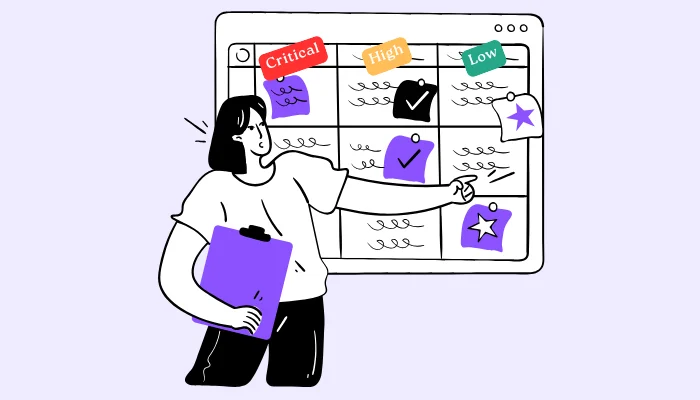
Here’s a statistic to make managers sit up and take note: according to a Gallup study, $9.6 trillion in productivity would be added to the economy if the world’s workforce were fully engaged with their daily tasks.
That would amount to a 9% increase in global GDP. It’s a significant figure, and it highlights the need for business leaders to ‘carpe diem’ and find better methods for managing their projects from day one.
Step forward: task prioritization in project management. It’s the keystone for:
When SME leaders take steps to positively manage their team’s productivity and allow them to fairly contribute to the success of a project, it fosters commitment, good working practices, and better overall outcomes.
Task prioritization frameworks for project management are used across various industries to improve focus and reduce stress for all employees. The list of industries that use task prioritization tools includes:
But how to prioritize tasks in project management is a different question altogether. Stay with us to find out everything you need to know about this topic.
First, we must ask: Why does task prioritization in project management matter? These days, it’s a non-negotiable for all project managers and their teams to stay focused. Often, when workers are not engaged or have no clear idea what their goals are, it can lead to common problems like:
Task prioritization can help overcome these issues by allowing managers and employees to engage effectively, work together, and find better ways of:
Alongside this, considering project management priority levels is key. They influence the decision-making process and inform how a project will take shape, from inception to completion.
Working out a fully operational hierarchy for who takes on what task, and when, will become more evident as you plan, prioritize, and see the core deliverables take shape.
With all this in mind, it’s helpful to have a framework to prioritize tasks in project management. We’ve put together a step-by-step guide to illustrate it.
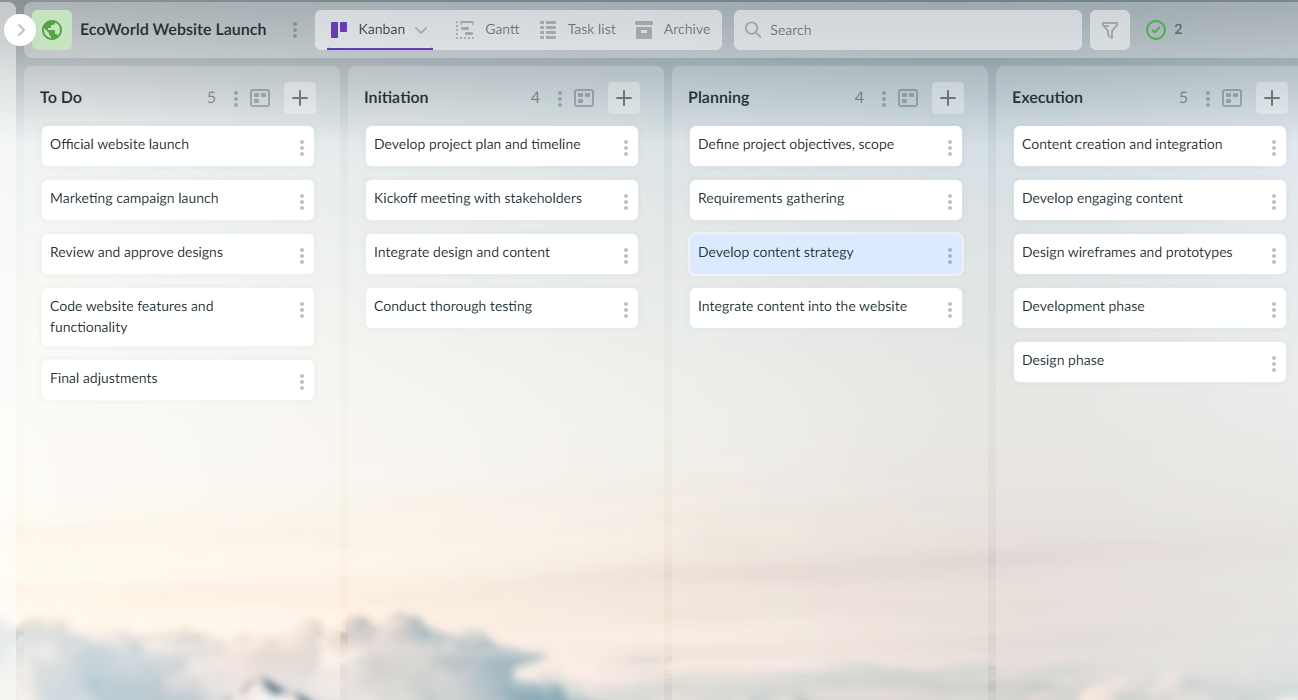
A comprehensive task list gives clarity on all work items, helping teams break larger project goals into achievable steps
First, you need a comprehensive overview of all your tasks. What needs to be done to get the project delivered on time and to the highest standard? Depending on the length of the project, you’ll have a list of:
Look at each task and break each larger goal into smaller core deliverables. Team members can view each job without feeling overwhelmed by the thought that ‘everything must be done now,’ allowing them to focus on a small step every day.
When planning a project, enhance your operations with tools like Kanbanchi, Asana, or Google Workspace. They make a valuable difference to how you develop and run your tasks and can be used for every step we’re outlining here.
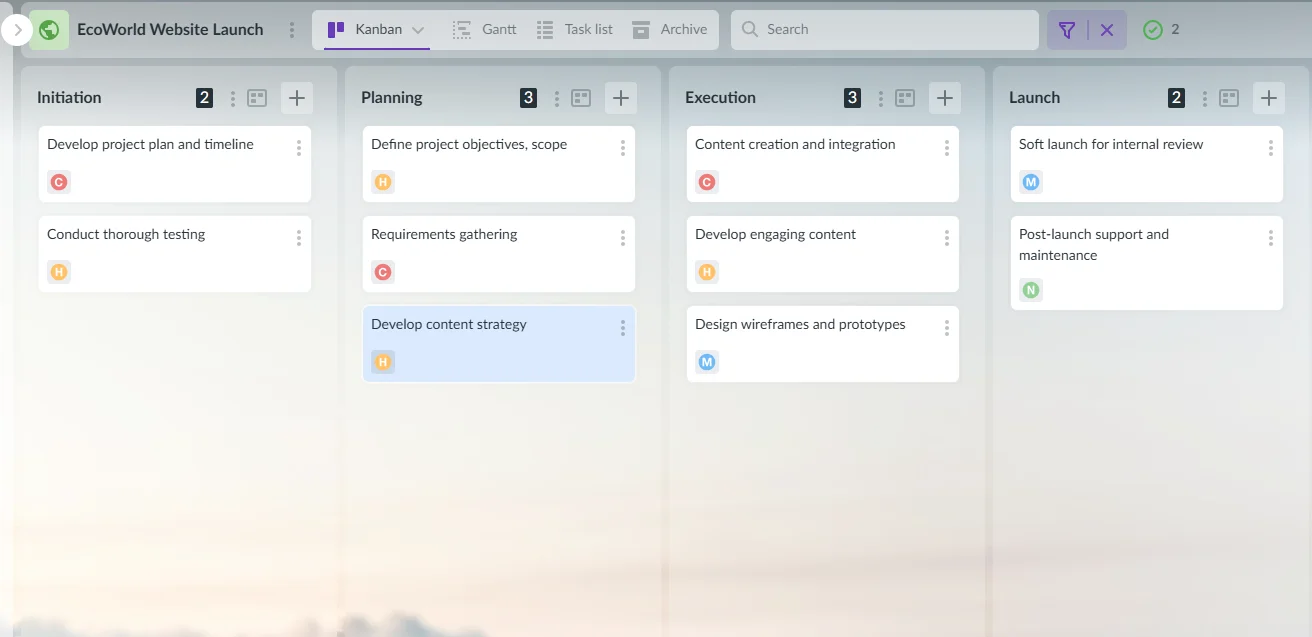
Evaluating urgency and importance prevents teams from focusing only on quick wins and ensures that high value tasks remain top priority
This is all about how to evaluate impact, assess deadlines, and work out project dependencies. It may seem obvious, but not all tasks are equal in their importance.
Sometimes it can be challenging to see the wood for the trees when planning a project. Instinct might tell you that completing all the small elements first is the most sensible approach. It’s not always the case. Doing it this way can often lead to a false sense of achievement and completion bias.
Therefore, it’s important to distinguish between these two categories:
Your project list is complete, roles are decided, and it’s time to think about choosing a project framework to use for your task prioritization management.
This is a task prioritization tool that classifies each part of the project into quarters, based on importance and urgency.
A prioritization tool that helps teams allocate resources by categorizing requirements into four different groups:
With this task prioritization tool, you assign alphabetical priority levels to tasks, then work out your system:
Further on, we’ll outline these and others in more detail so you have a comprehensive overview of how they work. You can decide on the most suitable for your project and team’s needs.
You and your team should always have a calendar and work diary to stay aware of important events and team meetings. But do you have the same setup for your tasks and project requirements?
If the answer is ‘No’, you need to work out a better way of scheduling and allocating your resources. Setting up a routine, making sure everyone is aware of how it works, and ultimately sticking to it is the best way to stay ahead.
Plan the most important tasks in advance, considering their due dates and priority. At the end of each day, plan the next day’s schedule and make sure you’ve all got enough time to devote to each part of the job.
With a plan in place, everything should be much easier to follow. Everyone knows their goals, what they need to do, and when.
It doesn’t end there. Your task prioritization should be reviewed often and adjusted accordingly as the needs of the project change, such as when deadlines alter or there are unexpected changes.
Regular check-ins with your team are key to this, too. This allows for dialogue and enables everyone to express what they think is succeeding and what needs extra attention.
Read more articles about Task Management
We’ve already introduced three popular task prioritization methods that SMEs and larger corporations use to plan and execute their projects from start to finish.
We’ll now outline and expand on these, and introduce you to some of the other practical and valuable tools that SMEs use.
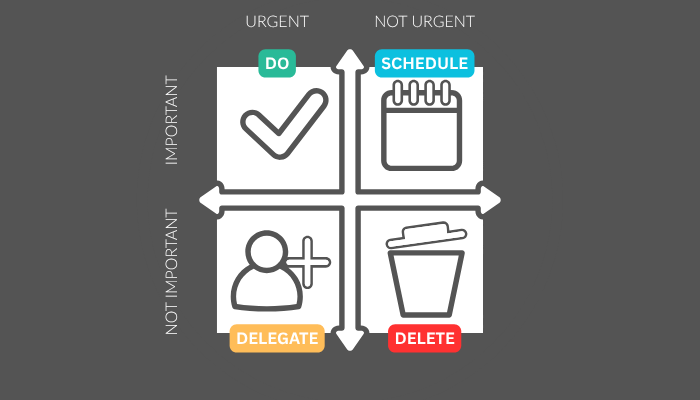
The Eisenhower Matrix helps teams decide which tasks to do now, schedule, delegate, or eliminate based on their urgency and importance
Named after the 34th President of the USA, Dwight D Eisenhower, this task management tool was developed from his time in Office and as a General during World War II.
From his illustrious career, he understood how to make complex decisions and prioritize tasks. Thus, the Eisenhower Matrix is a quadrant-based system that classifies each part of the project into four parts, based on importance and urgency.
A project manager will place tasks in one of these four quadrants. Team members will work on the job using this as a guide.
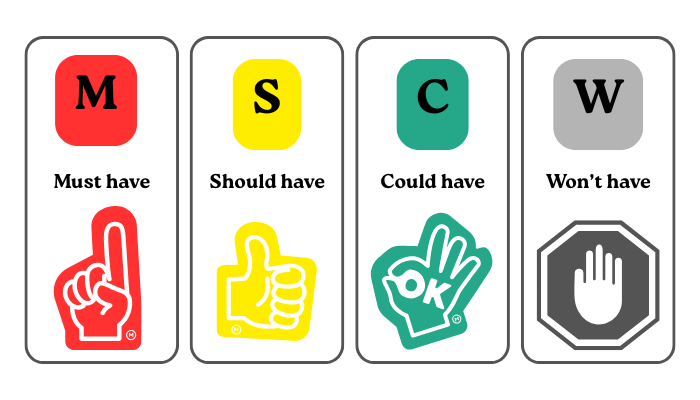
The MoSCoW method allocates resources efficiently by ranking requirements from essential deliverables to tasks that can be postponed
Developed by software expert Dai Clegg at Oracle, this method was designed to help his team prioritize tasks during brand-new product releases. It’s a tool to help teams allocate resources by categorizing requirements into four different groups:
Once a team leader has met with stakeholders, they’ll agree on a process for the project. Then, the above matrix will be used to decide the best course of action to meet the deadlines.
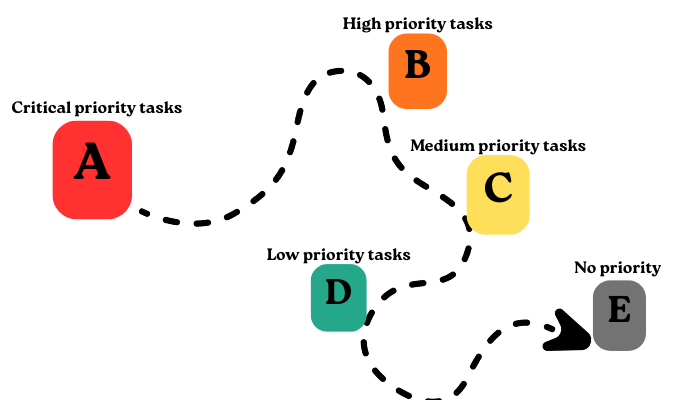
The ABCDE technique organizes tasks from highest to lowest priority, helping project teams focus on what matters most for success
Think of this as being a highly organized to-do list that allows leaders to see what needs to be prioritized and what can be left off the project without causing any detriment. With this task prioritization tool, you assign alphabetical priority levels to tasks, then work out your system:
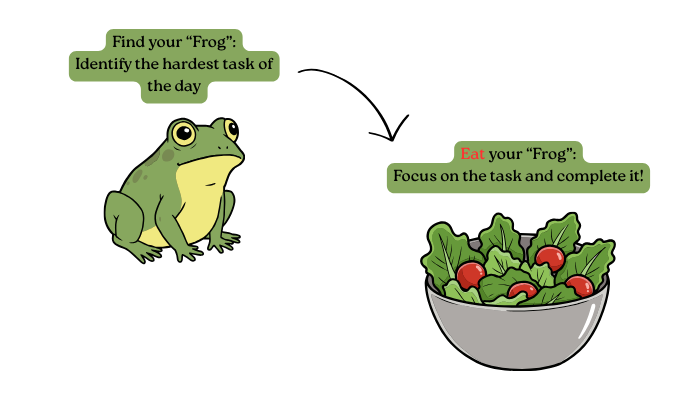
The Eat That Frog method encourages completing the most challenging and impactful task at the start of the day to maximize productivity and momentum
Mark Twain: “If you eat a live frog first thing in the morning, nothing worse will happen to you for the rest of the day.”
And indeed, this is where this task priority system gets its name. It centers on dealing with the most challenging task at the start of your workday. Here, your “frog” is the task you’re probably putting off doing, but ultimately it’ll have the biggest impact on the success of your project.
What you need to do:
Developed by Ivy Lee in answer to a consultant named Charles Schwab, who’d asked her to improve the Bethlehem Steel company’s efficiency. Its beauty comes from how simple it is. At the end of every day, select six essential jobs to do the following day, then put them in order of priority.
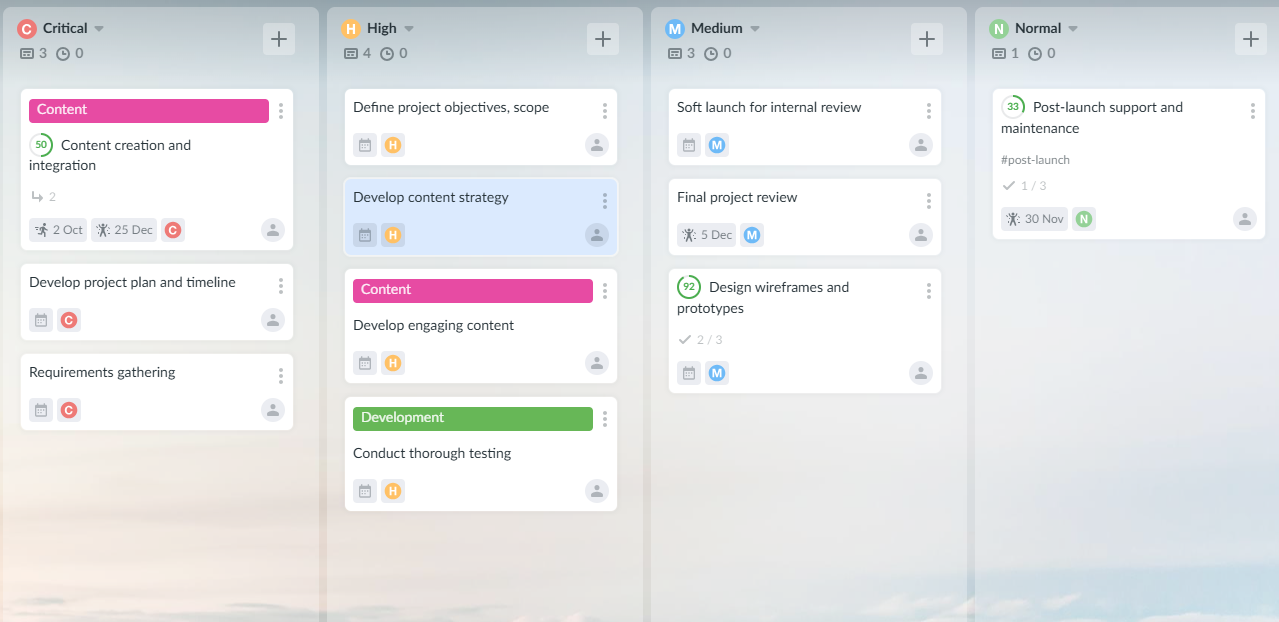
Kanban supports clear task flow by moving work items across columns like To Do, In Progress, and Done to manage priorities at a glance
This method is a highly visual way to prioritize tasks. It’s a great way to keep everyone focused and on the same page. Think about it as having a digital board on which all team members can see the status of every job at a glance.
Kanban is a superior method for cross-functional teams to cooperate harmoniously on a project. It’s very useful for those who work in product development as it’ll highlight what stage the project is in to everyone.
Therein lies the key to its success: ensuring that tasks are broken into stages, then moved along as the project progresses.
A productivity method that involves creating a daily to-do list of one large, three medium, and five small tasks. It’s designed to bring balance between ambition and realism when it comes to working out task productivity schedules.
This is a productivity method in which you set specific time slots for jobs, then do them in that timeframe.
It’s almost like making appointments to complete tasks, then ticking them off when they’re complete. It helps create a focus period for each job and is designed to stop workers from getting totally overwhelmed.
The key is to stick to your time slots. You should only work on the task during that time, then move on to the next one when the slot is up.
You now have some great tips on how to prioritize tasks at work, along with frameworks you can use. Setting them in place is one thing. Remaining consistent and making sure you and your team stick with them is another!
What can you do to ensure everything stays on plan?
Whatever framework you choose and methods you adopt, it’s important to foster these habits across the whole of the team and not just a select few people. When everyone is included and encouraged to take part and adopt task prioritization, they’ll be more likely to work to the best of their ability and put 100% effort into the project.
If you want high-quality, practical solutions for task prioritization and advice on how to prioritize tasks in a task manager, then we’re on hand to help.
The team at Kanbanchi has developed intuitive task management software that allows teams to apply prioritization techniques visually and collaboratively within Google Workspace.
Some of Kanbanchi’s outstanding key features:
Already using Google Workspace as a team? We’re completely compatible! So if you’re a team managing multiple members with lots of different priorities, you’ll be able to view the progress they’re making at a glance. Get in touch and let’s get the conversation started.
Sign up with Kanbanchi today and try our software
You can use a variety of task prioritization tools, such as the Eisenhower Matrix, the MoSCoW method, or Ivy Lee’s scheme, to set clear goals for team members, ensuring the core elements of a project are delivered successfully and on time.
It’s a project management tool to help you sort tasks by categorizing them based on their urgency and importance. They’re divided into quarters:
As Kanban is such a visual task manager, it can utilize colours and blocks to group tasks into the level of priority needed (e.g., urgent, standard, low). It can also be used to define priority levels directly on task cards.
It’s a system that promotes flow and focus for team members, enabling them to work on the next crucial task when they’re able. Ordering this way means the highest-value work gets completed first.
This is a ranking system for tasks, and it’s based on importance and urgency. You’ll find tasks are ranked as:
The most critical tasks are the ones that should be completed first, and the lowest can either be completed at the end of the project, or even left out, with no detriment to the finished work.

In this Article:
Start using Kanbanchi now
Start your free trial