-  views

The Ultimate List of Kaizen Ideas for Productive Teams

Try Kanbanchi now

Start your free trial

 

Kaizen continuous improvement concept illustration

Have you ever felt like your team is running a marathon in heavy boots? You’re moving, you’re sweating, and you’re working harder than ever, but the finish line doesn’t seem to get any closer. It’s almost like a fever dream! The more you work, the further away the end seems! 

The problem usually isn’t a lack of effort. It’s wasted time: the friction in your processes that slows everything down.

Enter Kaizen, put simply, the philosophy of continuous, incremental improvement. It’s the secret weapon of some of the most successful SMEs. 

While competitors wait for a massive brainwave that may never come, Kaizen teams are making five tiny improvements every single day. By the end of the year, those tiny gains have compounded into a total transformation.

This guide isn’t just a theoretical deep dive that offers no real solutions. It is a practical toolkit. 

Our team at Kanbanchi has compiled a comprehensive list of Kaizen ideas designed to help you identify areas of waste and eliminate them using the tools you already use every day in Google Workspace.

Whether you are a project manager looking to shave ten minutes off your weekly sync or a CEO trying to build a culture where every voice matters, these ideas are your roadmap.

Why a Kaizen Culture is a Game Changer

In many organizations, improvements happen only once a year during a stressful departmental review… then they’re rapidly forgotten about (until the next one). 

In a Kaizen culture, improvement is as natural as breathing, and it’s small, incremental changes that make a huge difference. 

It’ll help you create a better, more sustainable way of working because, let’s face it, most productivity hacks are temporary. They work for a week and then fade away. Kaizen is different because it focuses on Standardized Work. 

Once an improvement is proven successful, it becomes the new standard, the baseline from which the next improvement begins.

It ends the fear of big changes…

Big changes are scary, we all know that, and it’s human nature. 

They trigger the brain’s fear response, leading to resistance and burnout. Kaizen bypasses this by focusing on changes so small they are almost impossible to fail at. Here are two examples to consider: 

Follow the path of least resistance

Ask your team to ‘Reorganize the entire filing system online,’ and they’ll likely groan. 

When you ask them to ‘Suggest one folder that needs a better name,’ they’re more likely to engage.

Empower your team

Kaizen shifts power from higher-ups to team members at the coal face every day. 

The people doing the work are the best equipped to fix it.
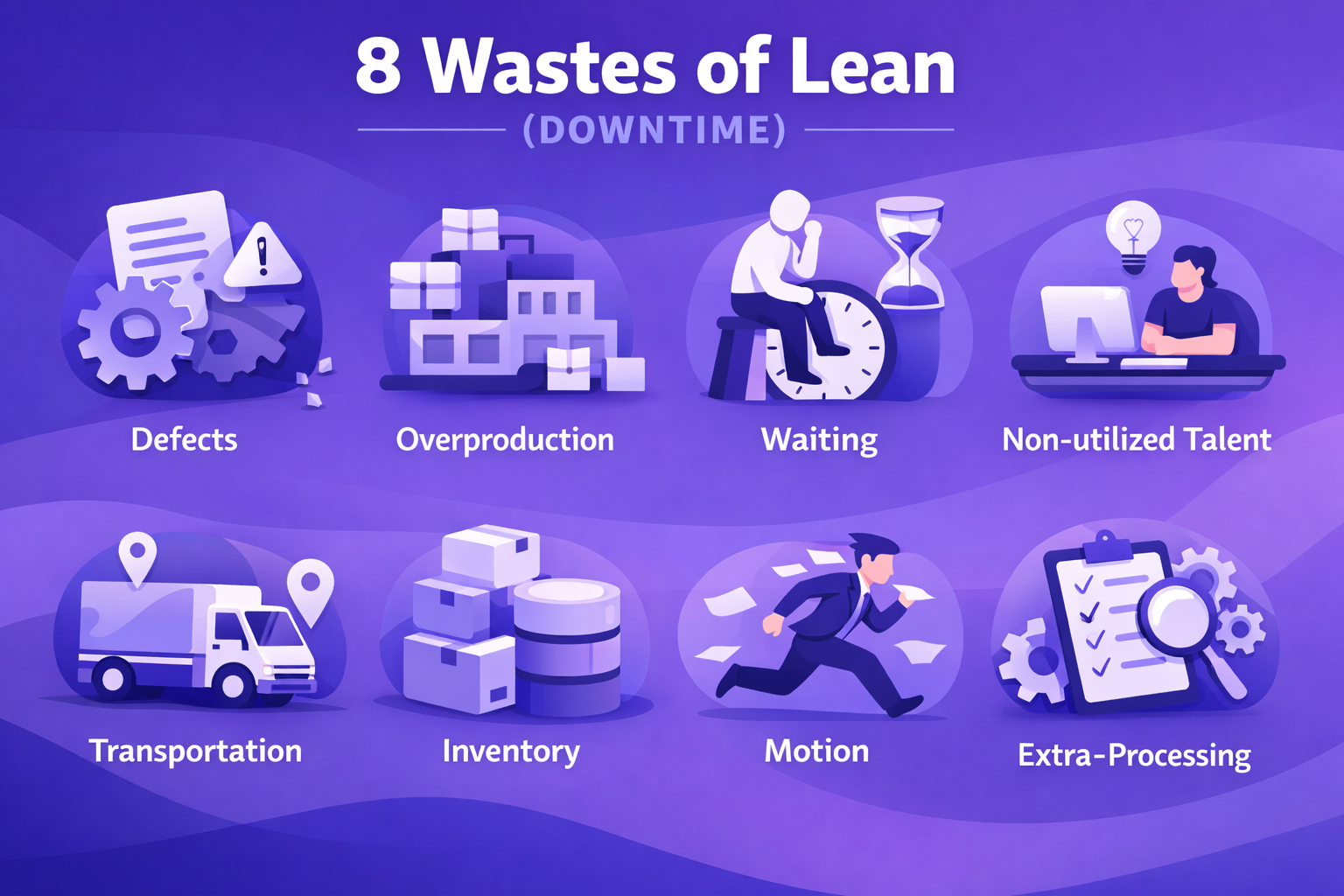
It helps put a stop to the financial waste

In Lean methodology, there are 8 types of waste (often remembered by the acronym DOWNTIME).

  1. Defects: Rework and errors.
  2. Overproduction: Making more than is needed.
  3. Waiting: Idle time between steps.
  4. Non-utilized Talent: Not using the team’s full potential.
  5. Transportation: Moving items unnecessarily.
  6. Inventory: Excess products or data sitting unused.
  7. Motion: Unnecessary movement (physical or digital clicking).
  8. Extra-processing: Doing more work than the customer requires.

By using a list of Kaizen ideas to target these specific wastes, you aren’t just making people happier, you’re directly impacting your bottom line.

How can you instill these principles in your team? Below, we’re going to look at some great examples of Kaizen ideas you can use in your work. 

20 Practical Examples List of Kaizen Ideas

Don’t wait for a lightbulb moment. 

Kaizen is about the low-hanging fruit and the things you can do to immediately make your work life easier (and drive future success). 

To help you get started, we’ve categorized this list of Kaizen ideas by the common areas where friction hides in a modern digital workspace.

Office and Administrative Improvements

Administrative paperwork (even the digital kind) is often the biggest source of what’s known in Kaizen as Muda (what we know as waste…). A few simple tricks like these can help: 

  • Standardize File Naming: Create a universal format (e.g., YYYYMMDD_Project_Client) to end the Search hunt.
  • The 5-Minute Email Rule: If a reply takes less than 2 minutes, do it now. If it takes longer, convert it into a task.
  • Email Templates: Identify the five emails you send most often and save them as Gmail templates.
  • Declutter Shared Drives: Dedicate 15 minutes a month to archiving Old or Draft folders.
  • Automate Meeting Minutes: Use an AI note-taker to transcribe and summarize syncs, then sync those notes to your project board.

IT and Software Development

In tech, small bugs and technical debt act like anchors. Kaizen cuts the rope. Here are a few ideas to try, to streamline workflows: 

  • Standardized Checklists: Add a Definition of Done checklist to every task card to prevent rework.
  • Automate Regression Testing: Start with one manual test and automate it this week.
  • The One-Click Dev Environment: Reduce the time it takes for a new hire to set up their workstation.
  • Documentation Sprints: Dedicate the last hour of every Friday to updating one page of the Wiki.
  • Peer Review Buffers: Schedule specific 30-minute blocks for code reviews to prevent stop-and-start context switching.

Customer Service and Support

Customer satisfaction is built on the back of hundreds of tiny interactions. Knowing how to make small changes to these to improve the experience of customers is key: 

  • Knowledge Base Updates: Every time a customer asks a question twice, add the answer to your FAQ.
  • Snippet Libraries: Use text expanders for common troubleshooting steps.
  • Feedback Loops: Ask customers one specific question: “What was the most confusing part of this process?”
  • Response Tiering: Categorize tickets by Quick Fix vs. Investigation to keep the easy wins moving.

Team Wellbeing and Communication

A team that isn’t stressed improves exponentially. Why? Because they communicate and understand the reasons why small improvements equal big wins: 

  • Meeting-Free Wednesdays: Give everyone a dedicated block for Deep Work and no meetings at least one day a week. 
  • The 50-Minute Hour: End meetings 10 minutes early to allow for a mental reset and break.
  • Transparent Workloads: Use a visual board so everyone can see who is overloaded before they burn out.
  • Digital Suggestion Box: Create a Kaizen Ideas board where anyone can post a 1% improvement.

Now, let’s move on to understand how you can apply examples like this in a team framework that everyone can understand and engage with. 

Using PDCA and DMAIC with Kanbanchi

Ideas are great, but execution is everything, right? 

To make your examples list of Kaizen ideas stick, you need a framework. In the Lean world, we use two primary cycles: PDCA and DMAIC.

The PDCA Cycle (Plan-Do-Check-Act)

This is the heartbeat of Kaizen. It’s a four-step model for carrying out change.

  1. Plan: Identify a problem and a potential 1% fix.
  2. Do: Implement the fix on a small scale as a test. 
  3. Check: Look at the data. Did it actually save time? Did it reduce errors?
  4. Act: If it worked, standardize it across the team. If not, try something else.

Using DMAIC for Complex Problems

If you are facing a larger bottleneck, use the DMAIC framework:

  • Define the problem (e.g., Onboarding takes 10 days).
  • Measure the current performance.
  • Analyze the root cause (Use the 5 Whys method).
  • Improve by implementing a Kaizen idea.
  • Control by monitoring the new process in your dashboard.

Why choose Kanbanchi for your Kaizen needs?

Frameworks like PDCA require visibility. If your Check phase happens in a private spreadsheet, the team loses interest.

Visualize the Cycle

Use columns on your board labeled 

  • Testing Idea
  • Measuring Results
  • Standardized

It’ll help everyone be able to see instantly what’s happening and when, and they can make value-based decisions on what happens next, without lots of lengthy meetings or email chains! 

Collaborative Analysis

Use the comment section on a Kanbanchi card to conduct a 5 Whys analysis with the whole team.

Start a free Kanbanchi trial now

10 Time Saving Kaizen Templates for Kanbanchi 

You don’t need to reinvent the wheel to start improving. In the spirit of Kaizen, we’ve developed ten time-saving productivity dashboard templates that you can implement in Kanbanchi today. These are designed to turn your list of Kaizen ideas into standardized digital workflows.
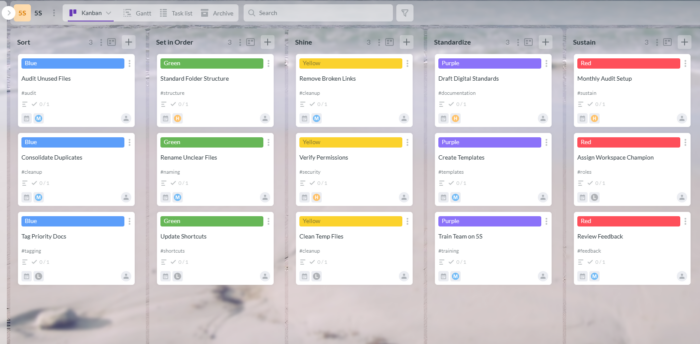
1. The 5S Digital Workspace Audit

Kanban board in Kanbanchi showing 5S digital workspace tasks
5S digital workspace Kanban board in Kanbanchi. Tasks are organized into Sort, Set in Order, Shine, Standardize, and Sustain stages

The 5S methodology:

  1. Sort
  2. Set in Order
  3. Shine
  4. Standardize
  5. Sustain

 …is usually for factories, but it works perfectly for Google Drive and admin teams that need extra help with making their workflows faster. 

The Idea Behind It 

Use columns for each S to track the migration of files from Unsorted to Standardized Archive.

Ultimate Goal: Eliminate digital clutter that slows down file retrieval and speeds up your workflow. 
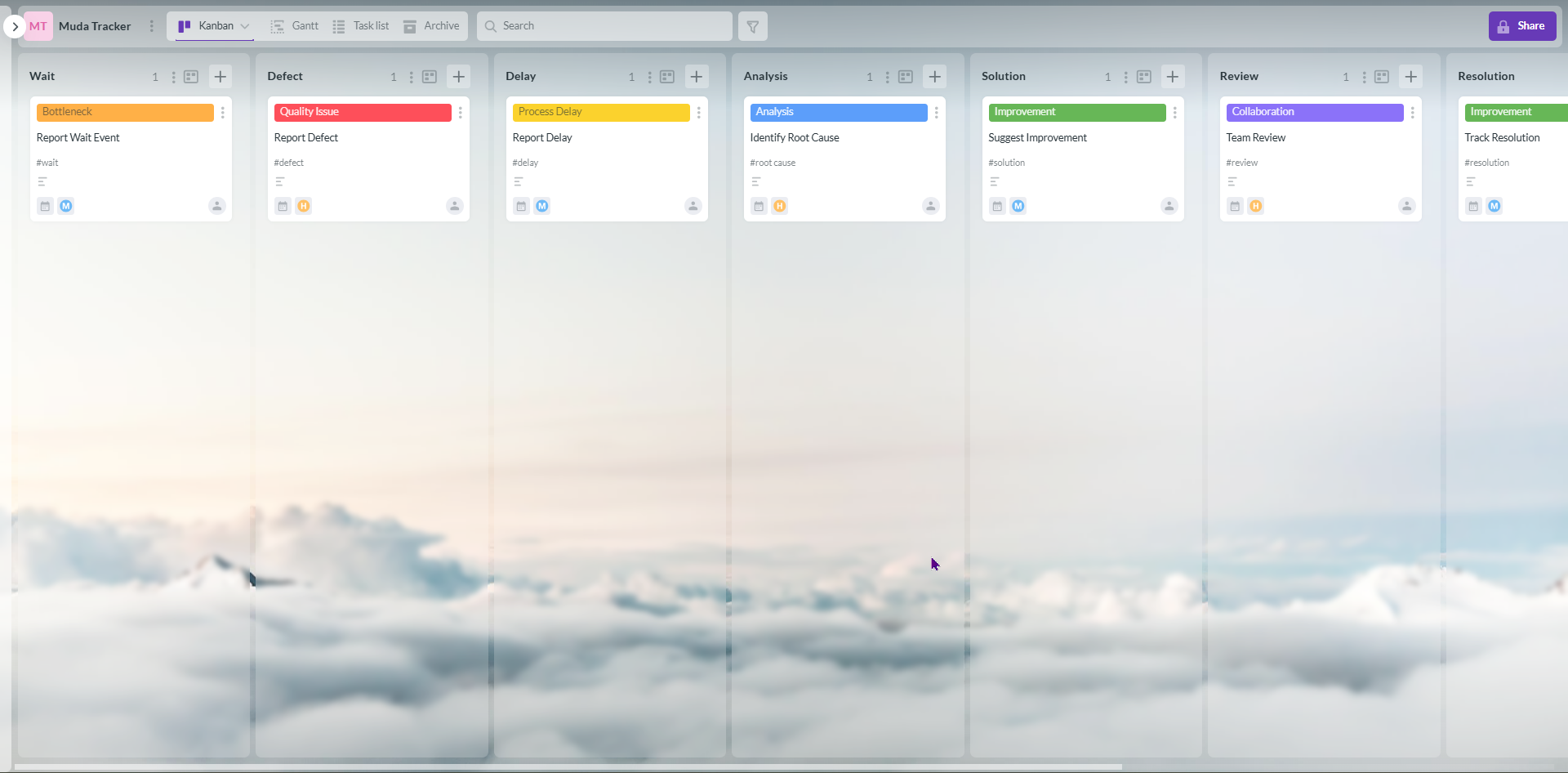
2. Waste Identification Board: Muda Tracker

Muda Tracker Kanban board in Kanbanchi showing Wait, Defect, and Delay tasks with color-coded labels.
Screenshot of a Muda Tracker board capturing Wait, Defect, and Delay events with color-coded labels for quick resolution

Stop letting small annoyances disappear without a trace; monitor them, and then you can discuss as a team how to address inefficiencies. 

The Idea Behind It 

Encourage team members to add a card every time they hit a bottleneck. Review these weekly to pick one to solve.

Ultimate Goal: Capture every Wait, Defect, or Delay event in real-time and deal with it professionally. 
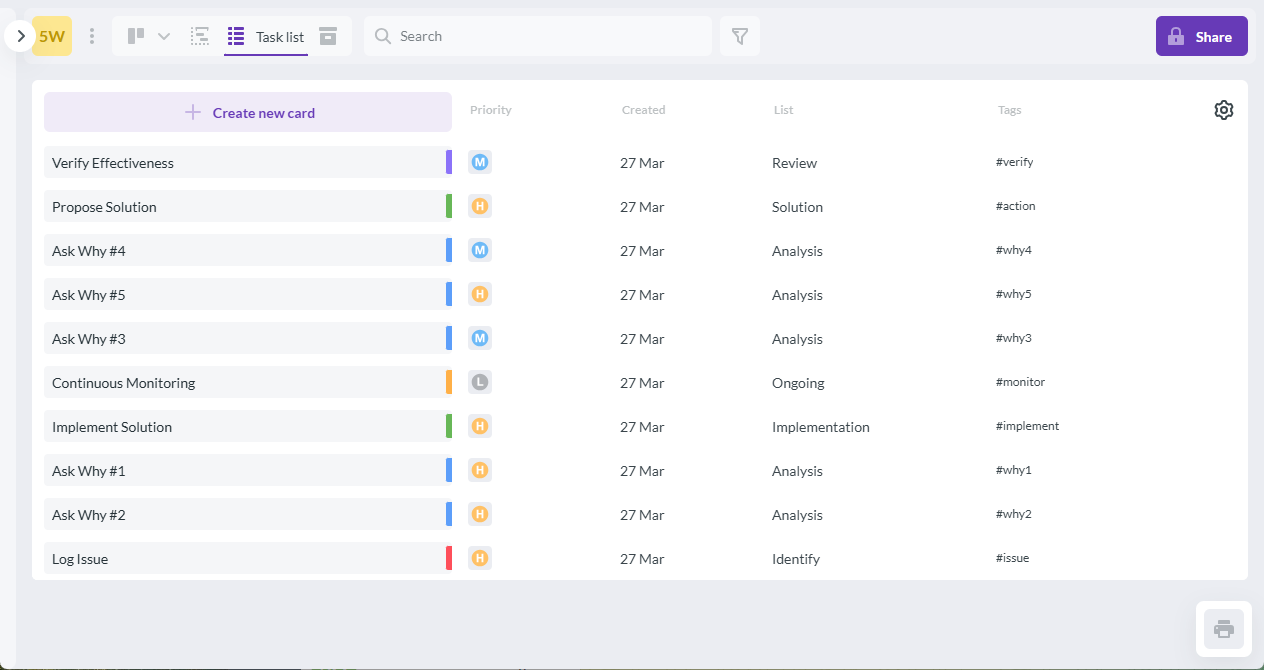
3. Root Cause Analysis: The 5 Whys

5 Whys Kanban board in Kanbanchi showing tasks to identify root causes and implement solutions.
Screenshot of a 5 Whys board tracking issues, asking ‘Why?’ five times, and implementing corrective actions

When a mistake happens, don’t just fix the symptom; fix the system. That way, your workflows become faster in the future. 

The Idea Behind It 

Create a template with a custom form that requires users to answer “Why?” 5 times before a task is considered resolved. It’s a really effective way to uncover mistakes and sort them. 

Ultimate Goal: Prevent recurring errors from happening regularly. 
4. Continuous Improvement Suggestion Box

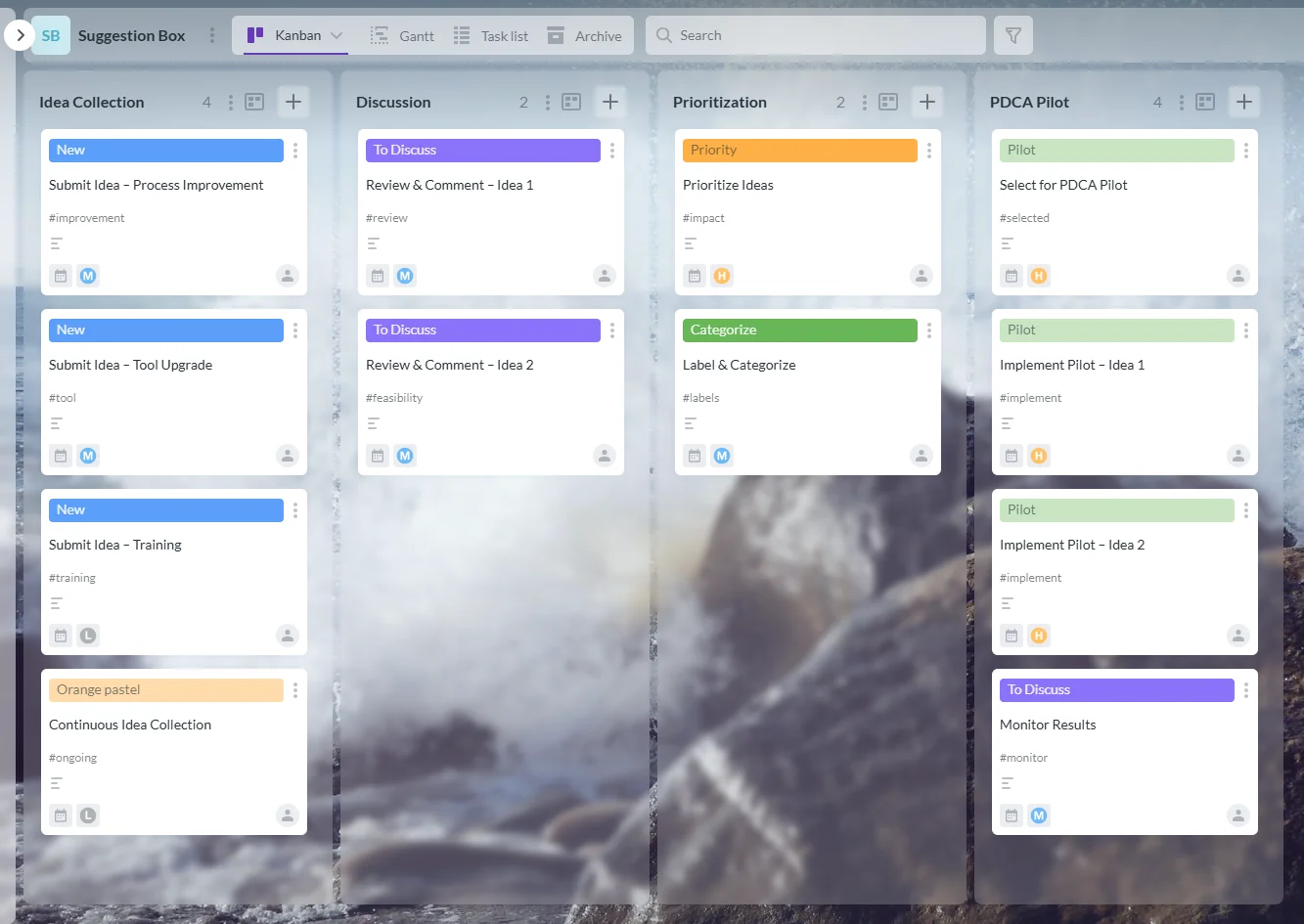
Kanbanchi Idea Board showing team-submitted suggestions, discussions, and PDCA Pilot tasks.
Screenshot of an Idea Board in Kanbanchi where team members submit, discuss, prioritize, and pilot improvement ideas.

Replace the dusty physical written suggestion box (that no one really uses) with a transparent system online that team members are more likely to remember to make use of. 

The Idea Behind It 

Use Kanbanchi cards to collect and organise improvement ideas in one shared board. Team members can add ideas as cards, discuss them in comments, and use labels, priorities, or custom properties to highlight the most valuable suggestions. The most impactful ideas can then be moved into the PDCA Pilot phase.

Ultimate Goal: Crowdsource innovation from the front line and get effective solutions from your team. 
5. Standard Operating Procedure (SOP) Library

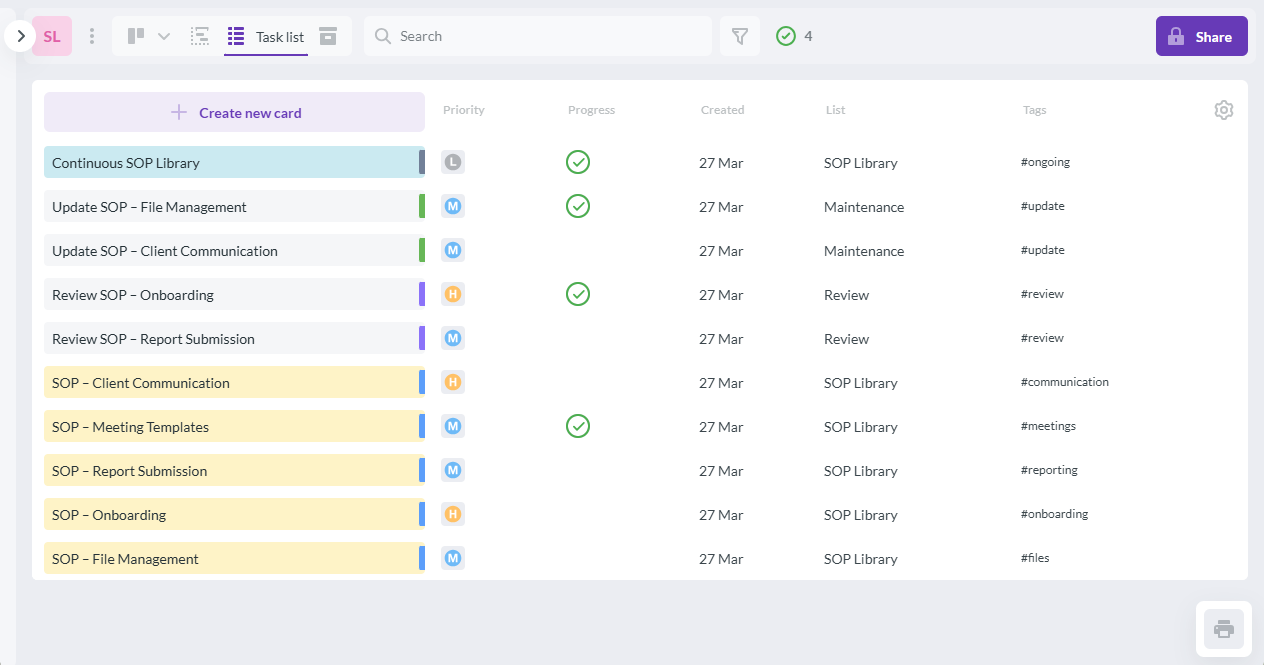
Kanbanchi SOP Library board showing How-To guides, attached documents, and video links for team reference.
SOP Library board in Kanbanchi with step-by-step guides

Kaizen fails without a baseline, and team members will always work better when they have a digital manual to reference. 

The Idea Behind It 

A board where each card is a How-To guide with attached Google Docs and video Loom links.

Ultimate Goal: Ensure everyone completes the task in the best-known way.
6. The Stop-Doing List

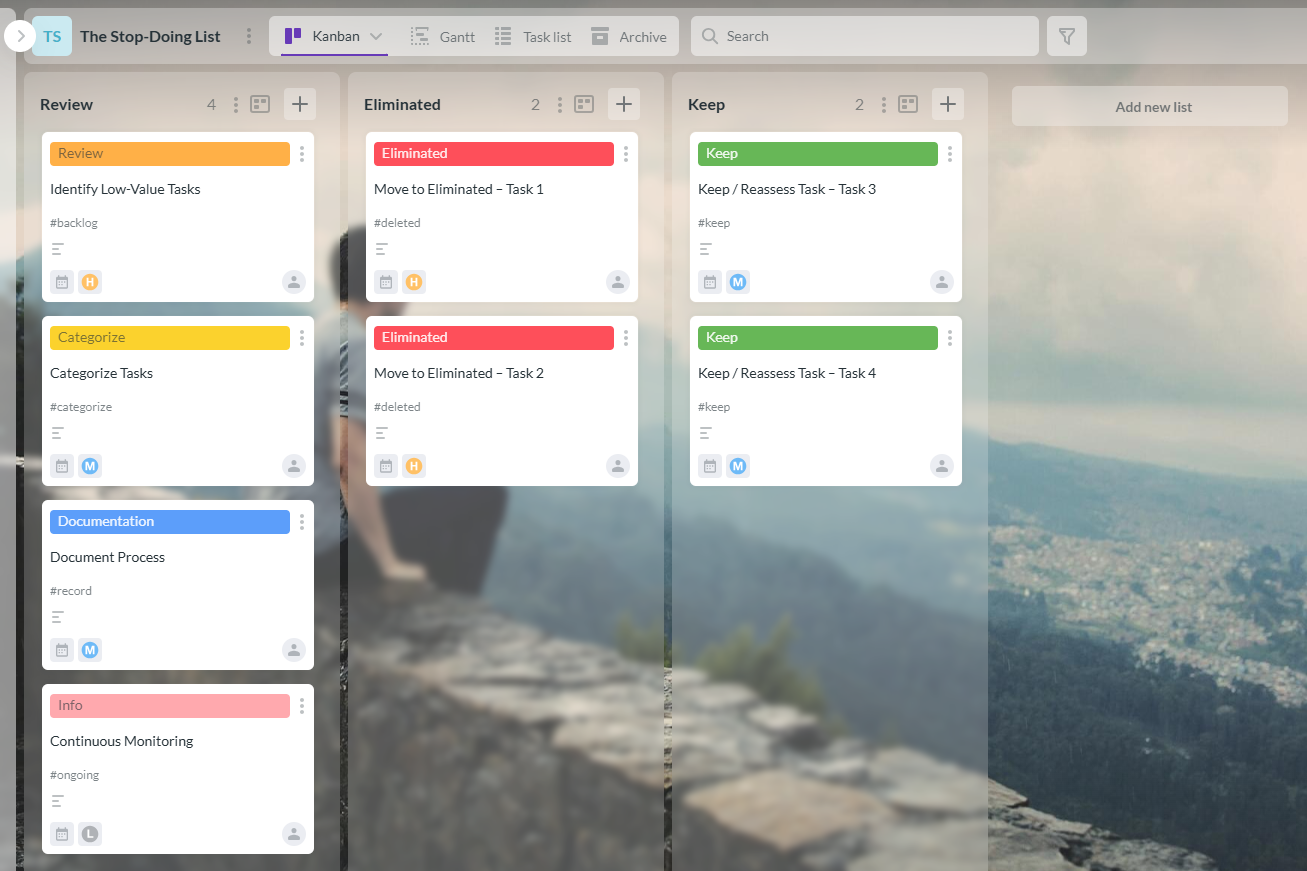
Kanbanchi Stop-Doing List board showing tasks to eliminate, keep, or review for reclaiming time
The Stop-Doing List board in Kanbanchi with tasks categorized for elimination, retention, or further review to free up time and reduce backlog.

Sometimes the best improvement is subtraction. Review a task list and identify what needs to be removed to free up time and reduce backlogs. 

The Idea Behind It 

To categorize tasks that have been in the backlog for over 90 days. If they aren’t essential, move them to the Eliminated column.

Ultimate Goal: Reclaim time from low-value activities.
7. Weekly Sprint Retrospective

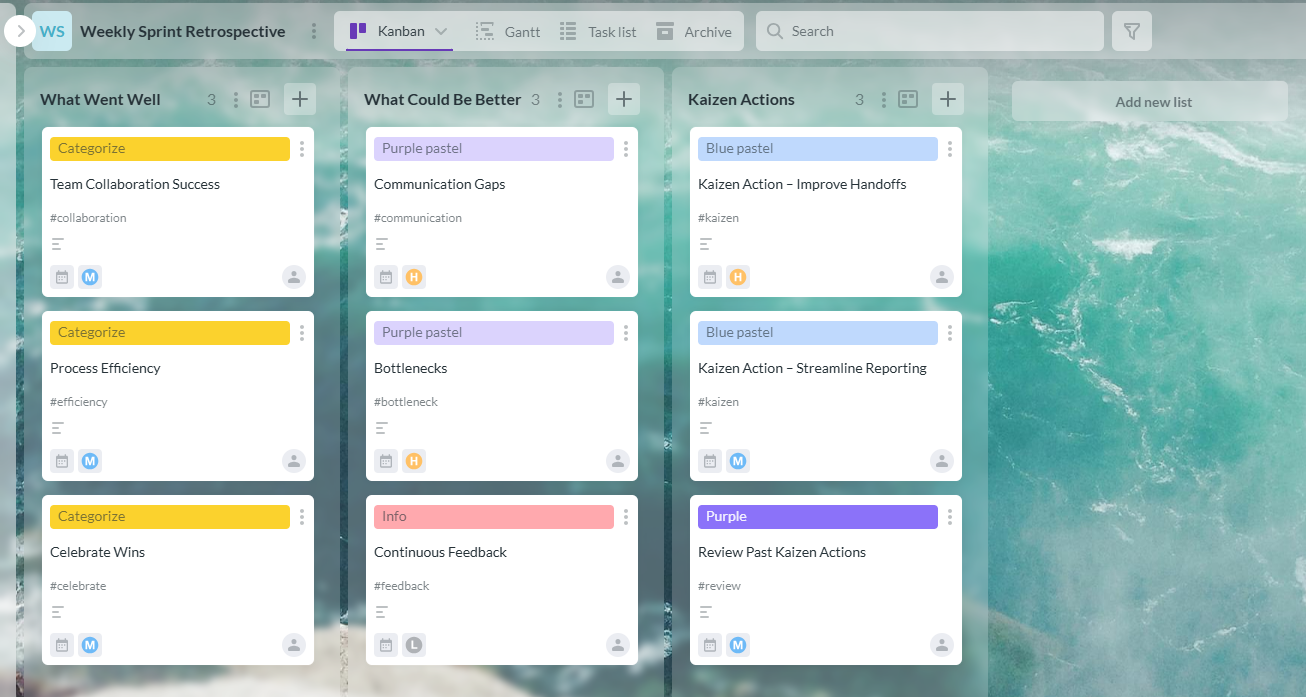
Kanbanchi Weekly Sprint Retrospective board showing columns for What Went Well, What Could Be Better, and Kaizen Actions
The Weekly Sprint Retrospective board in Kanbanchi capturing team successes, areas for improvement, and Kaizen Actions for the next week.

A dedicated space to look back before moving forward, and a chance to discuss any issues team members have with any of the work. 

The Idea Behind It 

Create columns for:

  1. What went well
  2. What could be better and 
  3. Kaizen Actions for next week.

It’ll give a sense of surety and safety! 

Ultimate Goal: Incremental team growth that helps to deliver good results. 
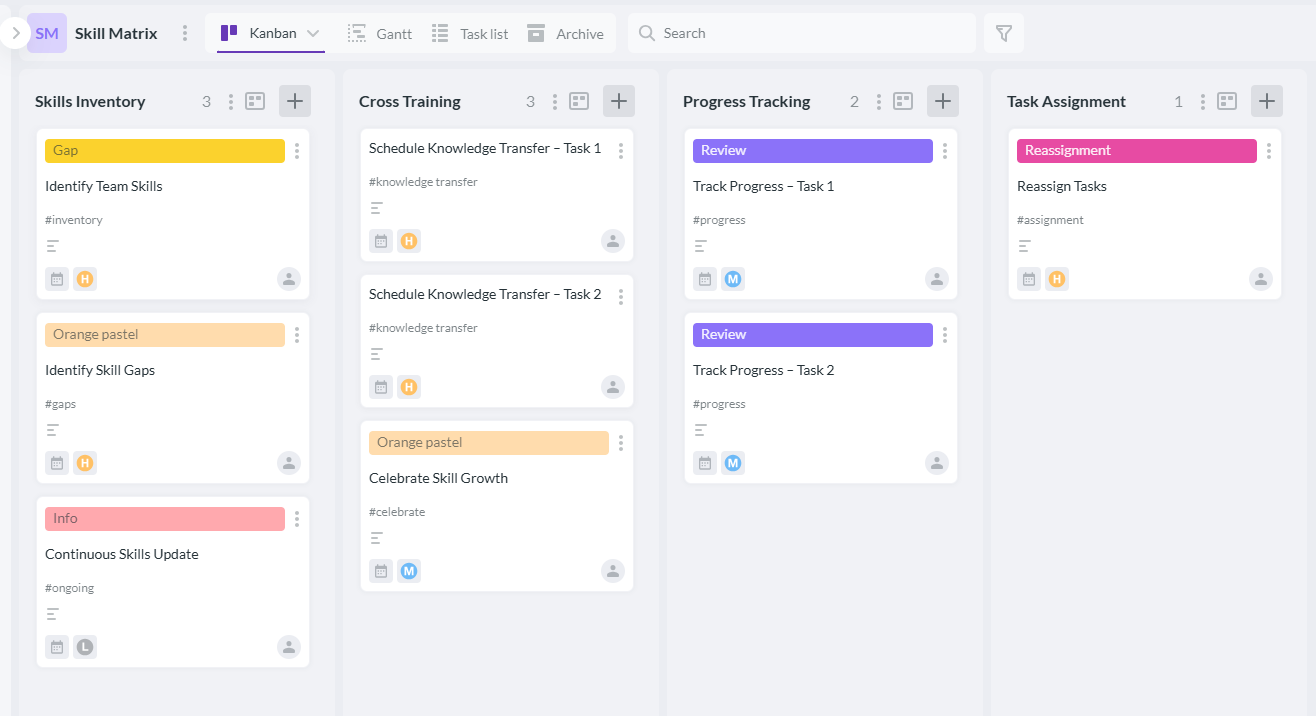
8. Skill Matrix and Cross Training

Kanbanchi Skill Matrix board showing team skills, training tasks, and task reassignment
Screenshot of a Skill Matrix board in Kanbanchi tracking team skills, scheduling knowledge transfer, and reassigning tasks based on strengths.

Reduce the amount of wasted talents in your team, and make a list of who does what best. Make use of the right people in the correct ways. 

The Idea Behind It 

To visualize who knows what. Identify one Knowledge Transfer task per week to train a backup.

Ultimate Goal: Remove tasks from people who aren’t as confident in one area as they are in another and redistribute work fairly. 
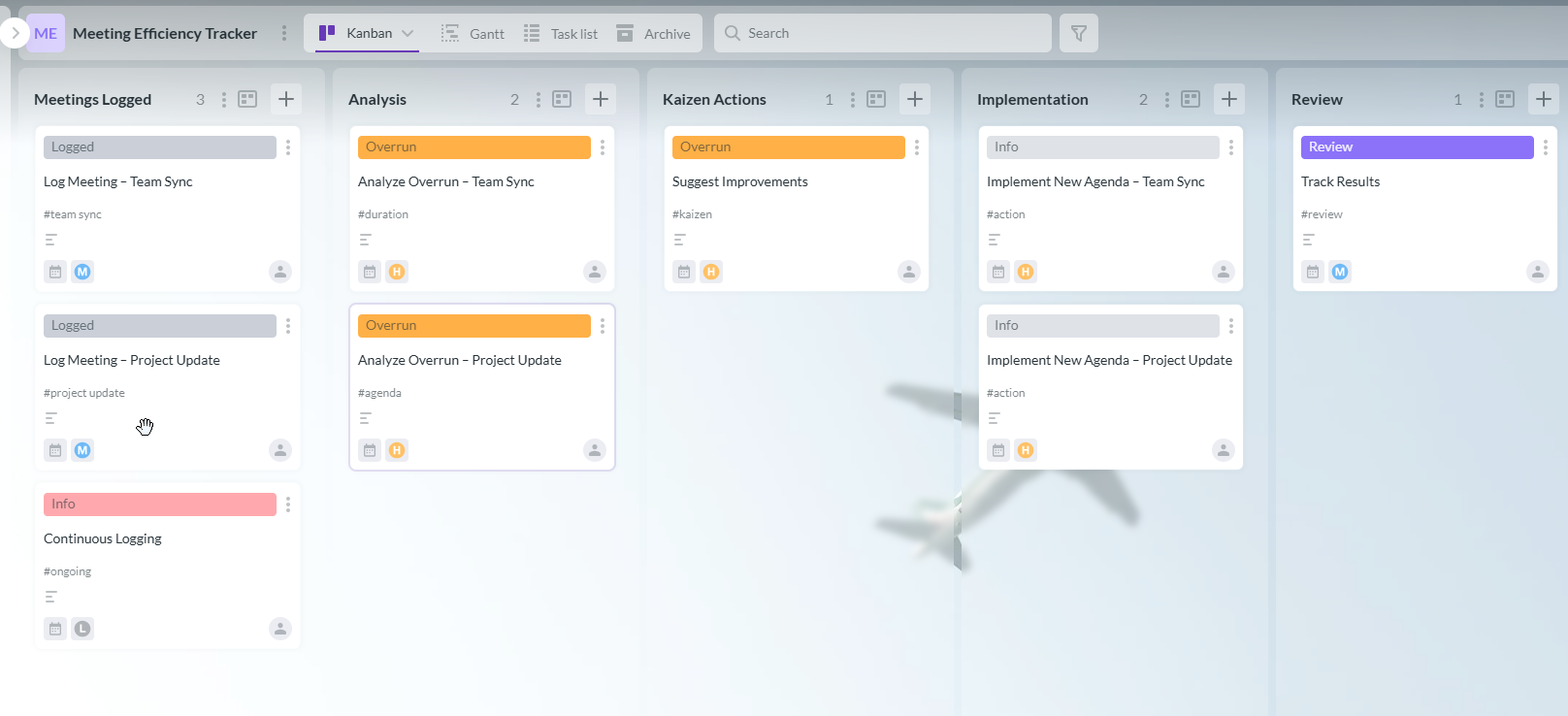
9. Meeting Efficiency Tracker

Kanbanchi Meeting Efficiency Tracker board showing logged meetings, agenda completion, and Kaizen improvement actions.
Screenshot of a Meeting Efficiency Tracker board in Kanbanchi.

Stop the Death-by-4 pm Meeting culture that kills creativity and can foster resentment. 

The Idea Behind It 

It creates a template to track meeting duration vs. the number of agenda items completed. If a meeting consistently runs over, it’s flagged for a Kaizen overhaul.

Ultimate Goal: Shorter, more impactful team syncs.
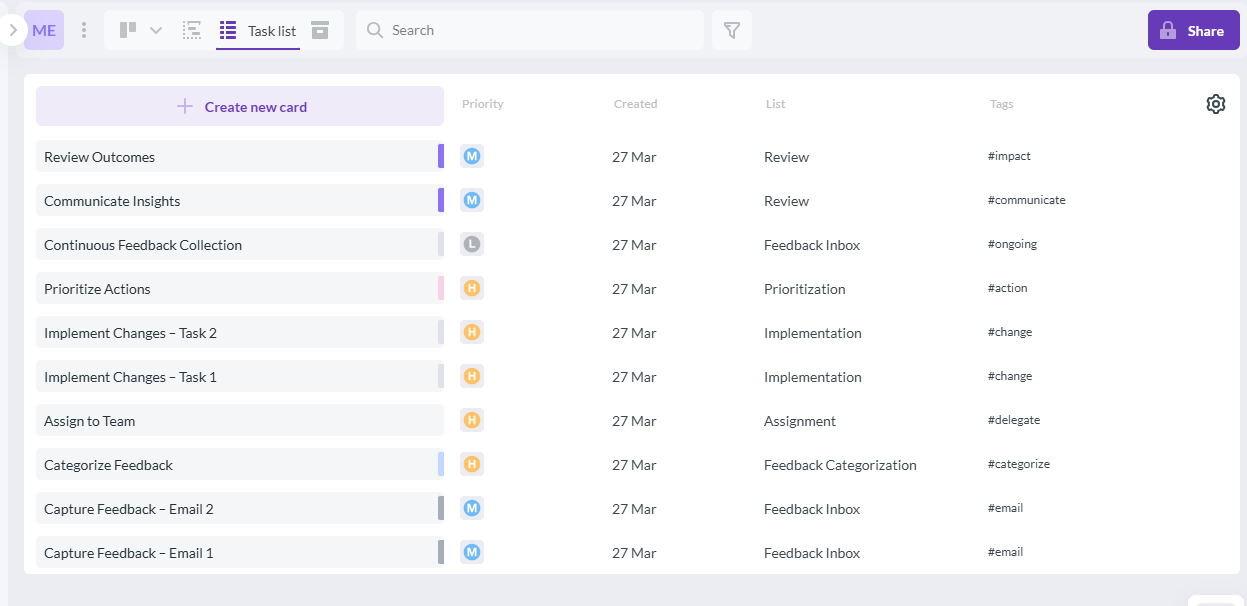
10. Customer Feedback Loop

Kanbanchi Customer Feedback Loop board showing captured feedback, categorized issues, and process improvement tasks.
Screenshot of a Customer Feedback Loop board in Kanbanchi capturing customer feedback, tracking recurring issues, and implementing process improvements

Directly link customer pain to process changes and find ways to communicate this effectively with your team. 

The Idea Behind It 

Capture customer feedback directly in Kanbanchi by converting emails into cards using the board email feature or by adding feedback manually. You can then organise these cards using labels or tags to identify recurring issues and patterns that require a system change.

Ultimate Goal: Market-driven improvements that help to boost performance and deliver better long-term results. 

Whilst implementing some, or all of these ideas can work well, it’s also good to be aware of some of the issues Kaizen ideas can create. To end our guide, we’ll look at these. 

Common Pitfalls: Why Kaizen Idea Boxes Occasionally Fail

We’ve all seen it: a company launches a Suggestion Program, and three months later, it’s a ghost town. Why? Because Kaizen isn’t a suggestion; it’s an action. Here are three main reasons for this. 

The Black Hole Effect

If an employee submits a Kaizen idea and never hears back, they will never submit another one.

Your Instant Fix: Use a transparent board. Even if an idea is rejected, the why should be visible in the card comments.

Over-complicating the Process

If it takes a 10-page form to suggest a 5-minute fix, people won’t do it.

Your Instant Fix: Keep the entry barrier low. A card title and a one-sentence description are enough to start the conversation.

Lack of Leadership Engagement

Kaizen isn’t just a bottom-up strategy. It requires leaders to give the team the time to improve.

Your Instant Fix: Dedicate 10% of every sprint to Kaizen Tasks. If improvement is treated as extra work, it will always be the first thing dropped when things get busy.

If all this has convinced you to start making the most of Kaizen principles in your workflow, then get in touch with the Kanbanchi team today. 

We can discuss your workflow priorities and how we can help deliver the results you and your team need. 

Choose Kanbanchi to find the best software for your team’s needs. We’d love to get the conversation started. 

Start a free Kanbanchi trial now

Frequently Asked Questions: Navigating the Kaizen Journey

As ever, to end our guide, we’ll walk you through some of the most common queries users have when they’re starting their journey with Kaizen. 

If you’ve got any other questions on the topic, you can get in touch with us, and we can chat with you! 

What are some examples of Kaizen in the workplace? 

In a digital office, Kaizen looks like standardizing email subject lines to 

  1. Improve searchability
  2. Creating a “Read Me” file for new project folders, or 
  3. Automating a recurring data entry task using a simple Google Sheets script. 

It is any change that reduces friction at small points to save time or reduce errors over the long term.

How do you write a Kaizen idea? 

Keep it simple and make a note of: 

  1. The Current Situation (the problem)
  2. The Proposed Change (the 1% fix)
  3. The Expected Benefit (e.g., it’ll save 10 minutes per week)

Using a visual card in Kanbanchi allows the whole team to see the before and after of the process.

What is the 5S Kaizen list? 

The 5S list is a framework for organizing a workspace: 

  1. Sort (remove what you don’t need)
  2. Set in Order (organize what remains)
  3. Shine (clean/inspect)
  4. Standardize (create rules)
  5. Sustain (maintain the habit)

These days, this will also apply heavily to digital assets such as shared drives and Slack channels.

How can I implement Kaizen in my small business? 

Start by setting aside 15 minutes a week for a Kaizen Sync. 

Ask your team: “What was the most annoying part of your job this week?” 

Pick one small annoyance and fix it. Focus on high-frequency, low-effort changes first to build momentum and show immediate value.

Start a free Kanbanchi trial now

    MultipleAuthors\Classes\Objects\Author Object
    (
        [term_id] => 918
        [term:MultipleAuthors\Classes\Objects\Author:private] => 
        [metaCache:MultipleAuthors\Classes\Objects\Author:private] => Array
            (
                [user_email] => lyubov.kozlova@kanbanchi.com
                [user_id] => 7
                [first_name] => Lyubov Kozlova
                [last_name] => 
                [job_title] => Blog editor and PM expert at Kanbanchi
                [description] => Helping Project Managers Use Kanbanchi for Effective Team Collaboration
                [user_url] => https://uk.linkedin.com/in/lyubov-kozlova-167906181
            )
    
        [userObject:MultipleAuthors\Classes\Objects\Author:private] => WP_User Object
            (
                [data] => stdClass Object
                    (
                        [ID] => 7
                        [user_login] => lyubov.kozlova
                        [user_pass] => $wp$2y$10$GPJi4BJo10p1GiS9f9aHZOJSmPdgPi1hpFiwLGdEULUf5r0oHbJ06
                        [user_nicename] => lyubov-kozlova
                        [user_email] => lyubov.kozlova@kanbanchi.com
                        [user_url] => https://uk.linkedin.com/in/lyubov-kozlova-167906181
                        [user_registered] => 2019-03-21 13:04:32
                        [user_activation_key] => 
                        [user_status] => 0
                        [display_name] => Lyubov Kozlova
                    )
    
                [ID] => 7
                [caps] => Array
                    (
                        [editor] => 1
                        [author] => 1
                        [contributor] => 1
                    )
    
                [cap_key] => wp_capabilities
                [roles] => Array
                    (
                        [0] => editor
                        [1] => author
                        [2] => contributor
                    )
    
                [allcaps] => Array
                    (
                        [moderate_comments] => 1
                        [manage_categories] => 1
                        [manage_links] => 1
                        [upload_files] => 1
                        [unfiltered_html] => 1
                        [edit_posts] => 1
                        [edit_others_posts] => 1
                        [edit_published_posts] => 1
                        [publish_posts] => 1
                        [edit_pages] => 1
                        [read] => 1
                        [level_7] => 1
                        [level_6] => 1
                        [level_5] => 1
                        [level_4] => 1
                        [level_3] => 1
                        [level_2] => 1
                        [level_1] => 1
                        [level_0] => 1
                        [edit_others_pages] => 1
                        [edit_published_pages] => 1
                        [publish_pages] => 1
                        [delete_pages] => 1
                        [delete_others_pages] => 1
                        [delete_published_pages] => 1
                        [delete_posts] => 1
                        [delete_others_posts] => 1
                        [delete_published_posts] => 1
                        [delete_private_posts] => 1
                        [edit_private_posts] => 1
                        [read_private_posts] => 1
                        [delete_private_pages] => 1
                        [edit_private_pages] => 1
                        [read_private_pages] => 1
                        [wpseo_bulk_edit] => 1
                        [copy_posts] => 1
                        [ppma_edit_post_authors] => 1
                        [ppma_edit_own_profile] => 1
                        [editor] => 1
                        [author] => 1
                        [contributor] => 1
                    )
    
                [filter] => 
                [site_id:WP_User:private] => 1
            )
    
        [hasCustomAvatar:MultipleAuthors\Classes\Objects\Author:private] => 1
        [customAvatarUrl:MultipleAuthors\Classes\Objects\Author:private] => Array
            (
                [url] => https://www.kanbanchi.com/wp-content/uploads/2025/08/photo_2019-01-17_12-45-57-1.jpg
                [url2x] => https://www.kanbanchi.com/wp-content/uploads/2025/08/photo_2019-01-17_12-45-57-1.jpg
            )
    
        [avatarUrl:MultipleAuthors\Classes\Objects\Author:private] => 
        [avatarBySize:MultipleAuthors\Classes\Objects\Author:private] => Array
            (
                [96] => 
                [80] => 
                [50] => 
            )
    
    )
    
  • Blog editor and PM expert at Kanbanchi

    Helping Project Managers Use Kanbanchi for Effective Team Collaboration

    All articles
Share

Try Kanbanchi now

  • Collaborate seamlessly
    with your team
  • Integrate Kanbanchi
    with Google or Microsoft
  • Manage all your work in one place
Start for free

Start using Kanbanchi now

Start your free trial