
In this Article:
Try Kanbanchi now
Start your free trial


Remember the days of the yearly plan… printed on a large plotter and taped to the office wall? It looked impressive for about two weeks, until the first market shift happened, and suddenly, your expensive printout was nothing more than office wallpaper.
The way we build products has altered a lot. No more old-school physical planners and rigid deadlines. That’s created its own issues, though. Our current methods often feel like chaos! You’ve got a dozen open tabs, random notifications from three different messaging apps, and task planning that sits untouched in spreadsheets.
As we head further into 2026, efficiency has got to be well… more efficient. It’s no longer about how many features you can cram into a release; it’s about how quickly your team can pivot without losing sight of the North Star.
The evolution of efficiency is the move toward a single, integrated dashboard, one where your strategy lives exactly where your work happens.
For many, that’s already within Google Workspace. By using a specialized product roadmap tool that integrates with your Drive, Calendar, and Gmail, you aren’t just managing a project; you’re orchestrating a vision.
So, want to know which are the best product roadmap tools for 2026? We thought you might. There’s a reason more people are investing, for a kick-off.
The Global Product Roadmap Tool Market is anticipated to grow at a CAGR of 6.6% from 2025 to 2035, according to WiseGuyReports. It’s been driven by increasing demand for efficient product management solutions across various industries.
Here at Kanbanchi, we’ve put together a guide to seven of the best, covering everything from their key features and use cases to pricing.
If you’re out there hunting for the best roadmap software, you’ve probably noticed that every landing page looks remarkably similar. They all promise:
But when you’re in the trenches of a product launch, what is it that really matters? There’s a good deal more to it than just those facts.
In 2026, the criteria for what is great in terms of product roadmap tools have shifted. It’s no longer enough to have a pretty Gantt chart. Here is what actually makes the biggest difference to high-performing teams:
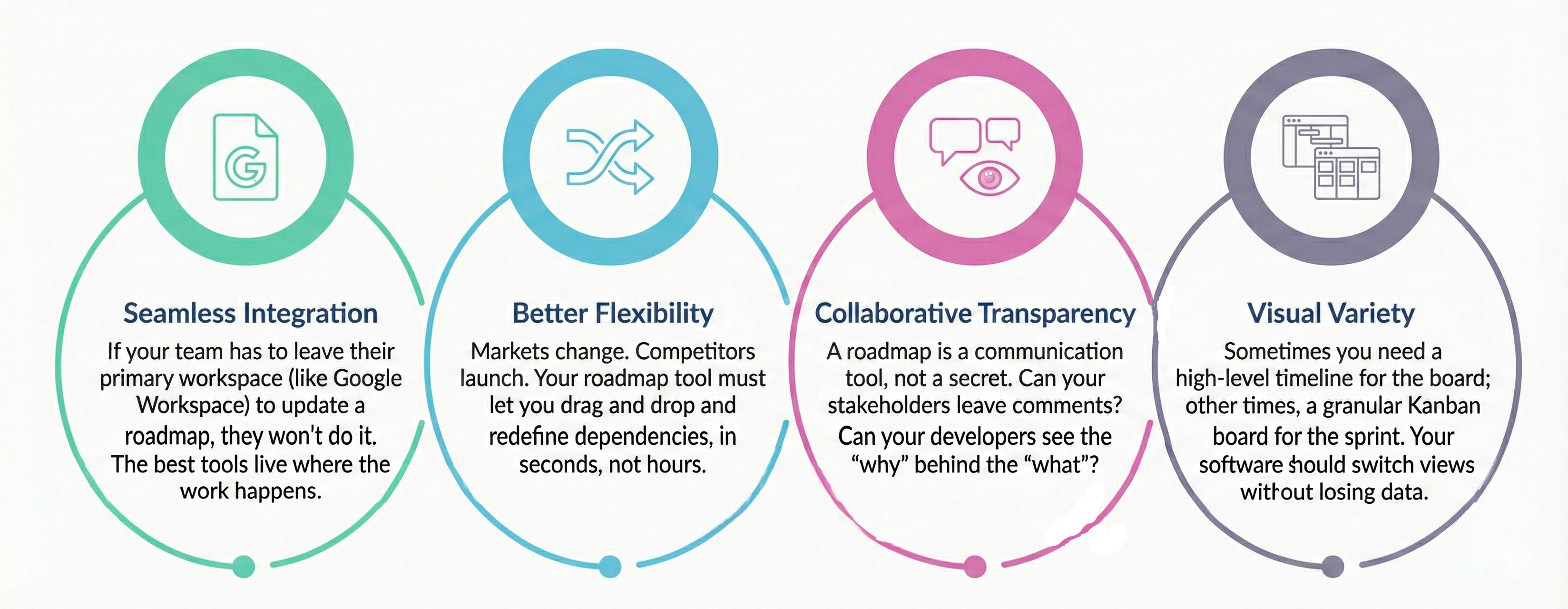
Modern teams need more than just alignment; they require the integration and flexibility found only in the top product roadmap tools of 2026
Ask yourself: Are you and your team still relying on a manual roadmap that requires a weekly update meeting just to stay current?
If so, you’re losing hours of productive time to pointless admin tasks. The top product roadmap tools today act as a single workspace that updates in real time, so you can spend less time talking about work and more time doing it. Need more convincing? Let’s take a run through why you and your team need these tools.
We reckon there are seven pretty good reasons why teams need a great product roadmap tool to get the most from their workflow.
Without a roadmap tool:
Once you engage a roadmap tool, this happens:
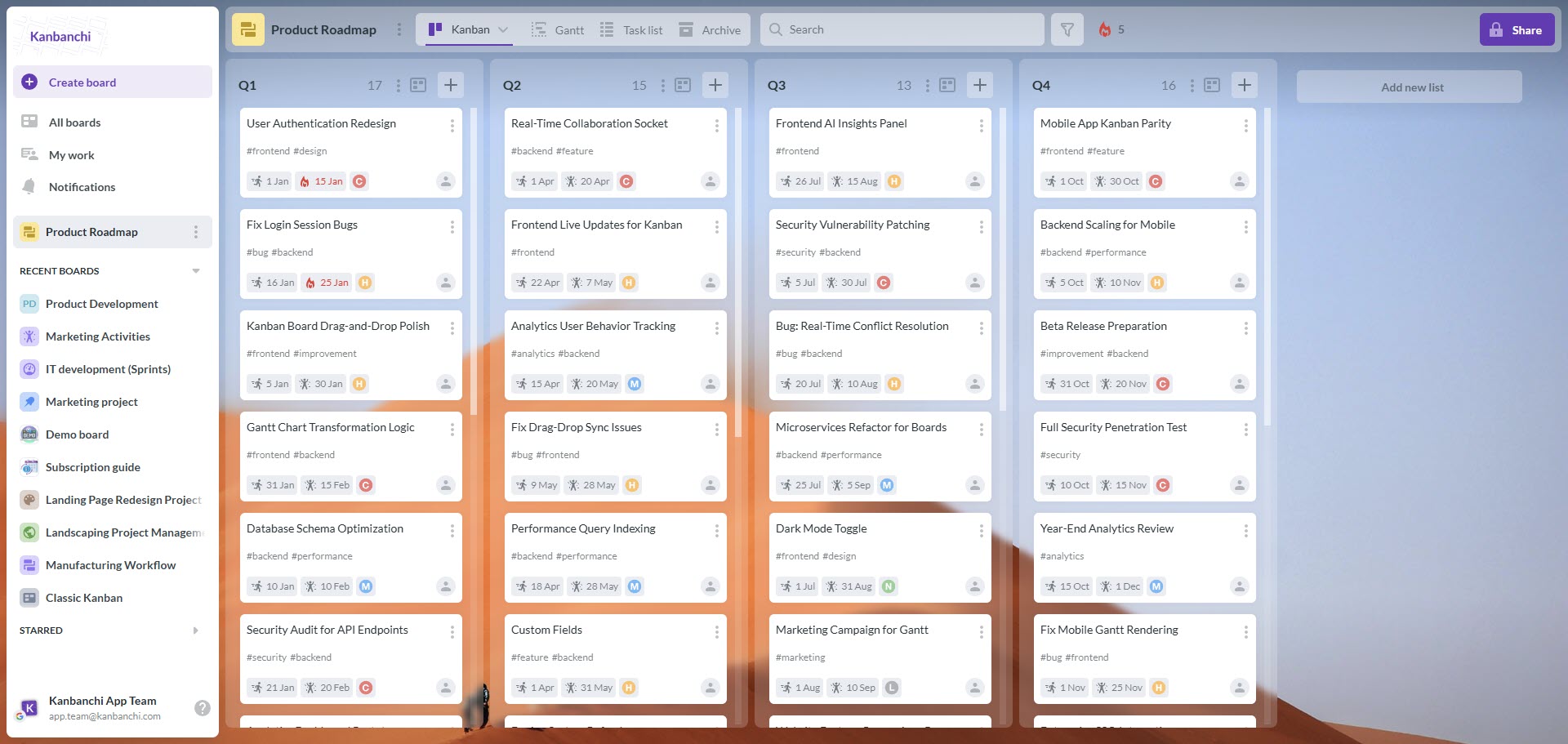
Create instant alignment by using the shared visual workspaces found in the best product roadmap tools for teams
Think about what your team might already have, such as:
Without a product roadmap tool, there’s no clear bridge between them.
When you add one in, it helps teams to:
You know what it’s like when you’re on a tight deadline! Everything feels urgent, and when you have no software to help manage everything:
Once you invest in a product roadmap, you immediately get:
All your decisions become data-informed instead of political.
Your project work rarely happens in isolation; there are always lots of elements to it that need input from many different teams in all sorts of departments.
When you invest in tools like this:
So you get less friction, fewer interruptions, and better collaboration for everyone.
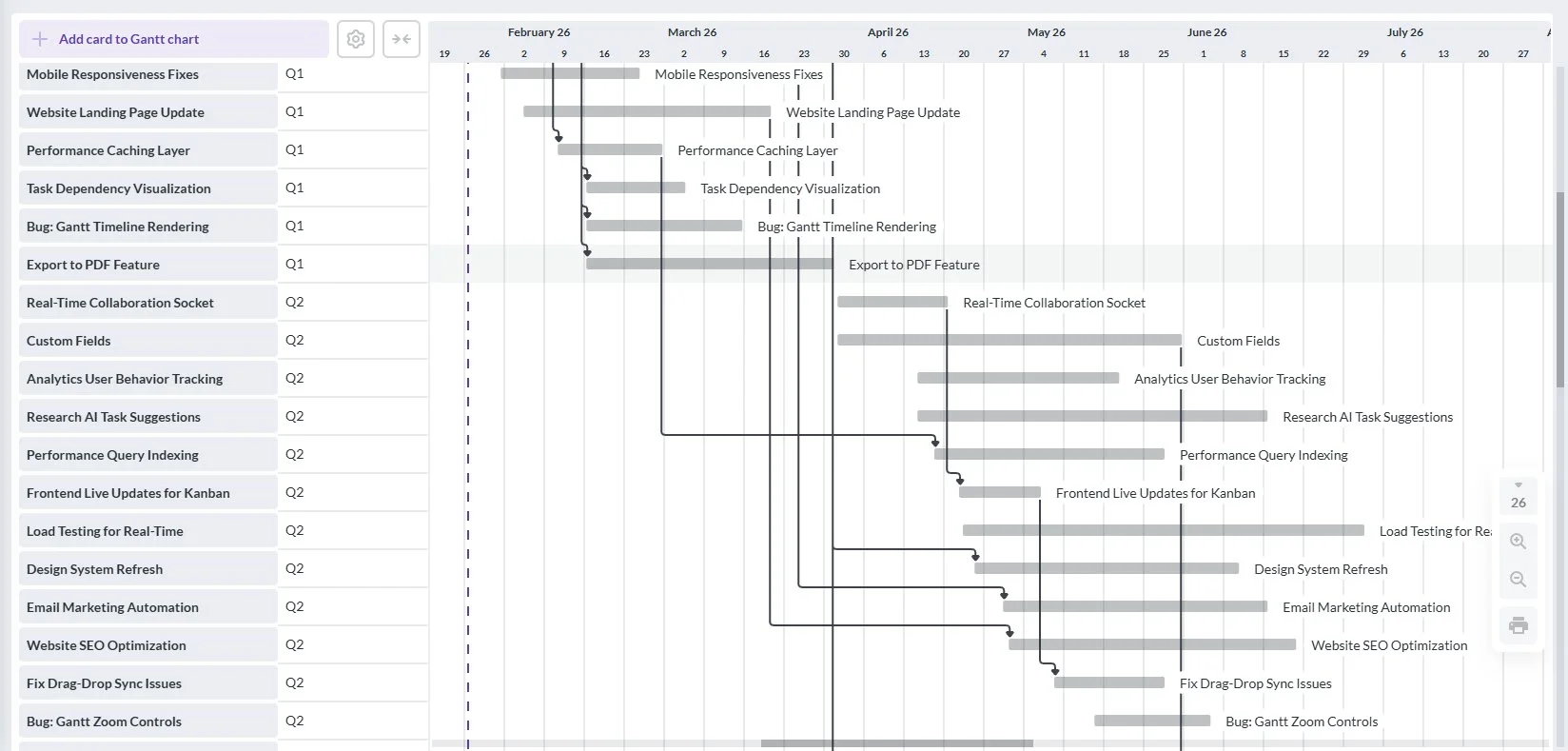
Coordinate complex timelines and visualize dependencies across departments with the best product roadmap software of 2026
We all understand that project plans can change, often very quickly, and so without a roadmap tool:
Add in a roadmap tool:
The one thing that Executives and clients don’t want is lots of:
What they actually want from a team is
So, add in a roadmap tool to:
When you’re working without a roadmap, your time management wanes and often:
Once you adapt this type of software, there’s:
What do you need to consider when choosing the right roadmap tool for your team in 2026? Consider how well they support:
More blog posts on IT and development
More blog posts on Product Management
While product managers obsess over feature sets and backend dependencies, marketing teams operate on a different clock. For a CMO or a Content Lead, a roadmap isn’t just about what’s being built; it’s about when the world hears about it.
If you have ever asked, what is the best marketing roadmap software, the answer depends on how much noise you’re willing to filter out. Many tools are too technical, designed for sprint cycles rather than campaign cycles.
In 2026, the top marketing roadmap software must bridge the gap between creativity and hard launch dates. Marketing roadmaps are uniquely visual and deadline-driven. They require:
With all this in mind, what do we think are the best tools for 2026? We’ve road-tested seven of them and will give you our honest feedback so you can make the right decision.
In all honesty, the market for roadmap software has lots of good options. Kanbanchi has curated la ist of the top 7 product roadmap tools that are defining how teams work this year:
Kanbanchi is the go-to solution for teams that live in Google Workspace. It doesn’t just integrate with Google; it lives inside your Google Drive. It’s best for product and marketing teams who want a unified dashboard without the friction of a separate heavy enterprise tool.
Key Features: Native Gantt charts, Kanban boards, time tracking, and seamless Google Workspace integration.
Pricing: Starts with a free tier and trial, and there’s a competitive Professional plan with the Gantt chart.

Kanbanchi integrates directly into Google Drive, making it the best product roadmap tool for teams using Google Workspace
Aha! remains a heavyweight in the product roadmapworld, known for its deep focus on strategy and the “why” of any given project. It’s rated for being very in-depth, but it will only work well for larger teams.
Key Features: Complex prioritization scoring (RICE, MoSCoW), idea portals for customer feedback, and multi-product portfolio management.
Pricing: Starts around $59/user/month.
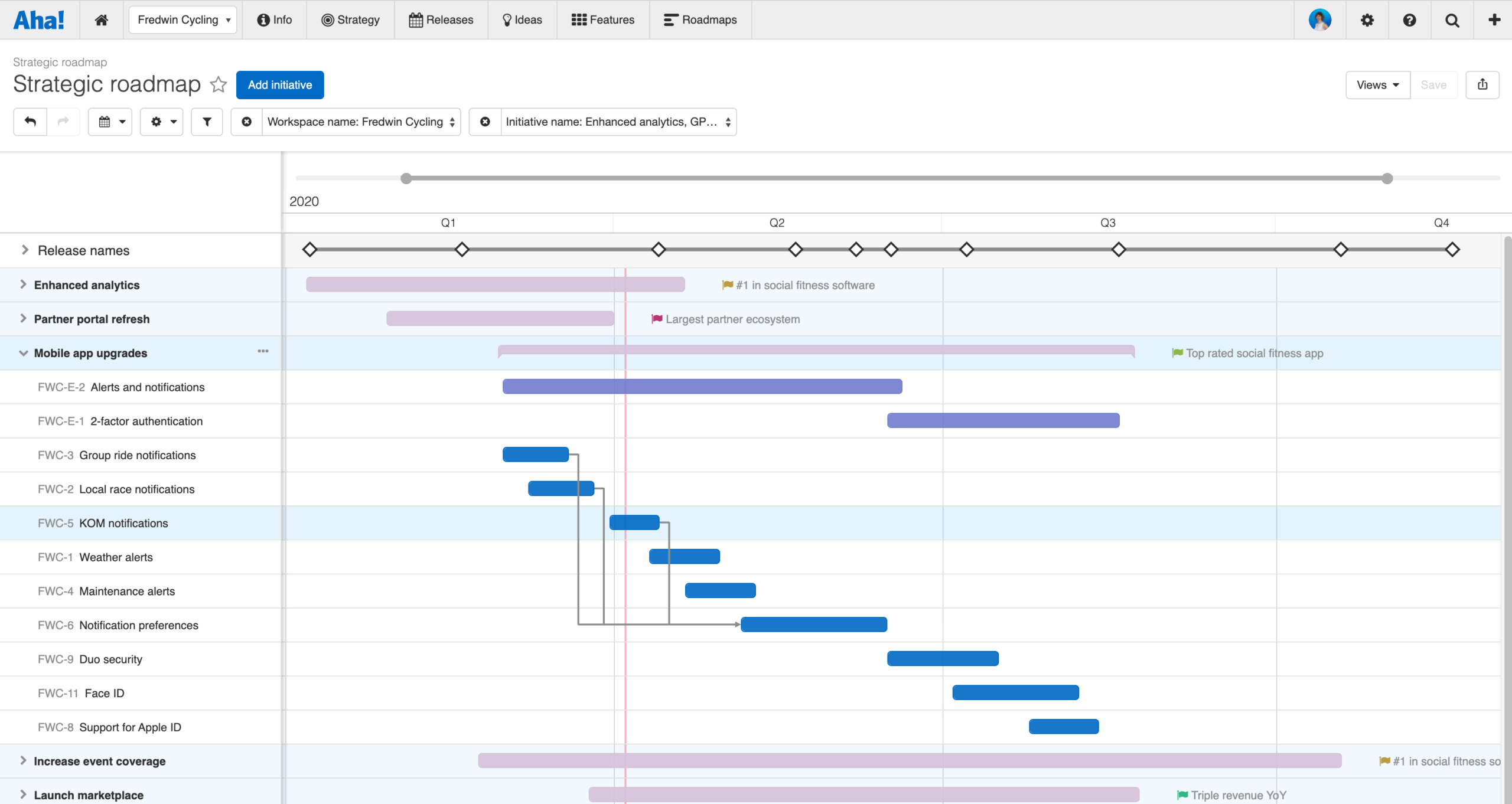
Aha!, a heavyweight among top product roadmap tools
If your roadmap is driven primarily by user feedback, Productboard is likely your top choice, and its AI features make it worth a shot.
Key Features: Feedback repository that links customer quotes directly to product features; Pulse AI for sentiment analysis.
Pricing: Paid plans begin at $19/user/month.
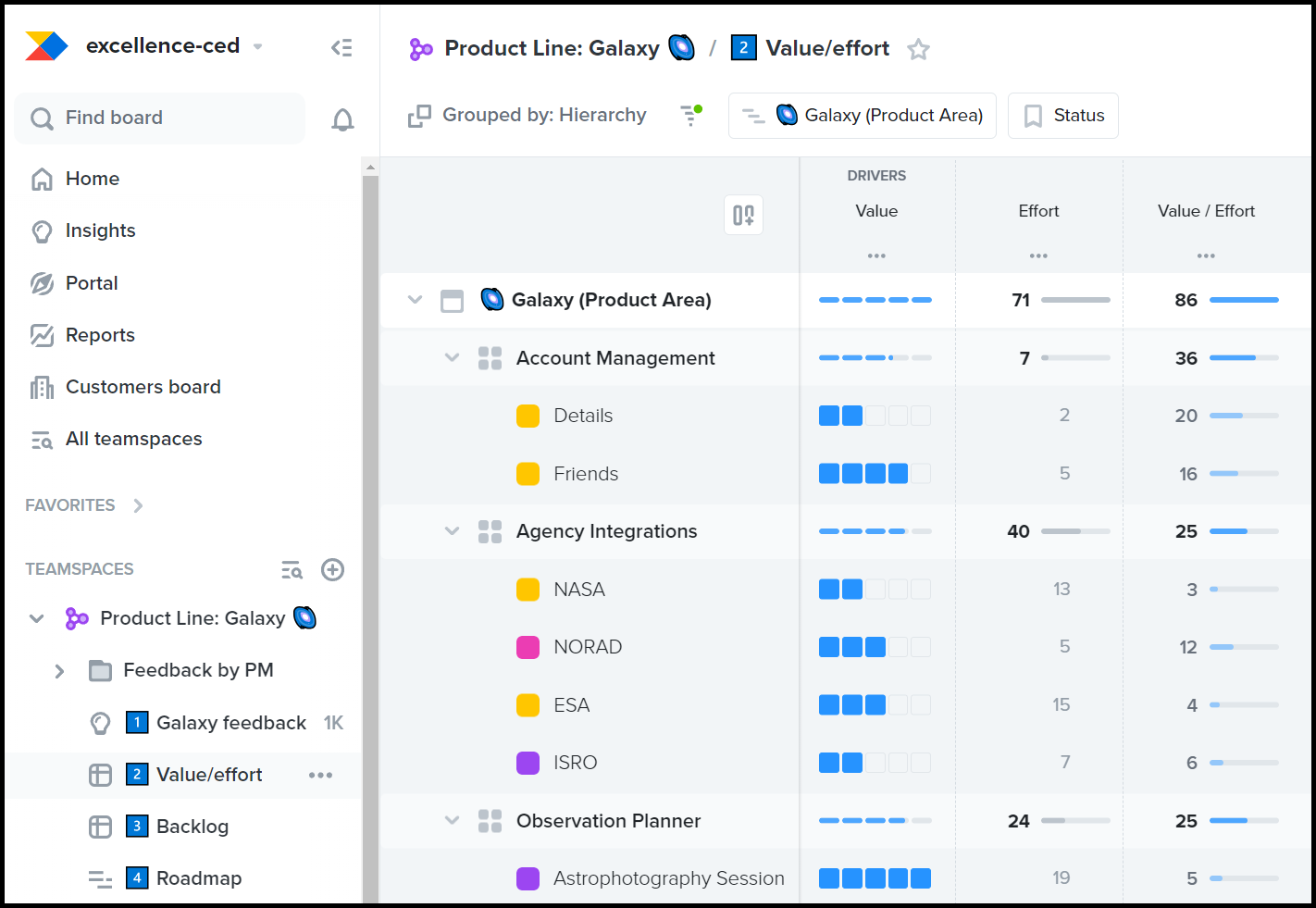
Prioritize features based on real user data with Productboard
Roadmunk excels at creating boardroom-ready roadmaps that look as good as they function.
Key Features: Swimlane and Timeline views are worthwhile, and CSV imports from Jira or Excel are easy.
Pricing: Various tiers based on team size; contact for current 2026 enterprise rates.
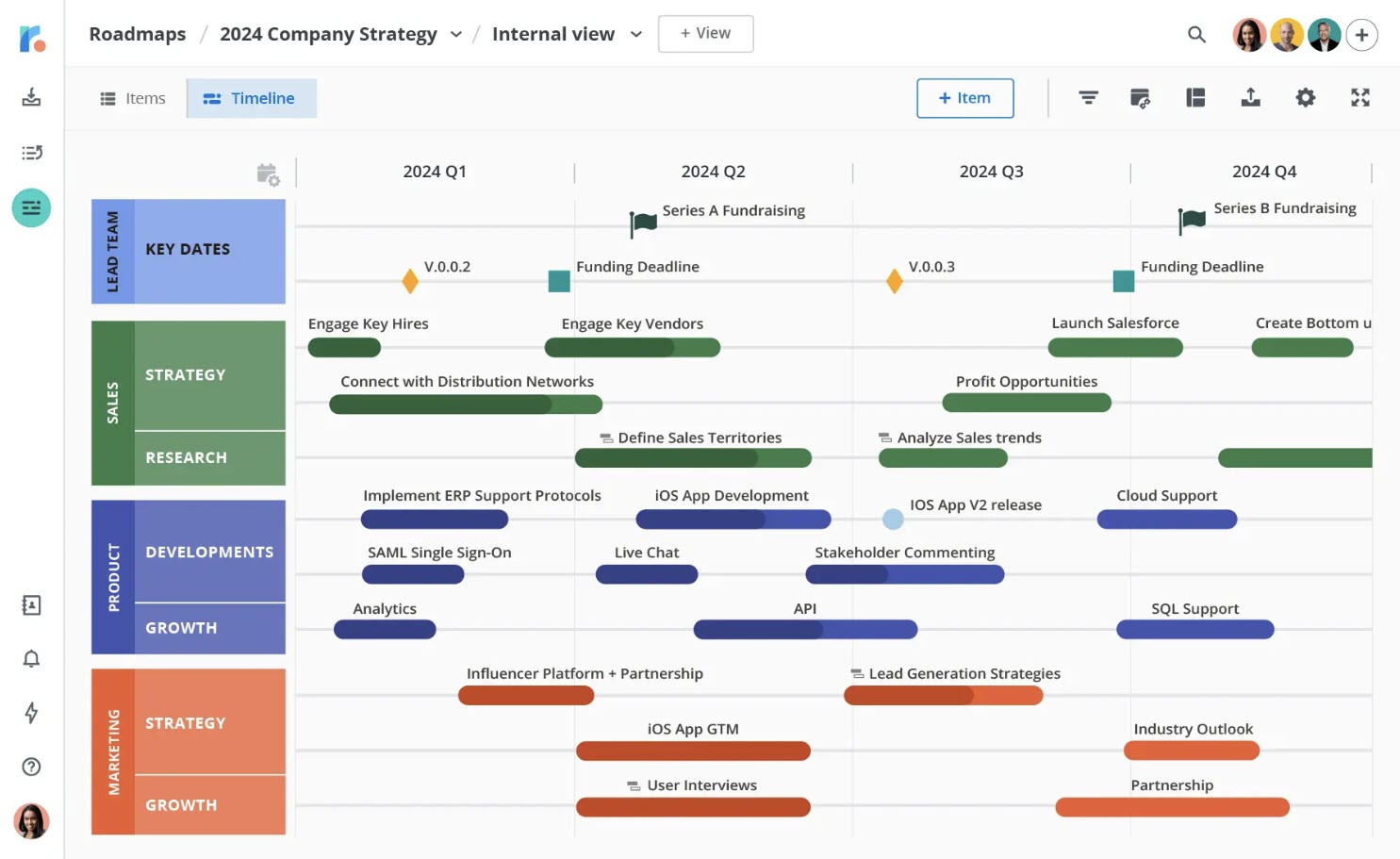
Create swimlane view roadmaps in minutes with Roadmunk
For teams already deep in the Atlassian ecosystem, Jira Product Discovery bridges the gap between the Idea and the Ticket.
Key Features: Native connection to Jira Software; collaborative ideation boards.
Pricing: Free for up to 3 creators; paid tiers starting around $10/user/month.
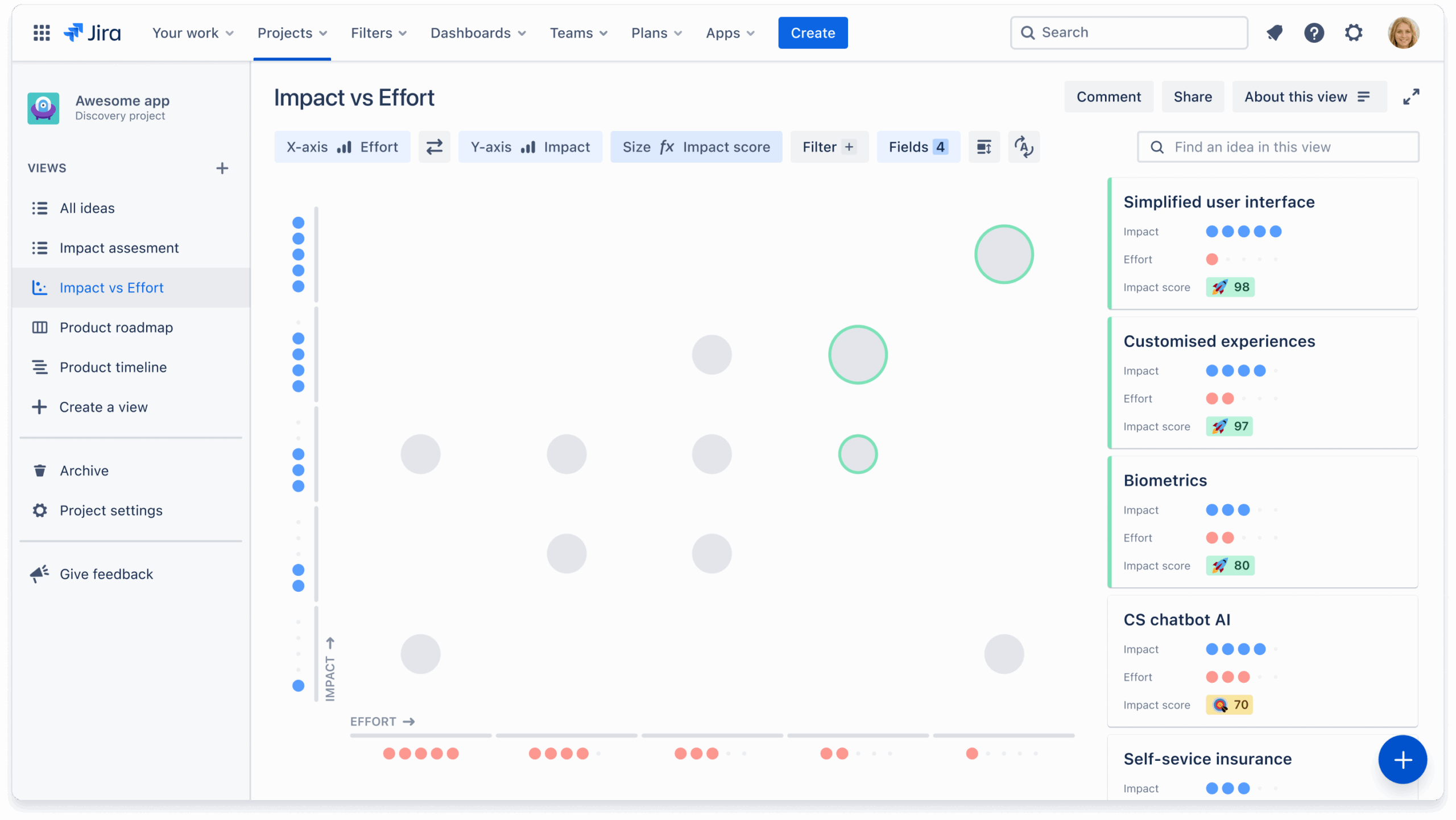
Jira Product Discovery bridges the gap between ideation and development for Jira users
Monday.com’s developer-focused branch offers a flexible, colorful interface that can be molded to almost any workflow.
Key Features: Hundreds of templates; robust automation engine to notify stakeholders when a status changes.
Pricing: Starts with a base monthly fee for a set number of seats.

Monday Dev sprint management board featuring colorful status bars and team assignments for a product sprint
Airfocus uses a modular approach, allowing you to pick and choose exactly which apps and features you need for your roadmap. Its deep customisation is welcomed by users.
Key Features: Priority Poker (for team-based scoring); 2×2 prioritization matrices.
Pricing: Plans start at $19/user/month.
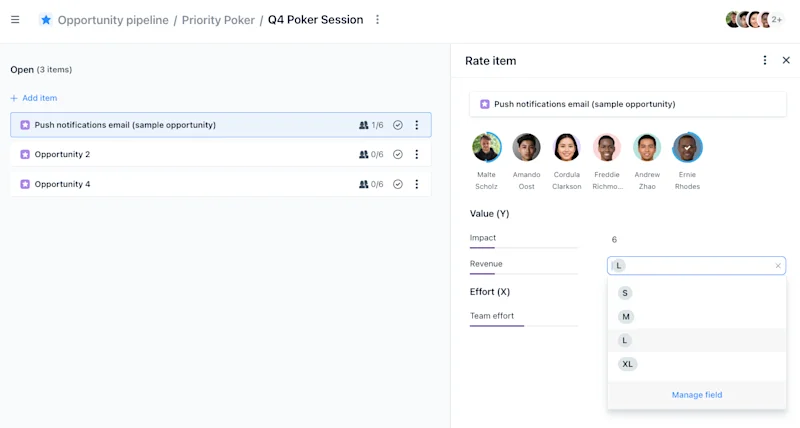
Gamify your prioritization and align your team with Airfocus
Let’s be honest: most product roadmap tools are “yet another” tab you have to remember to check. They exist in a vacuum, separated from your documents, your emails, and your team’s actual daily schedule. Kanbanchi changes the game because it’s a native extension of the tools you already use. If you are a Google Workspace power user, here is why Kanbanchi is the logical choice for your 2026 roadmap. Recently, the Microsoft version has also been launched.
When you create a roadmap in Kanbanchi, it’s stored as a file in your Google Drive. This means your roadmap follows the same folder structure, sharing permissions, and security protocols as your confidential docs. No more managing separate permission lists or worrying about who has access to an external URL.

Kanbanchi boards are files inside Google Drive that follow the same sharing settings, and can be easily accessed with a Google account
Strategic roadmapping requires a high-level Gantt Chart view to see dependencies and milestones. But execution happens on a Kanban board. Kanbanchi allows you to toggle between these views instantly.
Every card on your Kanbanchi roadmap can have a Google Doc attached directly to it. Writing a Product Requirements Document (PRD)? Just attach the Doc. Your developers don’t have to go hunting through Drive; the latest version is right there on the roadmap card.
START YOUR FREE TRIAL OF KANBANCHI TODAY
We think there are three major considerations when choosing the right product roadmap tools for your team:
By choosing a tool that integrates natively with your existing ecosystem, you reduce any learning curve. Not only that, you’ll ensure your team stays focused on delivering the work to the best of their ability. Choose the right product roadmap tool for your team, and the hard work is done for you!
For small teams, Kanbanchi is the most effective. It offers low overhead and high visibility. If you are already using Google Workspace, Kanbanchi is the natural choice because it requires no new account setup for your team.
You can, but that might not be the best option. Static spreadsheets lead to confusion, where half the team is looking at an outdated plan. Modern product roadmap tools ensure that when you move a date, everyone sees it instantly.
If you need deep operational and document integration, Kanbanchi for Google Workspace is the standout solution. It’s a superior choice for teams already invested in Google, and there’s no real learning curve involved.



In this Article:
Start using Kanbanchi now
Start your free trial