
In this Article:
Try Kanbanchi now
Start your free trial


Ever got that sinking feeling when a campaign launch is 24 hours away, and you realize the final tasks are still buried in a long email chain, or worse, the lead tracking link wasn’t even generated? These days, when it comes to managing your digital marketing campaigns, you can’t just wing it. How to manage a marketing campaign without such situations?
Managing a marketing campaign is a bit like conducting the Last Night of the Proms. You’ve got loads of different instruments:
…and they’re all playing at once. With no clear musical score or a great conductor, the result isn’t a masterpiece; it’s just noise. And in today’s market, noise doesn’t convert.
Whether you’re launching a new product, running a seasonal sale, or building brand awareness, the secret to success isn’t just a big budget or a flashy creative idea. It’s the process. It’s about how you move from a vague “What if” to a high-performing “We did it!”
You then need a way to manage all these complex workflows without jumping between a dozen different disconnected apps that don’t talk to each other. You need a system that feels like a natural extension of your daily work.
If it all seems a bit “aagh!” don’t worry, we’re here to help. In this guide, we are going to pull back the curtain on how to manage marketing campaigns effectively. We will cover:
And that’s not all, we’ll also show you why the right marketing campaign planning software can be the difference between a team that is constantly firefighting and a team that is consistently hitting their KPIs.
Ready to turn your marketing chaos into a streamlined machine?
Let’s dive in and get started.
According to DemandSage, about 58% of SMEs now use digital marketing campaigns to reach their customers. However, you’d be surprised how many teams just want to dive into a marketing campaign without a plan in place. Hold your horses! Before a single tweet is scheduled or a single pixel of an ad is designed, you need a concrete work schedule in place. It sounds obvious, doesn’t it? Yet many teams rush through this phase because they feel pressured to produce.
Effective marketing planning is about answering the hard questions early. So stop, sit back, and don’t rush in. Think about this:
Every successful campaign begins with a goal. But simply “increasing brand awareness” isn’t a goal; it’s a wish. To manage marketing campaigns that actually drive growth, you need to use the SMART framework:
| Specific | Measurable | Attainable | Relevant | Time-bound |
|---|---|---|---|---|
| Generate 500 new MQLs via our ebook | Track conversions (GA4) and CRM entries | We have $2500 monthly for that | It aligns with our goal for Q3: generate more leads | By the end of the 30-day campaign period, we reach our goal |
For instance, your goal might be: “Improve brand sales for this specific product by Q3”. Work forward from that, set it in place, and suddenly everything looks a lot clearer.
Once you know “what”, you need to define the “who”. Are you targeting current customers for an upsell, or are you hunting for brand new prospects?
A common mistake in marketing campaign management is trying to speak to everyone at once. When you speak to everyone, you hear no one. Create a Campaign Persona specifically for this initiative.
Plan your goals around this, and you can always tweak your ideas and adjust them as you go along, and once you see what is working (and what isn’t).
Where will your money and time go?
Your choice of channels, be it SEO, Paid Search, Social Ads, or Influencer Marketing, should be dictated by where your audience lives, not just where you feel comfortable.
Finally, decide on your Key Performance Indicators.
The key here is centralization. Ensure that every team member knows these numbers before the campaign goes live. When the whole team understands the target, they are much more likely to hit it.
Planning isn’t just about the what; it’s about the how. And that brings us to the next stage of your campaign: the execution.
If planning is the map, execution is the actual journey. This is where most marketing campaigns either find their rhythm or fall into a black hole of “Who was supposed to do that?”
Execution is about transforming your high-level strategy into a series of actionable tasks. It involves coordinating:
Without a clear workflow, your team will spend more time talking about work than actually doing it. Put one in place so everyone can see what needs to be done and when, and get on with their tasks.
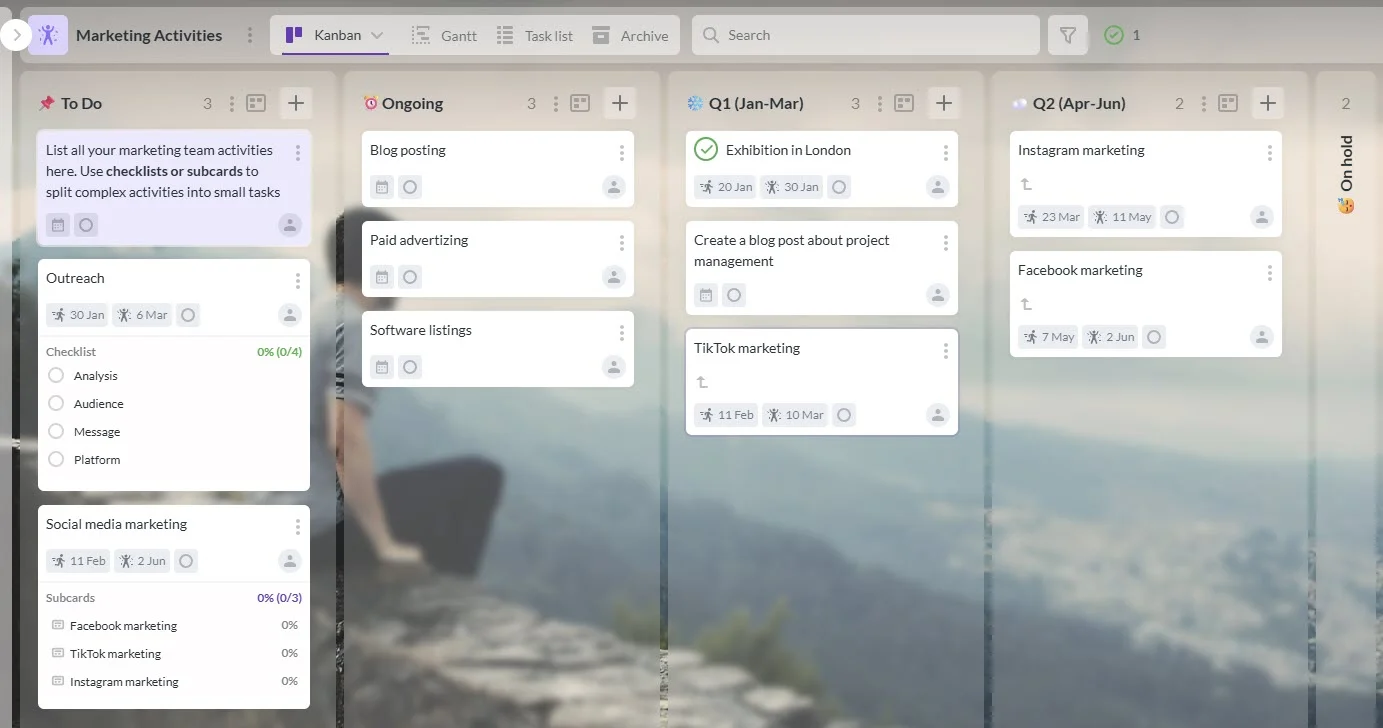
Centralize your “single source of truth” on a shared Kanban board to streamline execution and master how to manage marketing campaigns without the chaos of scattered tools
The biggest enemy of a marketing team is the silo. If your copy is in a Google Doc, your assets are in Dropbox, and your deadlines are in a private spreadsheet, you are asking for trouble.
To manage marketing campaigns successfully, everyone must work from a single source of truth. This ensures:
Don’t just create a task called Launch Campaign. That is too big to manage. Instead, break it down into micro-tasks:
The bottleneck in marketing campaigns usually happens at the approval stage. To keep the momentum, define your review process clearly.
Who has the final say? Is it the Creative Director or the Project Manager?
Setting these rules of engagement early prevents the dreaded last-minute revisions that can delay a launch and helps (as much as possible) to keep everything on track.
Stop using email for campaign updates. Use a tool that supports communication within the task. This keeps the context alive. If a designer has a question about a specific image, they should ask it on the task card for that image, not in a separate Slack thread that will be lost in ten minutes.
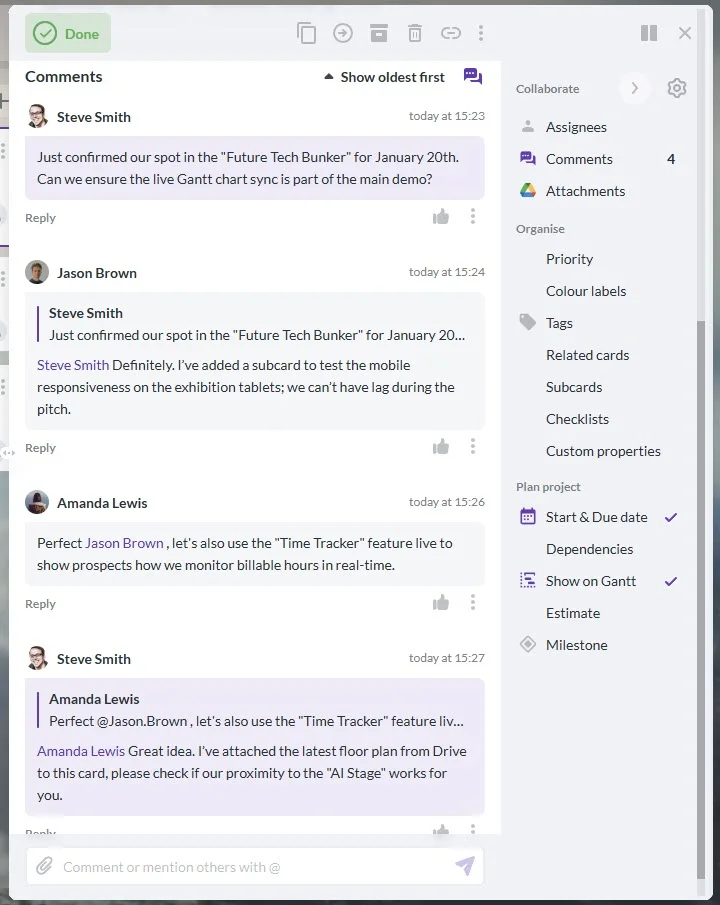
Keep context alive and eliminate lost information by discussing updates directly on the task card instead of using disconnected email threads or chat messages
By focusing on clear ownership and centralized communication, you move from ordered chaos to a streamlined execution phase.
That’s how to set up a campaign. But what about choosing an effective app, tool, or software program to turn all of these ideals into a concrete reality that helps your team deliver a marketing campaign successfully, on time, and on budget?
In the early days of a business, you might get away with using a basic to-do list or a shared spreadsheet. But as your team grows and your campaigns become multi-channel, those manual methods start to break down and become unworkable as you scale up.
Why? Because spreadsheets are static. They don’t remind you when a deadline is approaching, show dependencies, or facilitate real-time collaboration with other team members. This is where marketing campaign planning software becomes essential.
The best tool isn’t the one with the most features; it’s the one that your team will actually use. When evaluating your options, look for:
There are different types of tools, and each has its benefits depending on what you want to achieve with your work:
It’s often a good idea to look for one tool that can do everything, all in one space, and that’s where Kanbanchi can step up to the plate to assist you with your next marketing campaign.
You may be interested in reading our
Comparison Guide of SEO Project Management Tools (+ Kanbanchi SEO PM)
If your team lives in Google Workspace, you’ve likely felt the friction of jumping between your work (Docs, Sheets, Slides) and your management (third-party PM tools). Kanbanchi eliminates this gap. It’s not just another app; it’s a seamless layer that turns your Google environment into a professional marketing command center.
Kanbanchi also supports teams in the Microsoft environment that rely on documents and Excel tables and use Outlook for communication. With Kanbanchi’s ability to scale from individual usage with OneDrive to integrating into corporate SharePoint sites, it becomes one of the essential apps for marketing professionals.
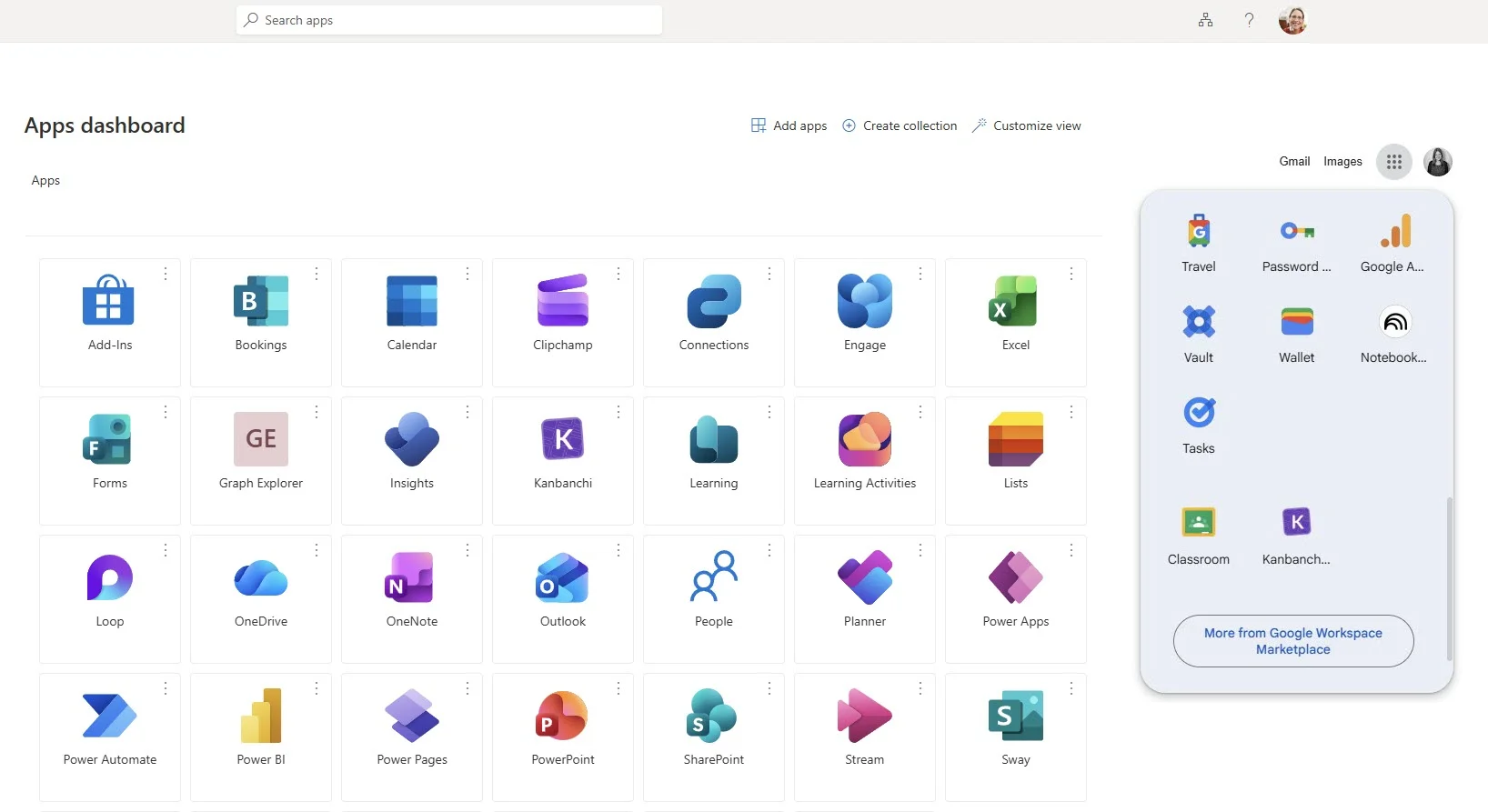
Kanbanchi integrates natively into your team’s existing Microsoft 365 or Google Workspace app launchers, which ensures seamless adoption
Here is how to set up your campaign for success using Kanbanchi.
Create a board specifically for your campaign; don’t rely on a generic To-Do list. Be savvy and use your lists to represent the stages of your marketing funnel or your production workflow, like this:
Marketing campaigns are heavily dependent on timing. If the landing page isn’t ready, the ad spend is wasted! Remember, you can use the Gantt Chart view to visualize it all.
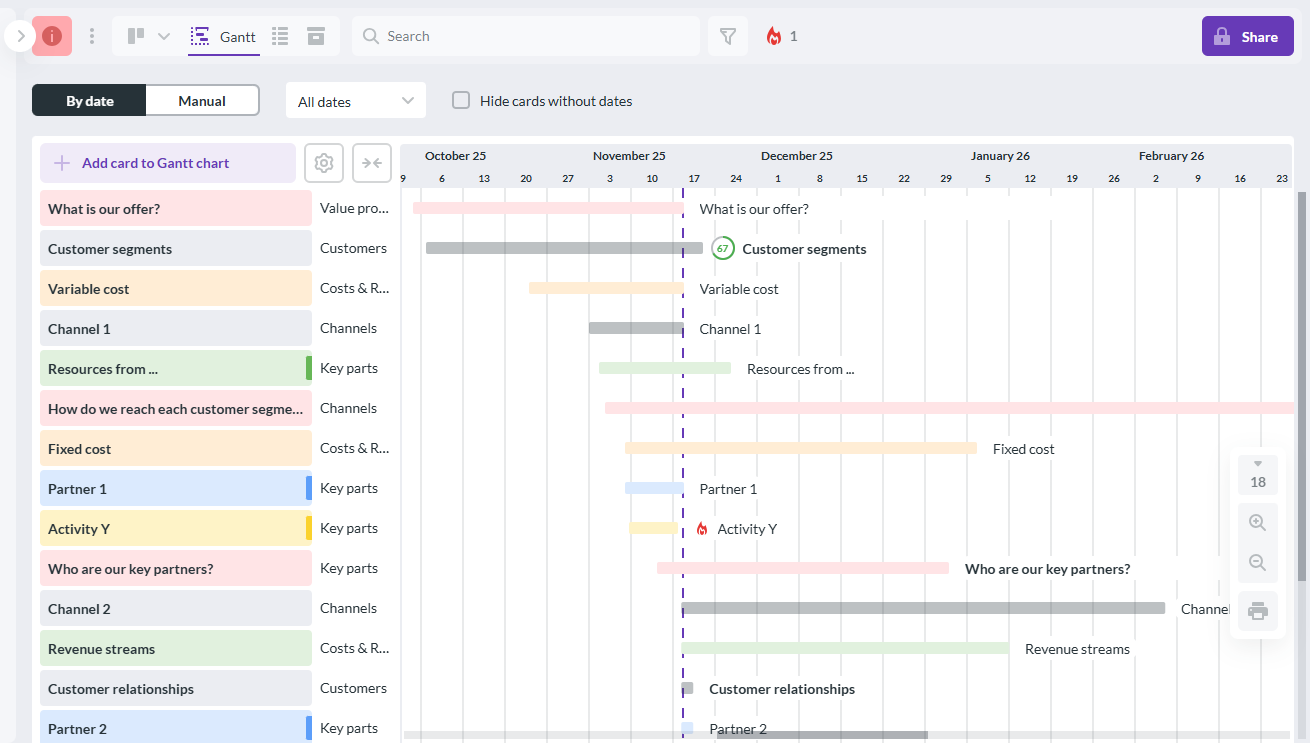
Looking at all these together helps give a productive overview and keeps all team members engaged, up to date, and focused on what they need to do.
Collaboration is instant in Kanbanchi. Everything updates in real-time: you can see who is on the board, who has made changes, and react immediately.
When teams know they can collaborate in real time, quickly and succinctly, everything becomes much easier.
Are you spending 40 hours a week on a social channel that only drives 2% of your leads?
Use Kanbanchi’s Time Tracker to see exactly where your team’s energy is going. This data is gold when it comes to optimizing your next campaign’s budget and resources.
The launch is often seen as the end of the road. In reality, it’s just the beginning of the most important phase: The Pivot.
To manage marketing campaigns effectively, you can’t simply set it and forget it. You need to watch how the market reacts and adjust your sails.
START A FREE TRIAL OF KANBANCHI TODAY
Sure, those five stages are all important, but once you reach the final stage (the pivot) as we outlined above, you need to keep a close eye on how it performs and what changes are needed to keep the marketing campaign on track. Kanbanchi can also help with this.
Don’t wait until the end of the month to check your performance. Check your metrics weekly (or daily for high-spend PPC), and adjust tasks on the Kanbanchi board.
Once the campaign concludes, gather the team for a debrief. Use your Kanbanchi board to review the workflow.
From this, you can decide which steps to take now or in future campaigns to keep success rolling, which leads us neatly to…
Optimization isn’t about fixing what’s broken; it’s about making what’s working even better. Take the winners from this campaign, the best-performing headline, the highest-converting image, and make them the baseline for your next initiative.
Kanbanchi will fit neatly into your team when you’re ready to start your next creative marketing campaign. It’s simple to install and has virtually no learning curve, whether you’re swapping from Google Workspace or trying us out as a worthy replacement for Microsoft Project Online.
Whatever point you’re pivoting to us from Kanbanchi will seamlessly meld with your systems, workflows, and team, meaning success is a given. Drop us a line so we can discuss Kanhanchi with you, and let’s get the important conversations started. Make your next marketing campaign a surefire success with our help.
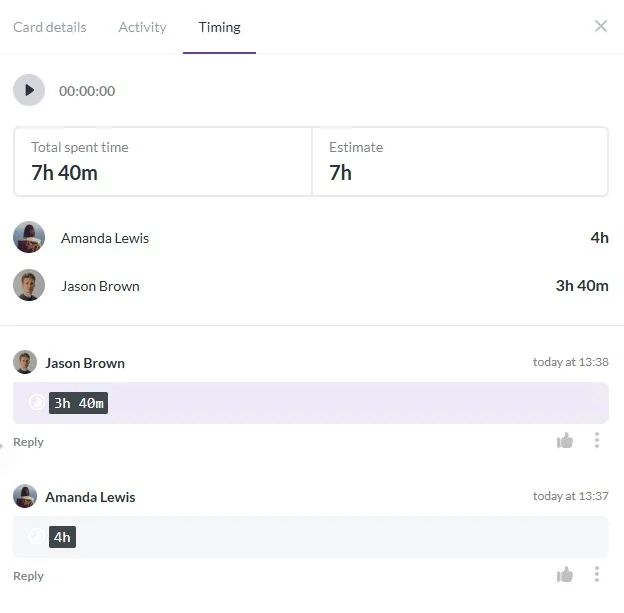
Continuous optimization can also be based on tracking the exact time each team member spends on tasks and comparing it to your initial estimates
We’ve tried to cover everything related to marketing campaigns in depth in our piece, but we know there may be one or two questions you’d like to ask. With that in mind, we’ve put together a few of the most frequently asked questions on the topic.
The strategy and planning phase can be seen as the most important. Without clear goals and a defined audience, even the most beautiful creative assets will fail to convert. Start with small goals that develop into bigger plans.
Yes. Small businesses often succeed by focusing on niche audiences, clear messaging, and cost-effective channels like email, social media, and content marketing.
By comparing the total cost (ad spend + software + team hours) against the total revenue generated. Using tools like Kanbanchi helps you accurately track the hidden costs of team hours.
Software like Kanbanchi provides automation, real-time collaboration, and visual timelines (Gantt charts) that spreadsheets simply cannot offer. It reduces manual errors and keeps the team aligned.
The most common mistakes marketing teams might make include unclear goals, poor targeting, inconsistent messaging, ignoring data, spreading the budget too thin, and failing to optimise during the campaign.
More articles for marketing teams

In this Article:
Start using Kanbanchi now
Start your free trial