
In this Article:
Try Kanbanchi now
Start your free trial


We’re a bootstrapped team of 25 people competing in a market where most of the niches are dominated by companies with thousands of employees and huge funding. We don’t have even one thousandth of their marketing budgets. So when we make changes, they need to be precise, and they need to work.
We have been in the market for project management tools since 2013, but until July 2025, 77% of our monthly purchases were single users. Everything was fine; they were buying single-seat subscriptions, and some were expanding later. But when we looked closer at those users, a lot of them weren’t solo users; they were team leads or team managers of small teams of 2-8 people. They actually needed the app to collaborate with their teammates, but they couldn’t justify the purchase of multiple seats for many users.
Our app doesn’t lack features that competitors have; it’s not too simple. It is meant for team collaboration, but our messaging and our pricing didn’t make it obvious. So we decided to focus on affordable scaling for small teams.
We started by rethinking our pricing and introducing tiered billing for teams, and we supported this change with how we present the app on our website, on Google Workspace Marketplace, and through our content strategy.
Two changes were made simultaneously.
First, we restructured our pricing so that the more seats a team purchases, the less they pay per user. The pricing page got a clear headline: “Choose your plan – the more seats you add, the less you pay per user.” It works for all plans except Essential, which is meant for individual use, not for collaboration. When visitors want to know their final price, they just enter the number of people on their team, and their final price shows up on the pricing page.
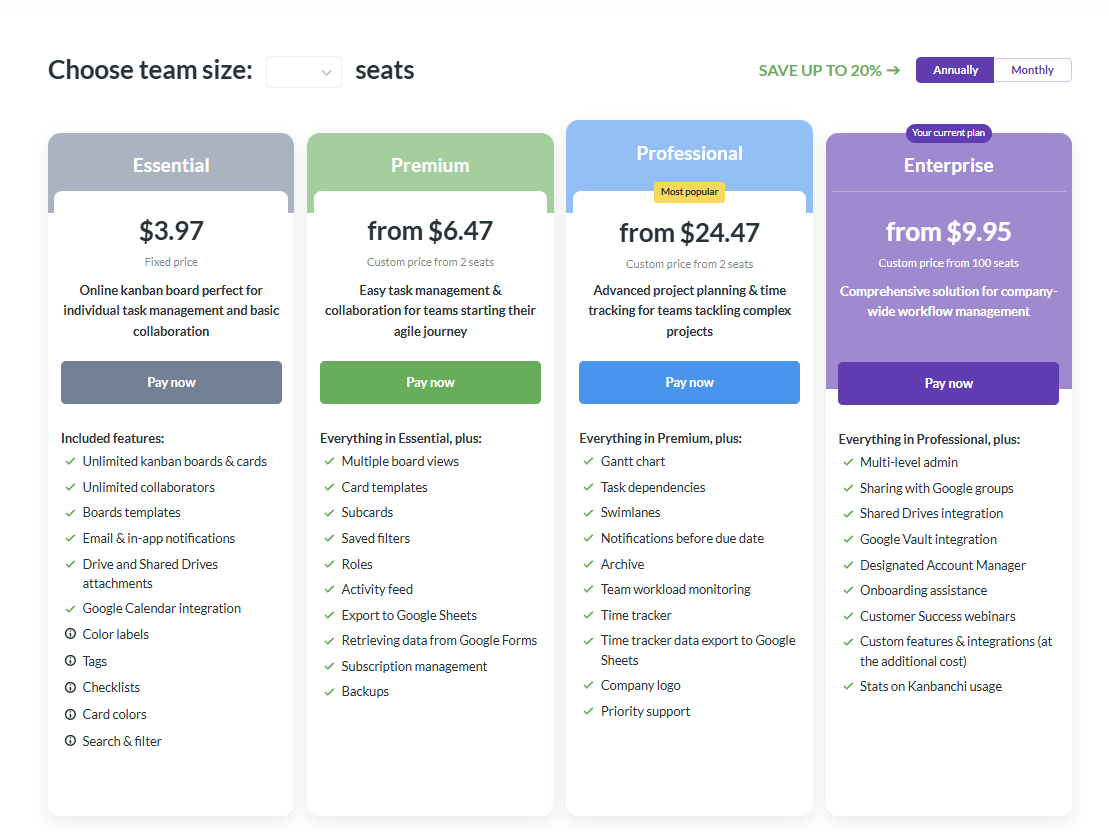
An old Kanbanchi pricing without special tiers for teams
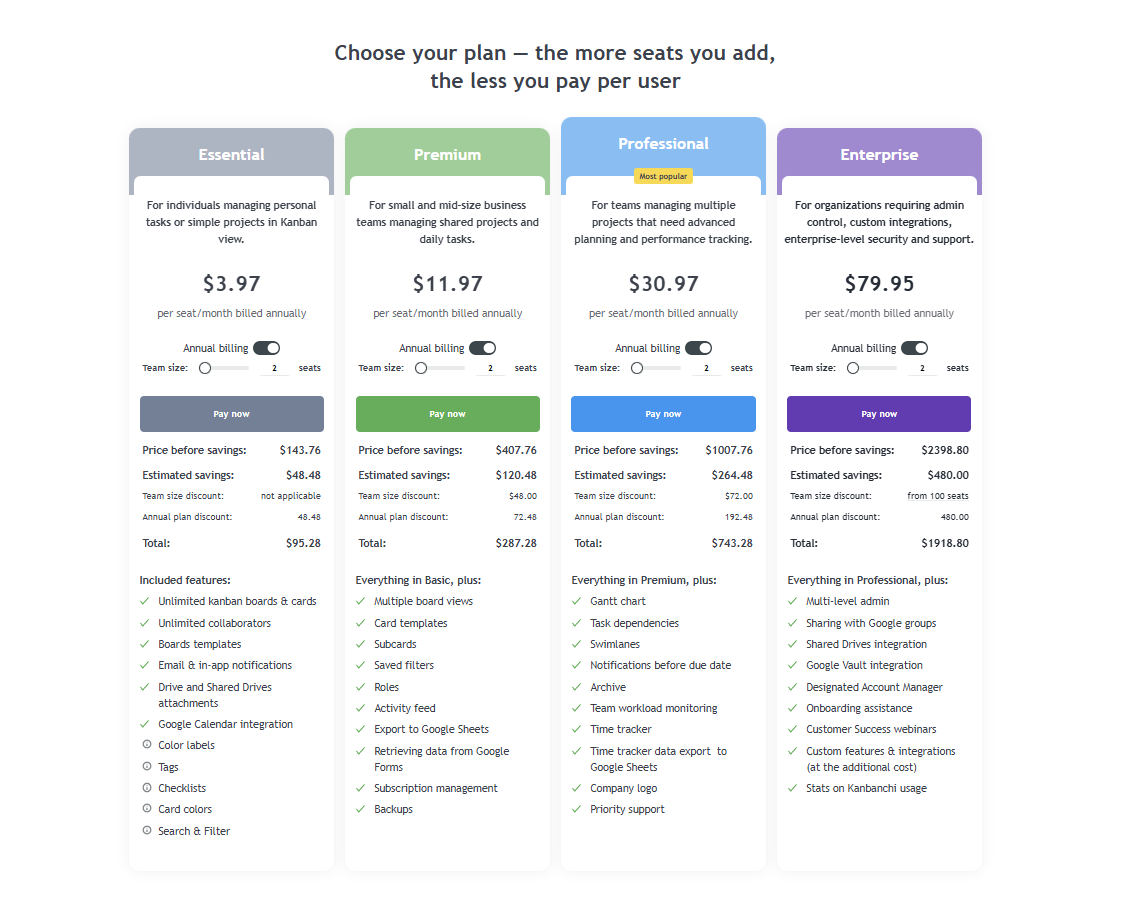
New Kanbanchi pricing with special tiers for teams
Second, we updated our Google Workspace Marketplace listing. We used to focus on Kanban boards because they are the core of Kanbanchi. However, it’s not just a Kanban board, but a project management platform for teams capable of supporting complex projects. The positioning shifted from a general-purpose tool to a team collaboration platform.
We made several changes, including a change to the main overview, which now mentions “Team dashboards”. The previous text said, “Project and task management tool designed for Google Workspace. Features include: Kanban, task board, Gantt chart, time tracking, timeline, reporting”.
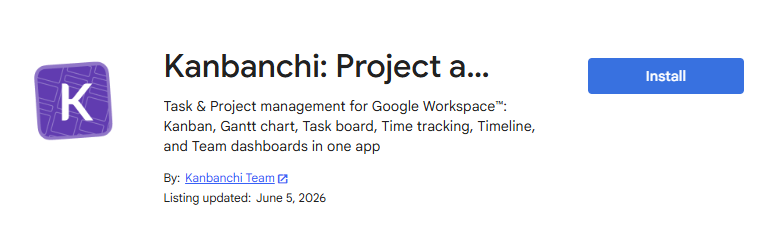
New Kanbanchi header on Google Workspace Marketplace
First of all, we started writing more articles on team management for our own blog. We expanded the list of topics that we cover and included team workflows, collaboration, workload distribution, remote team management, and how teams use boards together.
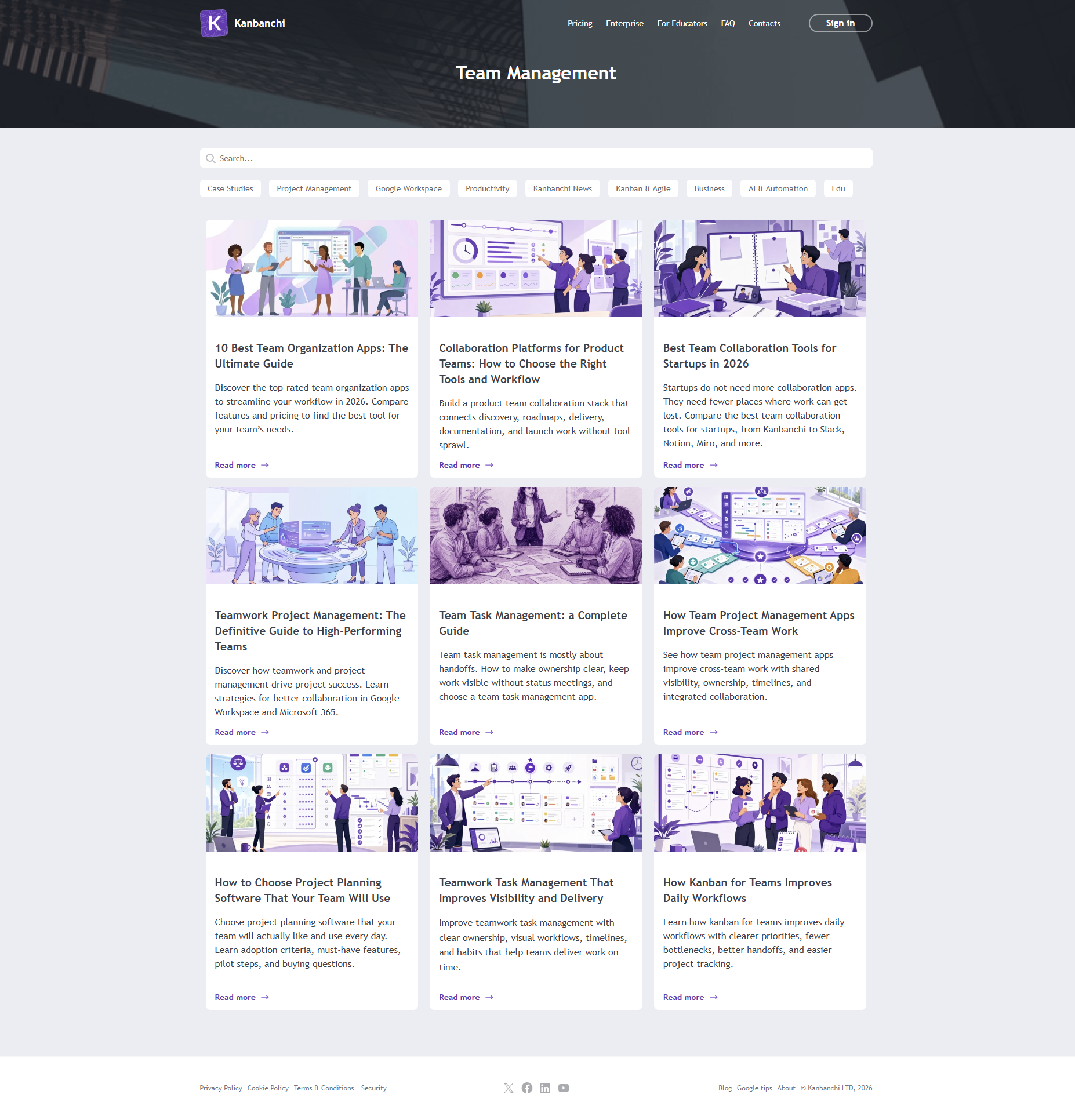
Examples of the Kanbanchi blog content targeted for teams
On our home page, we experimented with the headline. The regular headline says “All-in-One Project & Task Management Tool for Google Workspace and Microsoft 365″. We experimented by introducing several variants:

Experiments with the homepage: adding different keywords
These phrases supported the overall narrative of the teams-friendly app. However, later in 2026, we returned to the regular headline because it didn’t make as great a difference as the shift in the blog, and we had other reasons unrelated to this strategy.

Current headline
By the end of 2025, the shift was already happening, and we decided to support it with changes on the pricing page. We made a series of tests and discovered that it was hard for people to understand that the more seats they bought, the less they were actually paying.
Based on the test results, we ran an A/B test to make team tiers even more visible and the savings more obvious. The winning variant showed a 14% higher conversion rate to team purchases.
Honestly, the result was even better than we expected. Our initial hopes were around 10-15% MRR growth; we couldn’t even imagine 44%.
Team purchases (3+ seats) in monthly purchases:
MRR growth over the 12-month period: 44.61% (exact numbers hidden):

A screenshot from Profitwell
We didn’t just measure MRR growth, but also kept an eye on churn. There weren’t such dramatic changes, but the trend is decreasing. It’s a signal for us that teams are stickier than individuals. They don’t just hop on and off the tool, but they integrate Kanbanchi into their processes, collaborate, and stay longer.
I can name three reasons why, in my opinion, this strategy was so successful.
We had already built a solid platform for teamwork, so we didn’t need to add any other team features; they were already there. Shared boards that integrate with the familiar ecosystem, collaboration features, different views, space for communication, permissions, etc. We had it already, but our messaging wasn’t obvious to sell it to those who need it.
The old pricing page showed a per-seat price and had a phrase mentioning “custom price from 2 seats”, but the tests showed that visitors didn’t understand the actual meaning of it. So, we had to make the calculations visible.
The new pricing shows the team size that visitors can adjust, and when they do so, the system recalculates and shows everything to them: the price per seat, the final costs, and estimated savings. When a team lead sees the exact amount that can be saved by purchasing five seats instead of three, for example, it’s much easier for them to make a decision.
We didn’t change everything in one day, but started with the most obvious things: pricing and the Marketplace listing. After receiving positive signals and measuring the impact, we supported the change by adjusting our content strategy. Then made even more serious changes on the pricing page, but ran A/B tests first.
Each change was built on the results from the previous change, and we could track the logic of the whole process.
If you already have some user base, and they are happy with your product, there’s a great chance that there are more people like them out there. So, look at your messaging first. Does it reflect what your product offers?
Before adding more and more features, check if your pricing page aligns with what you want to sell. This is the page that typically has more visits than any other page, so you definitely want to make sure that it’s easy for visitors to understand your offer.
Don’t go for big changes at once; start with gradual improvements:
See more of our marketing blogs right here
Make small changes to them step by step, and continuously check results. They themselves will lead you to your next step. Our small steps led us to 44.61% MRR growth in 12 months; who knows where they will lead you.



In this Article:
Start using Kanbanchi now
Start your free trial